THE ADVENTURE COLLECTIVE® · Independent discovery and booking for outdoor travel

A full‑day loop from Egilsstaðir that pairs the blue‑green columns of Stuðlagil with the deep shadows of Hafrahvammagljúfur, a rustic hot spring, and the vast Hálslón reservoir and Kárahnjúkar dam.
A full‑day loop from Egilsstaðir that pairs the blue‑green columns of Stuðlagil with the deep shadows of Hafrahvammagljúfur, a rustic hot spring, and the vast Hálslón reservoir and Kárahnjúkar dam.
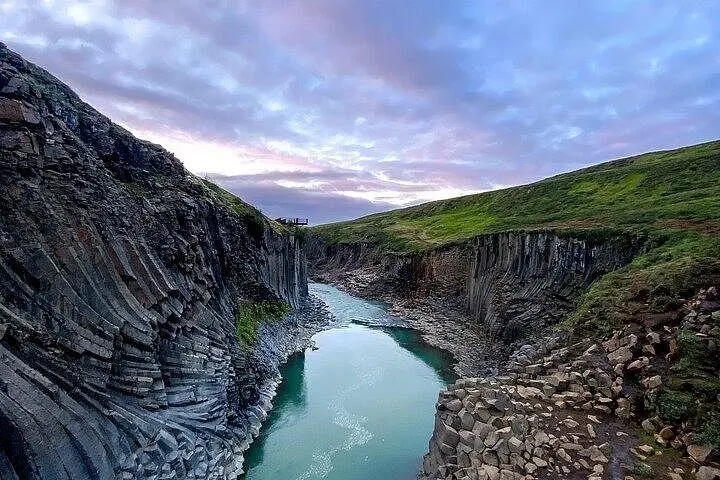
You step out of the van into a wind that pushes the river's spray across the viewing platform; below, the Jökla (Múlagljúfur) threads between towering basalt columns, its blue-green water daring your camera to keep up.
Verified experiences and guided adventures in the surrounding area.
Operated by Tanni Travel · Egilsstaðir, Austurland
You step out of the van into a wind that pushes the river's spray across the viewing platform; below, the Jökla (Múlagljúfur) threads between towering basalt columns, its blue-green water daring your camera to keep up.
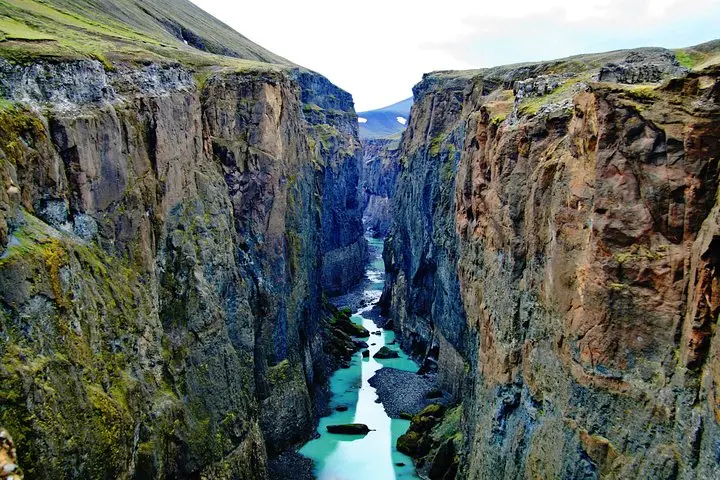
Stuðlagil is a study in volcanic geometry — hexagonal basalt columns carved by glacial rivers over millennia — and the renovated Grund viewpoint offers safe, elevated views for photographers and casual hikers alike. The route continues into the highlands to Hafrahvammagljúfur (often called Dimmugljúfur), a darker, steeper gorge that drops roughly 200 meters and reminds you how recent Iceland’s geology still feels.
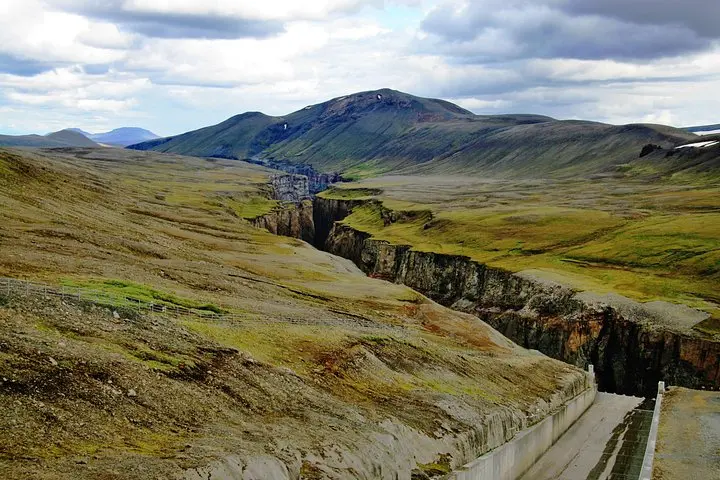
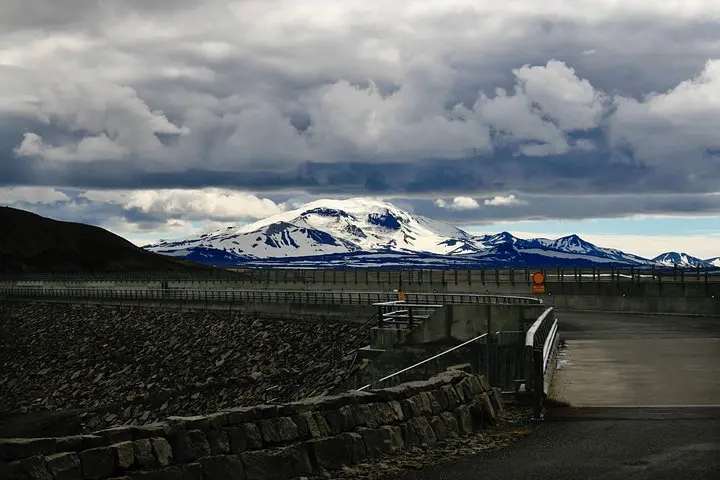
Culturally and politically, this landscape has modern layers: the Hálslón reservoir and Kárahnjúkar dam reshaped valleys in the name of hydroelectric power, visible evidence of resource debates that touched local communities.
Practically, the full loop is an 8‑hour day with multiple short walks—expect mostly short, uneven trail sections and viewing platforms rather than long climbs. Clothing should be windproof and waterproof; footwear with good grip is useful on muddy access paths. The natural hot spring stop offers a rustic soak—no facilities—so bring a towel and dry clothes. Photography is best in morning or late afternoon light when the river’s color contrasts with the basalt.
Accessibility is moderate: some short, steep sections and unpaved roads; the tour requires a basic level of fitness. Pack water, snacks, and layers; keep to designated paths to protect fragile moss and riverbanks. The result is a compact day that moves from sculpted basalt to deep canyon shadows, ending with the unexpected scale of Icelandic infrastructure against an untamed backdrop.
The tour lasts about 8 hours and commonly departs from the Egilsstaðir area with pickup options depending on the operator.
No—this is a rustic hot spring with no facilities, so bring a towel, dry clothes, and pack out any trash.
Access is generally short and non‑technical; however trails can be uneven and muddy, so decent footwear and mobility are recommended.
Yes—there’s a stop at Hálslón and viewpoints of the Kárahnjúkar dam and power plant, offering context on Iceland’s hydroelectric projects.
Tanni Travel operates guided outdoor trips and adventures with an emphasis on safety, stewardship, and memorable experiences.
You step out of the van into a wind that pushes the river's spray across the viewing platform; below, the Jökla (Múlagljúfur) threads between towering basalt columns, its blue-green water daring your camera to keep up.
You step out of the van into a wind that pushes the river's spray across the viewing platform; below, the Jökla (Múlagljúfur) threads between towering basalt columns, its blue-green water daring your camera to keep up.
Stuðlagil is a study in volcanic geometry — hexagonal basalt columns carved by glacial rivers over millennia — and the renovated Grund viewpoint offers safe, elevated views for photographers and casual hikers alike. The route continues into the highlands to Hafrahvammagljúfur (often called Dimmugljúfur), a darker, steeper gorge that drops roughly 200 meters and reminds you how recent Iceland’s geology still feels.
Culturally and politically, this landscape has modern layers: the Hálslón reservoir and Kárahnjúkar dam reshaped valleys in the name of hydroelectric power, visible evidence of resource debates that touched local communities.
Practically, the full loop is an 8‑hour day with multiple short walks—expect mostly short, uneven trail sections and viewing platforms rather than long climbs. Clothing should be windproof and waterproof; footwear with good grip is useful on muddy access paths. The natural hot spring stop offers a rustic soak—no facilities—so bring a towel and dry clothes. Photography is best in morning or late afternoon light when the river’s color contrasts with the basalt.
Accessibility is moderate: some short, steep sections and unpaved roads; the tour requires a basic level of fitness. Pack water, snacks, and layers; keep to designated paths to protect fragile moss and riverbanks. The result is a compact day that moves from sculpted basalt to deep canyon shadows, ending with the unexpected scale of Icelandic infrastructure against an untamed backdrop.