THE ADVENTURE COLLECTIVE® · Independent discovery and booking for outdoor travel
Walk Sugamo’s lively Jizo-dori to sample traditional snacks and ritual cures, then slow down at Rikugien Garden’s Edo‑era strolling landscape. This easy 2–3 hour route mixes food, local culture, and classic Japanese garden design.
Walk Sugamo’s lively Jizo-dori to sample traditional snacks and ritual cures, then slow down at Rikugien Garden’s Edo‑era strolling landscape. This easy 2–3 hour route mixes food, local culture, and classic Japanese garden design.
A stiff city breeze carries the smell of grilled mochi and roasted tea as you step onto Sugamo Jizo-dōri — a lively 780‑meter shopping street where shopkeepers call out to regulars and bright red goods punctuate the storefronts. The stone steps toward Togenuki Jizo Kouganji feel matter-of-fact; worshippers offer simple prayers and the temple’s wash basin invites you to touch the faithful’s ritual for relief.
Verified experiences and guided adventures in the surrounding area.
Operated by Wise Guides / Wise-Infinity inc. · Tokyo, Tokyo
A stiff city breeze carries the smell of grilled mochi and roasted tea as you step onto Sugamo Jizo-dōri — a lively 780‑meter shopping street where shopkeepers call out to regulars and bright red goods punctuate the storefronts. The stone steps toward Togenuki Jizo Kouganji feel matter-of-fact; worshippers offer simple prayers and the temple’s wash basin invites you to touch the faithful’s ritual for relief.
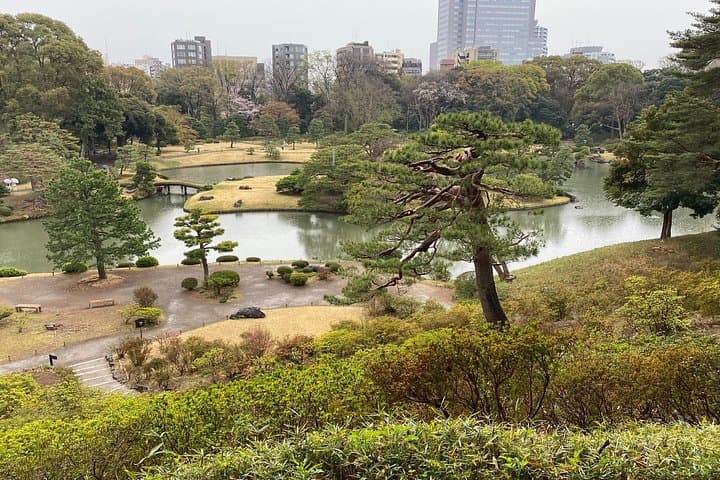
Sugamo’s identity grew in the 20th century as Tokyo’s neighborhood for older generations, and its shops reflect that: specialty footwear, traditional confectionery, and the famous red underwear tied to local beliefs about luck and health. A short subway ride takes you to Rikugien Garden, carved during the Edo period and arranged as a strolling garden that recreates 88 scenes from classical waka poetry. Paths wind around ponds that nudge you forward, hillocks that frame distant pines, and a tea house where time politely pauses for a bowl of matcha.
Practically: expect about 2–3 hours on a guided stroll that mixes flat urban pavement and compact gravel in the garden. The tour includes three snack tastings at selected shops and minimal walking difficulty, but bring comfortable shoes and small change for incidental purchases. Mornings are quieter at Rikugien; weekends fill Sugamo with locals. Respect temple etiquette—remove hats, speak softly, and follow any photography rules in the tea house. For travelers seeking a compact cultural walk with a green finish, this route combines food, faith, and Edo‑era landscape design in easy, close quarters.
The guided experience runs about 2–3 hours with mostly flat walking on a 780‑meter shopping street plus leisurely paths through Rikugien Garden.
Admission is not typically included in standard walk‑throughs—confirm with your booking; many tours provide time to enter but not the ticket fee.
Yes; Sugamo is known for traditional snacks and the tour often includes three sample items at selected shops—additional purchases are possible.
The route is rated easy but includes some compact gravel in the garden and several short steps; check accessibility specifics with the operator for wheelchair needs.
Wise Guides / Wise-Infinity inc. operates guided outdoor trips and adventures with an emphasis on safety, stewardship, and memorable experiences.

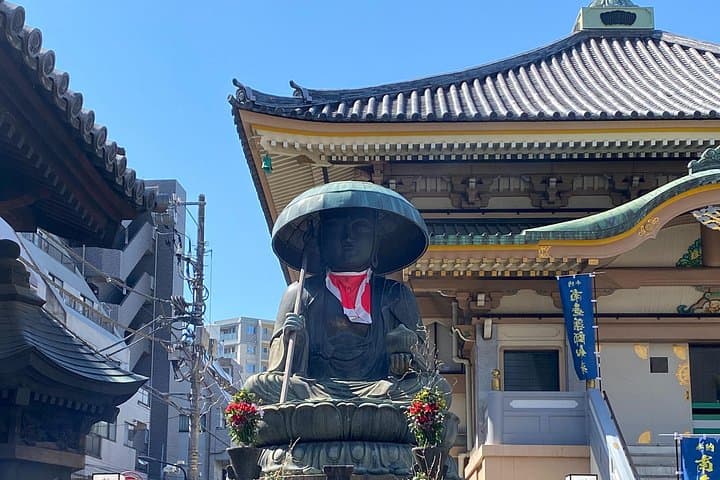
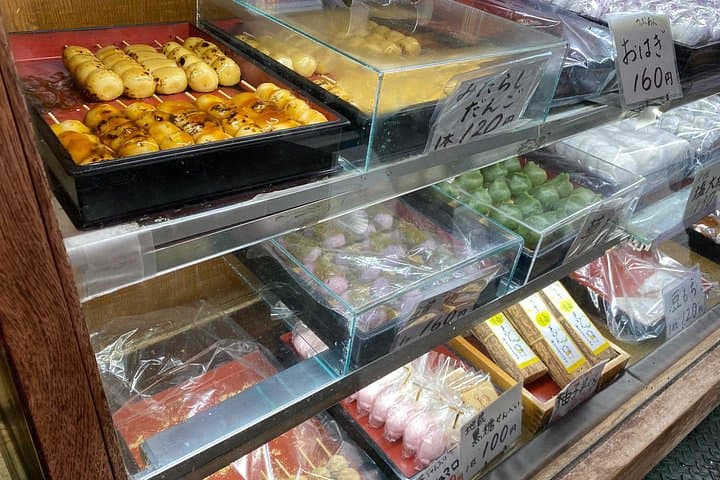
A stiff city breeze carries the smell of grilled mochi and roasted tea as you step onto Sugamo Jizo-dōri — a lively 780‑meter shopping street where shopkeepers call out to regulars and bright red goods punctuate the storefronts. The stone steps toward Togenuki Jizo Kouganji feel matter-of-fact; worshippers offer simple prayers and the temple’s wash basin invites you to touch the faithful’s ritual for relief.
A stiff city breeze carries the smell of grilled mochi and roasted tea as you step onto Sugamo Jizo-dōri — a lively 780‑meter shopping street where shopkeepers call out to regulars and bright red goods punctuate the storefronts. The stone steps toward Togenuki Jizo Kouganji feel matter-of-fact; worshippers offer simple prayers and the temple’s wash basin invites you to touch the faithful’s ritual for relief.
Sugamo’s identity grew in the 20th century as Tokyo’s neighborhood for older generations, and its shops reflect that: specialty footwear, traditional confectionery, and the famous red underwear tied to local beliefs about luck and health. A short subway ride takes you to Rikugien Garden, carved during the Edo period and arranged as a strolling garden that recreates 88 scenes from classical waka poetry. Paths wind around ponds that nudge you forward, hillocks that frame distant pines, and a tea house where time politely pauses for a bowl of matcha.
Practically: expect about 2–3 hours on a guided stroll that mixes flat urban pavement and compact gravel in the garden. The tour includes three snack tastings at selected shops and minimal walking difficulty, but bring comfortable shoes and small change for incidental purchases. Mornings are quieter at Rikugien; weekends fill Sugamo with locals. Respect temple etiquette—remove hats, speak softly, and follow any photography rules in the tea house. For travelers seeking a compact cultural walk with a green finish, this route combines food, faith, and Edo‑era landscape design in easy, close quarters.
