THE ADVENTURE COLLECTIVE® · Independent discovery and booking for outdoor travel

A guided hike up Sugarloaf’s Costão delivers a compact blend of slab climbing, forested steps, and sweeping harbour views, ending with a cable car descent to Morro da Urca. This 4–5 hour outing suits moderately fit participants and includes climbing equipment and a cable car ticket.
A guided hike up Sugarloaf’s Costão delivers a compact blend of slab climbing, forested steps, and sweeping harbour views, ending with a cable car descent to Morro da Urca. This 4–5 hour outing suits moderately fit participants and includes climbing equipment and a cable car ticket.
You step off the shaded Cláudio Coutinho path and the rock changes underfoot: broad granite slabs that slope toward the sky, salt air from Guanabara Bay behind you and the city of Rio spread below. The climb up Sugarloaf’s eastern face (the Costão) moves fast between concentrated effort and wide, breath-stealing views — forested gullies, rocky outcrops, and the distant curve of Niterói across the water.
Verified experiences and guided adventures in the surrounding area.
Operated by Rio World Connection · Rio de Janeiro, Rio de Janeiro
You step off the shaded Cláudio Coutinho path and the rock changes underfoot: broad granite slabs that slope toward the sky, salt air from Guanabara Bay behind you and the city of Rio spread below. The climb up Sugarloaf’s eastern face (the Costão) moves fast between concentrated effort and wide, breath-stealing views — forested gullies, rocky outcrops, and the distant curve of Niterói across the water.
Sugarloaf is a granite monolith carved by marine and wind erosion over millions of years; its cable car, first opened in 1912, turned the peak into one of Rio’s most enduring landmarks. The route blends local culture — the calm of Urca’s residential streets and seaside kiosks — with geology you can touch: expansive, weathered slabs interrupted by a short 25‑meter vertical that requires harnessed climbing. Guides provide equipment and lead the technical section, making the ascent accessible while respecting safety standards.
Expect roughly 4–5 hours for the full experience including photo stops and a relaxed descent by cable car to Morro da Urca, then a return walk to the Claudio Coutinho path. Terrain alternates smooth slab, packed dirt, and a final vegetated scramble; total elevation to the summit is about 396 meters with intermittent steep pitches. Bring 1.5 L of water, sun protection, sturdy shoes with grip, and layered clothing for wind at the top. Start early to avoid midday heat and afternoon showers in summer, and listen closely to your guide during the rope section. The payoff is direct: panoramic harbor views and the satisfaction of standing on one of Brazil’s most recognizable peaks.
Yes, if you have moderate fitness; the short technical section (25 m) is guided with harness and rope, so beginners can participate under supervision.
Yes — one cable car ticket to Morro da Urca is included for the descent portion of the tour.
The full experience takes about 4–5 hours including stops; the summit reaches roughly 396 meters so expect around 350–400 m of elevation gain from the Urca trailhead.
This tour is not recommended for pregnant travelers or those with spinal, severe mobility, or cardiovascular issues due to the scramble and short climbing section.
Rio World Connection operates guided outdoor trips and adventures with an emphasis on safety, stewardship, and memorable experiences.


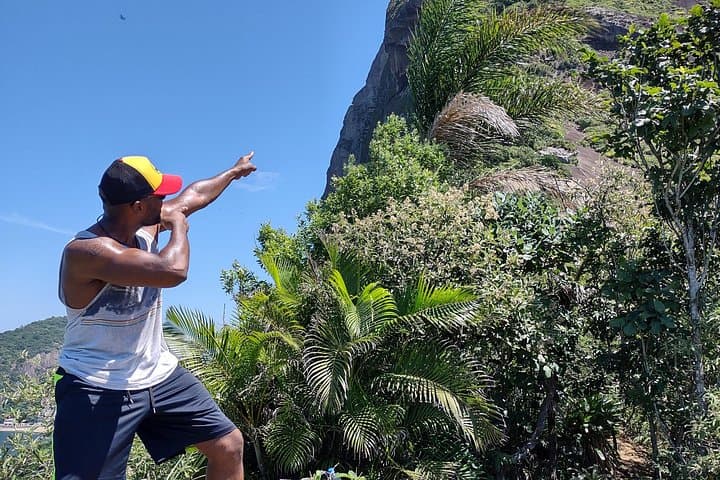
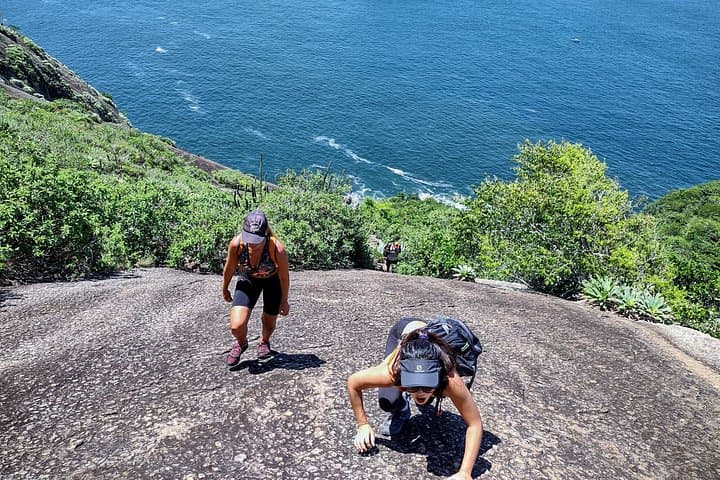
You step off the shaded Cláudio Coutinho path and the rock changes underfoot: broad granite slabs that slope toward the sky, salt air from Guanabara Bay behind you and the city of Rio spread below. The climb up Sugarloaf’s eastern face (the Costão) moves fast between concentrated effort and wide, breath-stealing views — forested gullies, rocky outcrops, and the distant curve of Niterói across the water.
You step off the shaded Cláudio Coutinho path and the rock changes underfoot: broad granite slabs that slope toward the sky, salt air from Guanabara Bay behind you and the city of Rio spread below. The climb up Sugarloaf’s eastern face (the Costão) moves fast between concentrated effort and wide, breath-stealing views — forested gullies, rocky outcrops, and the distant curve of Niterói across the water.
Sugarloaf is a granite monolith carved by marine and wind erosion over millions of years; its cable car, first opened in 1912, turned the peak into one of Rio’s most enduring landmarks. The route blends local culture — the calm of Urca’s residential streets and seaside kiosks — with geology you can touch: expansive, weathered slabs interrupted by a short 25‑meter vertical that requires harnessed climbing. Guides provide equipment and lead the technical section, making the ascent accessible while respecting safety standards.
Expect roughly 4–5 hours for the full experience including photo stops and a relaxed descent by cable car to Morro da Urca, then a return walk to the Claudio Coutinho path. Terrain alternates smooth slab, packed dirt, and a final vegetated scramble; total elevation to the summit is about 396 meters with intermittent steep pitches. Bring 1.5 L of water, sun protection, sturdy shoes with grip, and layered clothing for wind at the top. Start early to avoid midday heat and afternoon showers in summer, and listen closely to your guide during the rope section. The payoff is direct: panoramic harbor views and the satisfaction of standing on one of Brazil’s most recognizable peaks.