THE ADVENTURE COLLECTIVE® · Independent discovery and booking for outdoor travel

Float between canyon walls on the Grijalva River, watch waterfalls and crocodiles, then sample regional food and Mudejar brickwork in Chiapa de Corzo. This full-day trip blends a two-hour boat cruise with viewpoint walks and local flavor.
Float between canyon walls on the Grijalva River, watch waterfalls and crocodiles, then sample regional food and Mudejar brickwork in Chiapa de Corzo. This full-day trip blends a two-hour boat cruise with viewpoint walks and local flavor.
Morning light cuts across the Grijalva River as the minivan threads the mountain road toward Sumidero Canyon, and the world narrows to cliff and water. Passengers step onto a launch beneath sheer walls that rise up to roughly 750–800 meters, the rockface shadowing the river while waterfalls and caves reveal themselves like moving panels.
Verified experiences and guided adventures in the surrounding area.
Operated by Ecoexperiencias · Chiapa de Corzo, Chiapas
Morning light cuts across the Grijalva River as the minivan threads the mountain road toward Sumidero Canyon, and the world narrows to cliff and water. Passengers step onto a launch beneath sheer walls that rise up to roughly 750–800 meters, the rockface shadowing the river while waterfalls and caves reveal themselves like moving panels.
Geology here is blunt and visible: the Grijalva has carved steep limestone and volcanic strata over millennia, producing cliffs where swifts nest and thermal currents toy with clouds. History sits downstream—Chiapa de Corzo, one of the earliest colonial towns in the Chiapas region, shows Mudejar brickwork around its central fountain and a market rhythm rooted in indigenous and Spanish-era exchange.
On the two-hour boat portion expect close-up canyon walls, small cascades, and wildlife sightings—crocodiles basking on mud banks, howler or spider monkeys on riparian trees, and a variety of kingfishers and herons. The tour pairs that river passage with viewpoint stops accessible by short walks; those overlooks frame the canyon and the broader Grijalva valley.
Practical edge: the full-day itinerary runs about 9 hours including transport from San Cristóbal de las Casas. Wear sturdy walking shoes, bring sun protection, and carry water and small bills for market snacks. Boats are open-sided and exposed to spray; pack a light rain layer. The park is protected—do not feed wildlife and follow guide directions around riverbanks. Morning departures usually mean calmer water and better wildlife activity; mid-day can be hotter and busier.
The guided boat cruise is about two hours, focused on the main canyon stretch with stops for wildlife and scenic views.
Yes—transport by air-conditioned minivan with hotel pickup and drop-off from San Cristóbal de las Casas is included.
Basic restroom facilities are available at viewpoints and in Chiapa de Corzo, but facilities are limited along the river itself.
Yes; crocodiles are commonly observed sunning on banks, though sightings depend on season and time of day—guides will point them out.
Ecoexperiencias operates guided outdoor trips and adventures with an emphasis on safety, stewardship, and memorable experiences.
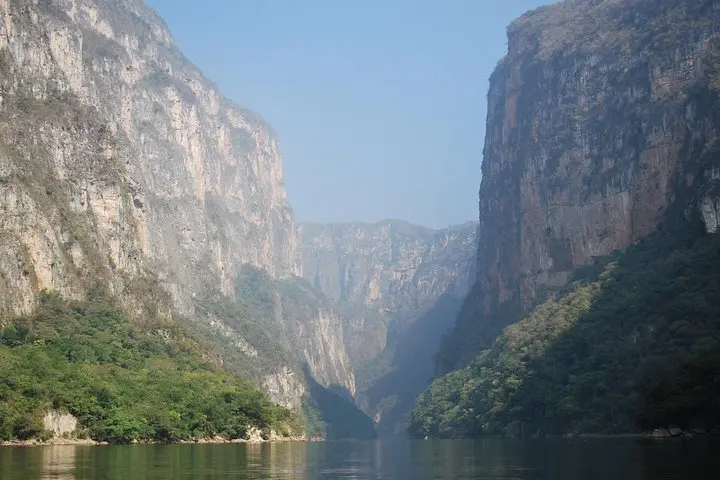
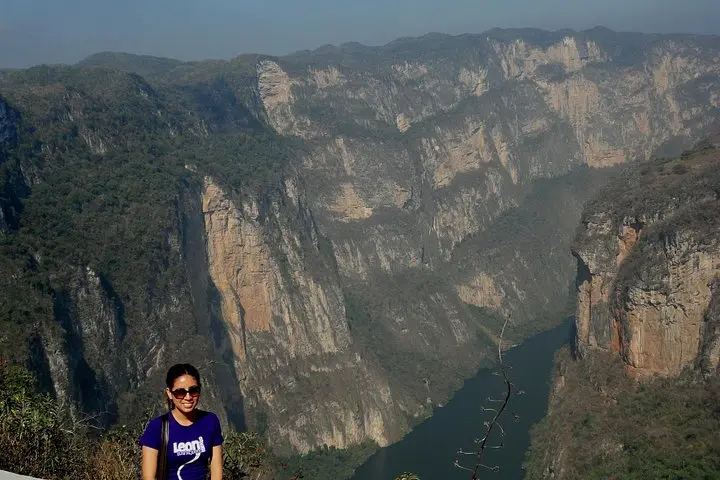
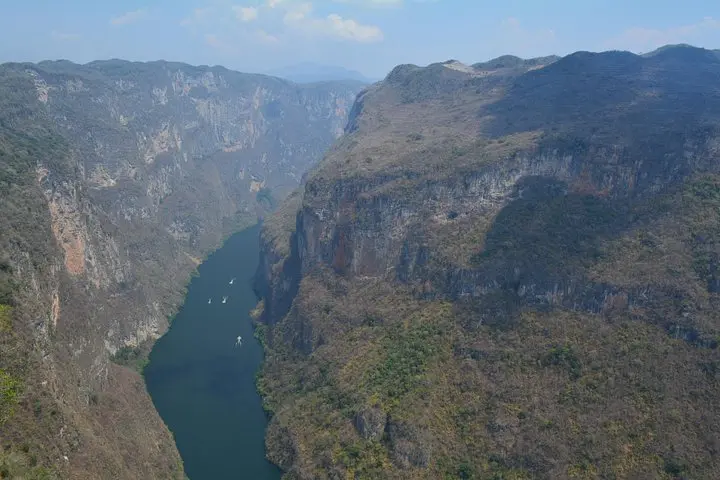
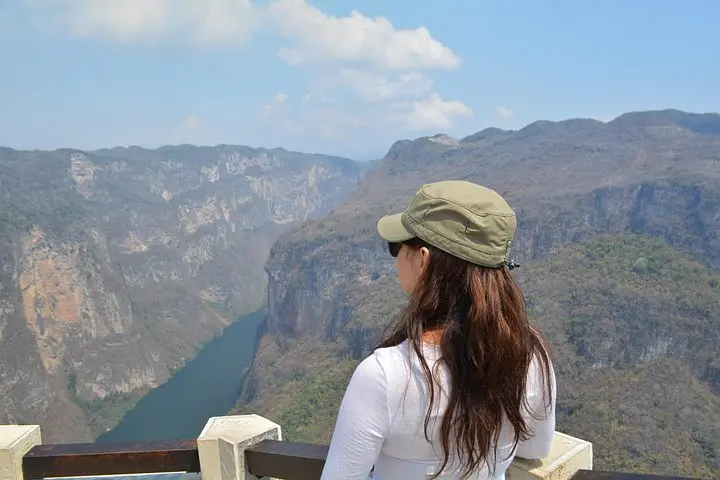
Morning light cuts across the Grijalva River as the minivan threads the mountain road toward Sumidero Canyon, and the world narrows to cliff and water. Passengers step onto a launch beneath sheer walls that rise up to roughly 750–800 meters, the rockface shadowing the river while waterfalls and caves reveal themselves like moving panels.
Morning light cuts across the Grijalva River as the minivan threads the mountain road toward Sumidero Canyon, and the world narrows to cliff and water. Passengers step onto a launch beneath sheer walls that rise up to roughly 750–800 meters, the rockface shadowing the river while waterfalls and caves reveal themselves like moving panels.
Geology here is blunt and visible: the Grijalva has carved steep limestone and volcanic strata over millennia, producing cliffs where swifts nest and thermal currents toy with clouds. History sits downstream—Chiapa de Corzo, one of the earliest colonial towns in the Chiapas region, shows Mudejar brickwork around its central fountain and a market rhythm rooted in indigenous and Spanish-era exchange.
On the two-hour boat portion expect close-up canyon walls, small cascades, and wildlife sightings—crocodiles basking on mud banks, howler or spider monkeys on riparian trees, and a variety of kingfishers and herons. The tour pairs that river passage with viewpoint stops accessible by short walks; those overlooks frame the canyon and the broader Grijalva valley.
Practical edge: the full-day itinerary runs about 9 hours including transport from San Cristóbal de las Casas. Wear sturdy walking shoes, bring sun protection, and carry water and small bills for market snacks. Boats are open-sided and exposed to spray; pack a light rain layer. The park is protected—do not feed wildlife and follow guide directions around riverbanks. Morning departures usually mean calmer water and better wildlife activity; mid-day can be hotter and busier.