THE ADVENTURE COLLECTIVE® · Independent discovery and booking for outdoor travel

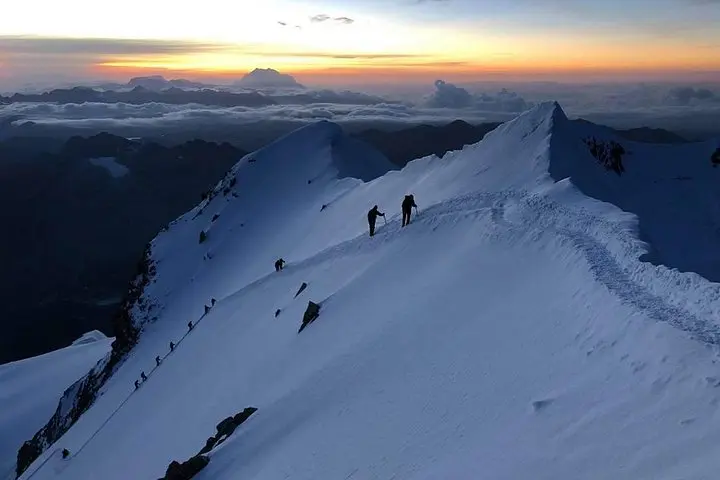
A three-day guided ascent of Huayna Potosí takes you from La Paz to 6,094 m across moraine, glacier and steep snow ramps. Expect heavy altitude gain, technical crampon-and-ice-axe travel, and a pre-dawn summit push for sunrise over the Cordillera Real.
A three-day guided ascent of Huayna Potosí takes you from La Paz to 6,094 m across moraine, glacier and steep snow ramps. Expect heavy altitude gain, technical crampon-and-ice-axe travel, and a pre-dawn summit push for sunrise over the Cordillera Real.
You climb out of La Paz at dawn and the city shrinks into the bowl of the altiplano while Huayna Potosí’s north face looms, a compact pyramid of snow and ice daring you higher.
Verified experiences and guided adventures in the surrounding area.
Operated by Mapamundi Go · La Paz, La Paz Department
You climb out of La Paz at dawn and the city shrinks into the bowl of the altiplano while Huayna Potosí’s north face looms, a compact pyramid of snow and ice daring you higher.
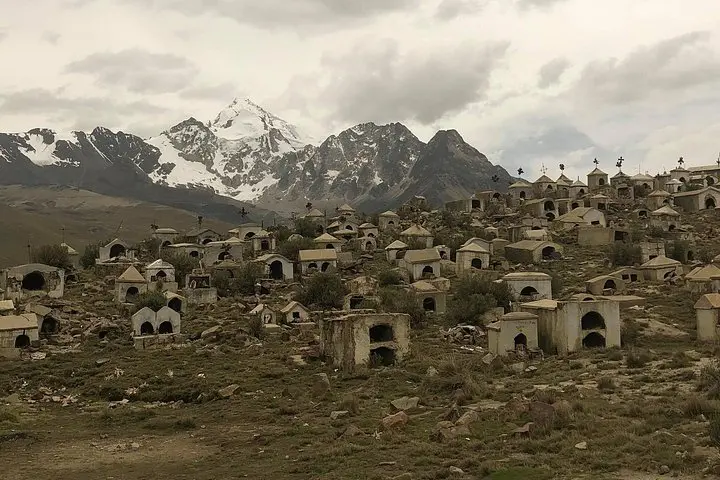
The mountain sits on the eastern edge of the Cordillera Real, formed by tectonic uplift and carved by glaciers that still cleave its flanks. Spanish and Aymara histories thread through the region: miners, muleteers and highland communities have long worked these valleys; Zongo Valley and the Casa Blanca refuge are practical waypoints built into that history.
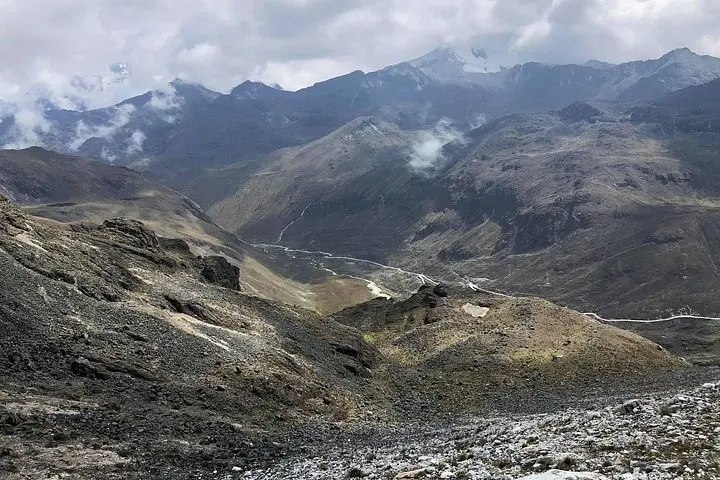
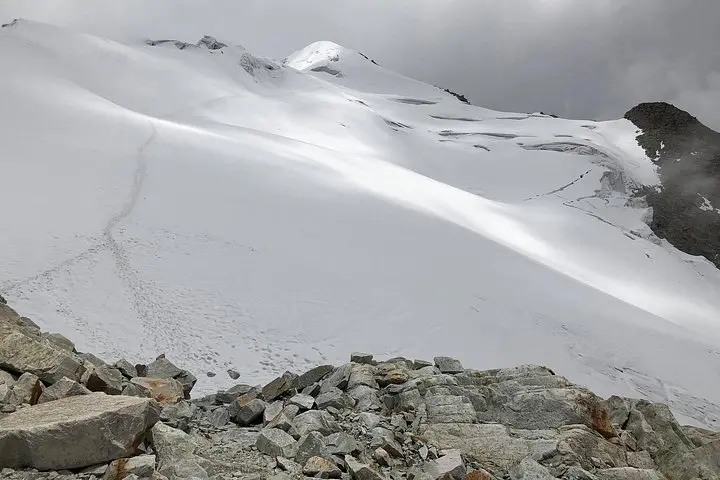
Terrain alternates rapidly — rocky moraine to glacial plateau, short steep snow ramps and crevassed ice on the summit approach. Expect day 1 to move from La Paz (≈3,690 m) to base camp (4,780 m) with acclimatization and rope/crampon practice at the Glacier Viejo. Day 2 climbs to Camp Alto (~5,270 m) over mixed scree and compact snow. Day 3 begins around 2:00 a.m., a 700–900 m final push on steep snow/ice to 6,094 m, followed by a long descent back to La Paz.
Practical guidance: travel with a certified guide, build in acclimatization days, and plan for rapid weather changes — afternoon storms are common outside the dry season. Hydrate, pace conservatively, and be prepared for technical glacier travel; crampons, ice axe and rope skills are routinely used. The route rewards persistence with sunrise that throws light across Illimani and the altiplano — a clear, cold payoff for careful preparation.
Basic experience with crampons and ice axe is strongly recommended; guides teach skills but previous practice shortens learning time and improves safety.
The dry season (June–August, and shoulder months May/September) offers the most stable weather and firmer snow; avoid the peak rainy months December–March.
Total ascent from La Paz to summit is ~2,400 m; altitude sickness is a real risk — acclimatize, hydrate, and descend at any worrying symptoms.
Typical packages include certified guides, refuge accommodation (Casa Blanca), meals, and group mountaineering equipment like ropes, crampons and helmets.
Mapamundi Go operates guided outdoor trips and adventures with an emphasis on safety, stewardship, and memorable experiences.
You climb out of La Paz at dawn and the city shrinks into the bowl of the altiplano while Huayna Potosí’s north face looms, a compact pyramid of snow and ice daring you higher.
You climb out of La Paz at dawn and the city shrinks into the bowl of the altiplano while Huayna Potosí’s north face looms, a compact pyramid of snow and ice daring you higher.
The mountain sits on the eastern edge of the Cordillera Real, formed by tectonic uplift and carved by glaciers that still cleave its flanks. Spanish and Aymara histories thread through the region: miners, muleteers and highland communities have long worked these valleys; Zongo Valley and the Casa Blanca refuge are practical waypoints built into that history.
Terrain alternates rapidly — rocky moraine to glacial plateau, short steep snow ramps and crevassed ice on the summit approach. Expect day 1 to move from La Paz (≈3,690 m) to base camp (4,780 m) with acclimatization and rope/crampon practice at the Glacier Viejo. Day 2 climbs to Camp Alto (~5,270 m) over mixed scree and compact snow. Day 3 begins around 2:00 a.m., a 700–900 m final push on steep snow/ice to 6,094 m, followed by a long descent back to La Paz.
Practical guidance: travel with a certified guide, build in acclimatization days, and plan for rapid weather changes — afternoon storms are common outside the dry season. Hydrate, pace conservatively, and be prepared for technical glacier travel; crampons, ice axe and rope skills are routinely used. The route rewards persistence with sunrise that throws light across Illimani and the altiplano — a clear, cold payoff for careful preparation.