THE ADVENTURE COLLECTIVE® · Independent discovery and booking for outdoor travel

A four-day, technical ascent of Illimani from La Paz: approach to base camp, glacier high camp at 5,550 m and a pre-dawn summit push to 6,442 m. Ideal for experienced, well-acclimatized mountaineers ready for sustained altitude, steep ice and alpine exposure.
A four-day, technical ascent of Illimani from La Paz: approach to base camp, glacier high camp at 5,550 m and a pre-dawn summit push to 6,442 m. Ideal for experienced, well-acclimatized mountaineers ready for sustained altitude, steep ice and alpine exposure.
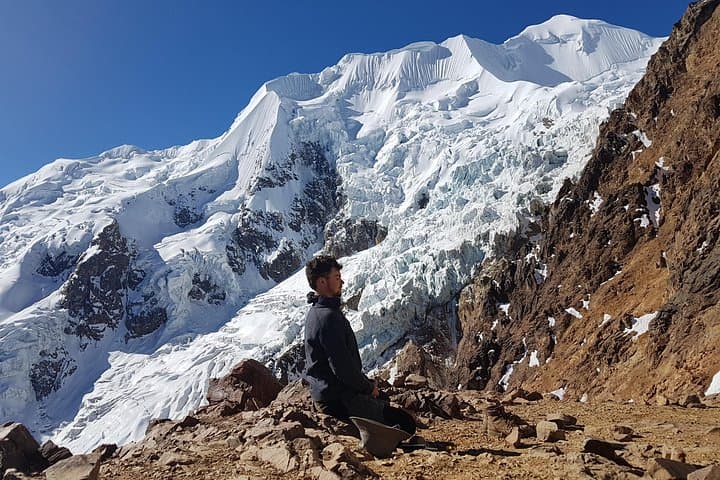
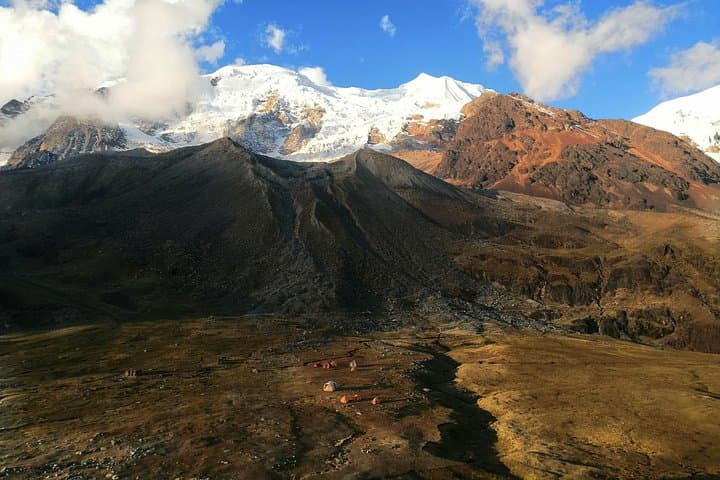
Night in La Paz exits through the window and the silhouette of Illimani grows until it fills the windshield — a hulking, glaciated ridge that seems to dare you to climb. The road climbs for three hours to Pinaya (3,800 m) before donkeys shoulder packs and your boots find the first step toward base camp at 4,600 m. Wind and stone become constant companions as the route tightens into moraine, then glacier, each step higher thinning the air and sharpening concentration.
Verified experiences and guided adventures in the surrounding area.
Operated by Bolivian Mountaineering · La Paz, La Paz Department
Night in La Paz exits through the window and the silhouette of Illimani grows until it fills the windshield — a hulking, glaciated ridge that seems to dare you to climb. The road climbs for three hours to Pinaya (3,800 m) before donkeys shoulder packs and your boots find the first step toward base camp at 4,600 m. Wind and stone become constant companions as the route tightens into moraine, then glacier, each step higher thinning the air and sharpening concentration.
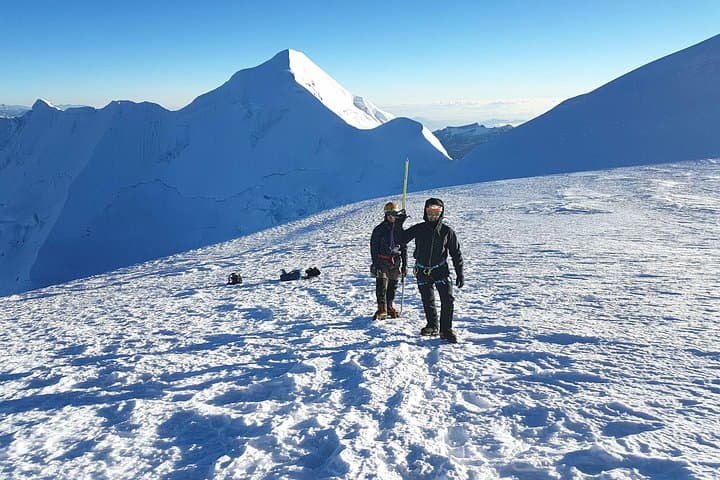
Geology and culture are visible on the approach: Illimani’s four summits are the eroded remnants of ancient uplift in the Cordillera Real; local Aymara communities have long regarded the mountain as a powerful presence on the skyline. Glacial ice and steep ridgelines define much of the ascent — expect moraines, rocky ridges and glacier travel with slopes up to 50° on the final push to the 6,442 m southern summit.
Practical guidance matters here. The itinerary moves over four days: approach to base camp (3 hours), ascent to Nido de Cóndores high camp (5 hours to 5,550 m), a pre-dawn summit bid starting ~1:00 AM with a 6–8 hour roundtrip to the summit and return, then descent back to Pinaya. Guides provide ropes, helmets, ice axes, crampons and porters/donkeys; national park permits and basic camp lodging are included.
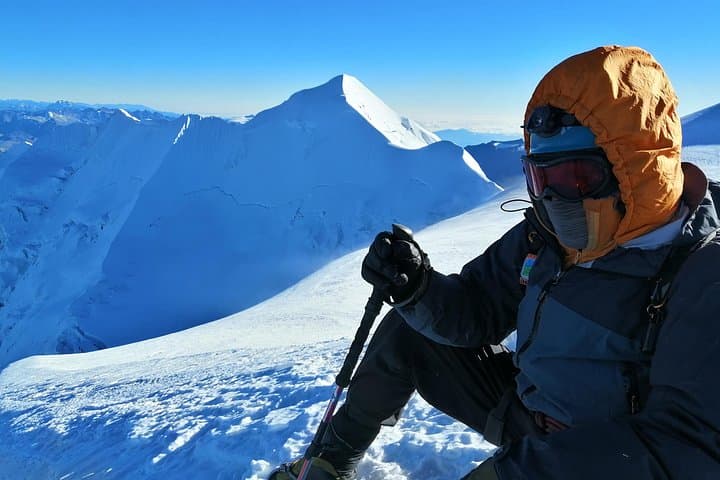
Expect strong sun by day, single-digit to sub-zero nights, and rapid weather shifts — plan for layered insulation, rigorous acclimatization and glacier skills (ice axe, crampon, ropework). This is a technical high-altitude climb: fitness, prior mountaineering experience and altitude resilience are non-negotiable.
Yes — this route involves steep glacier travel, crevasse exposure and ropework; previous ascents and technical training are required.
Very hard: the summit reaches 6,442 m. Proper acclimatization, slow ascent profiles and awareness of symptoms are essential.
Private transport, camping equipment, guide services (Spanish/English), porters/donkeys, some mountain equipment (helmet, ice axe, harness, ropes, boots), food and national park tickets are included per operator notes.
The dry season (May–September) offers the most stable conditions and is the preferred window for technical ascents.
Bolivian Mountaineering operates guided outdoor trips and adventures with an emphasis on safety, stewardship, and memorable experiences.
Night in La Paz exits through the window and the silhouette of Illimani grows until it fills the windshield — a hulking, glaciated ridge that seems to dare you to climb. The road climbs for three hours to Pinaya (3,800 m) before donkeys shoulder packs and your boots find the first step toward base camp at 4,600 m. Wind and stone become constant companions as the route tightens into moraine, then glacier, each step higher thinning the air and sharpening concentration.
Night in La Paz exits through the window and the silhouette of Illimani grows until it fills the windshield — a hulking, glaciated ridge that seems to dare you to climb. The road climbs for three hours to Pinaya (3,800 m) before donkeys shoulder packs and your boots find the first step toward base camp at 4,600 m. Wind and stone become constant companions as the route tightens into moraine, then glacier, each step higher thinning the air and sharpening concentration.
Geology and culture are visible on the approach: Illimani’s four summits are the eroded remnants of ancient uplift in the Cordillera Real; local Aymara communities have long regarded the mountain as a powerful presence on the skyline. Glacial ice and steep ridgelines define much of the ascent — expect moraines, rocky ridges and glacier travel with slopes up to 50° on the final push to the 6,442 m southern summit.
Practical guidance matters here. The itinerary moves over four days: approach to base camp (3 hours), ascent to Nido de Cóndores high camp (5 hours to 5,550 m), a pre-dawn summit bid starting ~1:00 AM with a 6–8 hour roundtrip to the summit and return, then descent back to Pinaya. Guides provide ropes, helmets, ice axes, crampons and porters/donkeys; national park permits and basic camp lodging are included.
Expect strong sun by day, single-digit to sub-zero nights, and rapid weather shifts — plan for layered insulation, rigorous acclimatization and glacier skills (ice axe, crampon, ropework). This is a technical high-altitude climb: fitness, prior mountaineering experience and altitude resilience are non-negotiable.