THE ADVENTURE COLLECTIVE® · Independent discovery and booking for outdoor travel

Trek the Lemosho Route to Uhuru Peak over seven days, moving from rainforest to glacier while local guides handle logistics. This route favors acclimatization and scenery—plan for long days, cold nights, and altitude management.
Trek the Lemosho Route to Uhuru Peak over seven days, moving from rainforest to glacier while local guides handle logistics. This route favors acclimatization and scenery—plan for long days, cold nights, and altitude management.
Morning light hits the rainforest rim and the summit of Kibo sits pale and distant, a chalked cone above a band of cloud. On the Lemosho Route you start in the green, move through heather and moorland, cross an arid saddle at Lava Tower, and push for the icy crown at Uhuru Peak. The trail shifts atmosphere as rapidly as altitude: birds and colobus monkeys in the lower woods, wind-scoured ridgelines on the high plateau, and a quiet, thin air that tests each breath.
Verified experiences and guided adventures in the surrounding area.
Operated by Moana Tanzania · Moshi, Kilimanjaro Region
Morning light hits the rainforest rim and the summit of Kibo sits pale and distant, a chalked cone above a band of cloud. On the Lemosho Route you start in the green, move through heather and moorland, cross an arid saddle at Lava Tower, and push for the icy crown at Uhuru Peak. The trail shifts atmosphere as rapidly as altitude: birds and colobus monkeys in the lower woods, wind-scoured ridgelines on the high plateau, and a quiet, thin air that tests each breath.
Kilimanjaro is a free-standing stratovolcano capped by three volcanic cones; European climbers first recorded ascent in 1889, but the mountain remains central to Chagga culture around Moshi. Geology shows a youthful volcanic core threaded with glaciers that have retreated markedly in recent decades. The Lemosho Route is prized for gradual acclimatization and varied scenery—forest, moor, alpine desert, and glacier—over seven days with local guides, cooks and porters supporting your summit push.
Practically: expect 6–8 hours on several trekking days, one long summit night starting around midnight, and temperatures ranging from warm in the forest to well below freezing on the summit. Hydration, layered clothing, sun protection, and a steady, slow pace are essential; altitude management is the single biggest factor for success. Book through a reputable operator, budget for tipping porters and guides, and plan rest days around your arrival in Moshi to recover before the trek.
No technical climbing is required for the standard Lemosho Route; trekking poles and crampons (season-dependent) can be useful on icy sections.
The clearest windows are late June–October (long dry season) and January–February (short dry period); heavy rains in March–May reduce summit success rates.
Altitude is the primary risk—proper acclimatization, a slow itinerary like Lemosho, hydration, and communication with guides about symptoms are essential; operators may carry oxygen.
Tipping is customary—budget roughly 10–20% of the trek cost distributed among guides, cooks and porters, adjusted for group size and service quality.
Moana Tanzania operates guided outdoor trips and adventures with an emphasis on safety, stewardship, and memorable experiences.
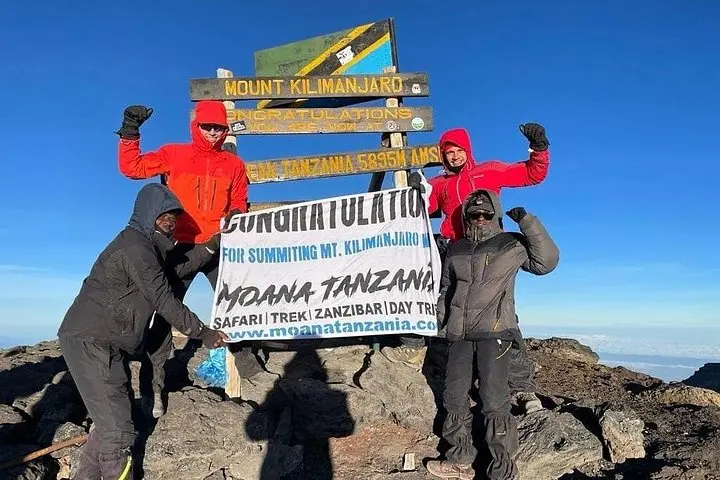
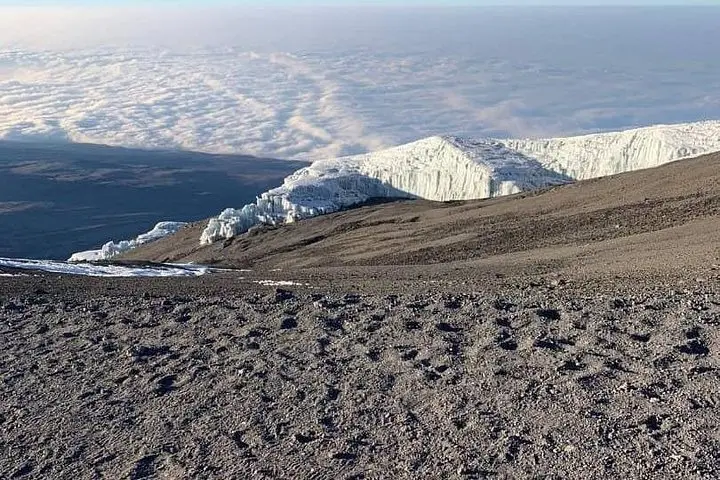
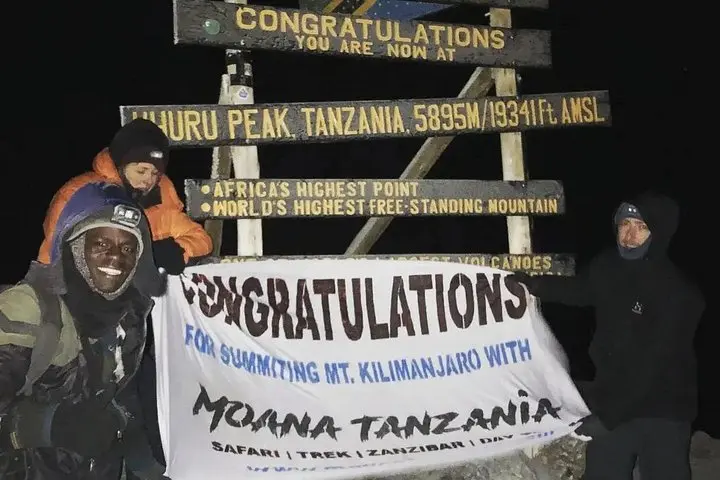
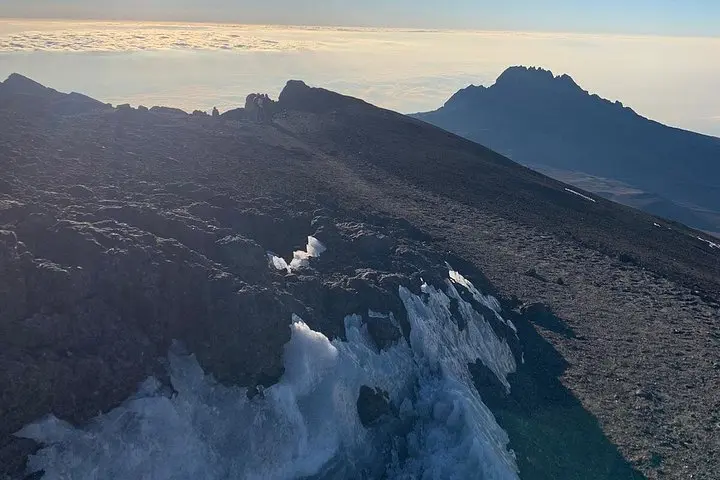
Morning light hits the rainforest rim and the summit of Kibo sits pale and distant, a chalked cone above a band of cloud. On the Lemosho Route you start in the green, move through heather and moorland, cross an arid saddle at Lava Tower, and push for the icy crown at Uhuru Peak. The trail shifts atmosphere as rapidly as altitude: birds and colobus monkeys in the lower woods, wind-scoured ridgelines on the high plateau, and a quiet, thin air that tests each breath.
Morning light hits the rainforest rim and the summit of Kibo sits pale and distant, a chalked cone above a band of cloud. On the Lemosho Route you start in the green, move through heather and moorland, cross an arid saddle at Lava Tower, and push for the icy crown at Uhuru Peak. The trail shifts atmosphere as rapidly as altitude: birds and colobus monkeys in the lower woods, wind-scoured ridgelines on the high plateau, and a quiet, thin air that tests each breath.
Kilimanjaro is a free-standing stratovolcano capped by three volcanic cones; European climbers first recorded ascent in 1889, but the mountain remains central to Chagga culture around Moshi. Geology shows a youthful volcanic core threaded with glaciers that have retreated markedly in recent decades. The Lemosho Route is prized for gradual acclimatization and varied scenery—forest, moor, alpine desert, and glacier—over seven days with local guides, cooks and porters supporting your summit push.
Practically: expect 6–8 hours on several trekking days, one long summit night starting around midnight, and temperatures ranging from warm in the forest to well below freezing on the summit. Hydration, layered clothing, sun protection, and a steady, slow pace are essential; altitude management is the single biggest factor for success. Book through a reputable operator, budget for tipping porters and guides, and plan rest days around your arrival in Moshi to recover before the trek.