THE ADVENTURE COLLECTIVE® · Independent discovery and booking for outdoor travel

Seven days on the Machame Route deliver a carefully paced ascent to Uhuru Peak — steep ridgelines, moorland vistas and a sunrise on the crater rim. This private trek from Moshi pairs experienced guides and full crew support with an itinerary focused on acclimatization and summit success.
Seven days on the Machame Route deliver a carefully paced ascent to Uhuru Peak — steep ridgelines, moorland vistas and a sunrise on the crater rim. This private trek from Moshi pairs experienced guides and full crew support with an itinerary focused on acclimatization and summit success.
At first light the rainforest breathes steam onto your sleeves and the trail slides up through a ceiling of moss and strangler figs. On day two the jungle loosens its grip, heather and lobelia replace the ferns, and the mountain opens like a page — each camp a paragraph in a slow, breath-checked narrative toward Africa’s roof. The Machame Route takes you on that arc: steep, scenic, and deliberately paced to coax your body into high altitude.
Verified experiences and guided adventures in the surrounding area.
Operated by Kilele Climb Tours Co Ltd · Moshi, Kilimanjaro Region
At first light the rainforest breathes steam onto your sleeves and the trail slides up through a ceiling of moss and strangler figs. On day two the jungle loosens its grip, heather and lobelia replace the ferns, and the mountain opens like a page — each camp a paragraph in a slow, breath-checked narrative toward Africa’s roof. The Machame Route takes you on that arc: steep, scenic, and deliberately paced to coax your body into high altitude.
Machame was popularized because it balances drama with solid acclimatization. Geologically Kilimanjaro is a three-coned stratovolcano — Kibo, Mawenzi and Shira — built from successive eruptions and carved by glaciers that once draped the summit. The Machame path sweeps west then south, crossing montane forest into moorland and finally the alpine desert below the crater rim. Culturally the climb threads you through Chagga country; you’ll leave from Moshi, a compact town of coffee farms and hospitality that has long supplied guides and porters for the mountain.
Your crew is central to the trip: porters set tents and cook hearty meals, guides read the mountain’s moods and manage pacing, and kitchen teams keep hot drinks flowing at camp. The itinerary is intentionally conservative — lava tower acclimatization, a long traverse across the Shira Plateau, then the long push from Barafu to Uhuru Peak at dawn. Success is as much about respecting incremental gains in elevation as it is about physical strength.
Practical edge: expect a mix of terrain — slushy scree, dusty scree slopes, and possible snow or ice near the rim. Nights drop sharply; sleeping bags and insulated layers are essential. Hydration and slow, steady steps are your best defenses against altitude. Guides carry pulse oximeters and oxygen for emergencies; wilderness first responders are included with the climb.
The payoff is precise: a sunrise on Stella Point, the crater rim unfurling and glaciers glinting in a thin air that feels both ancient and immediate. Descending through the mossy forest to Mweka is a softer conclusion — damp, green, and generous with birdsong.
If you’re planning this climb, give yourself arrival time in Moshi for a pre-trek briefing, budget for porter and guide tips, and train with long uphill hikes and altitude awareness. The Machame Route demands stamina and patience, but it rewards you with a full experience of Kilimanjaro’s ecological zones and the clear, unforgettable summit of Uhuru Peak.
Machame is considered moderately difficult due to steep sections and variable terrain, but it offers one of the best acclimatization profiles and scenic variety.
No technical climbing skills are required, but prior multi-day trekking experience and high cardiovascular fitness improve your chances of summit success.
Dry seasons — late June to October and late December to mid-March — offer more stable weather and clearer summit windows.
Guides monitor symptoms, use pulse oximeters, and follow a conservative itinerary; acclimatization days and hydration are primary prevention, and emergency oxygen is available.
Yes — the tour includes camping equipment, meals (breakfasts, lunches and dinners), dining tents and sleeping pads; confirm sleeping bag arrangements before travel.
Tipping is customary; budget roughly 10–15% of tour cost distributed among guides, assistant guides and porters according to team size and service.
Kilele Climb Tours Co Ltd operates guided outdoor trips and adventures with an emphasis on safety, stewardship, and memorable experiences.

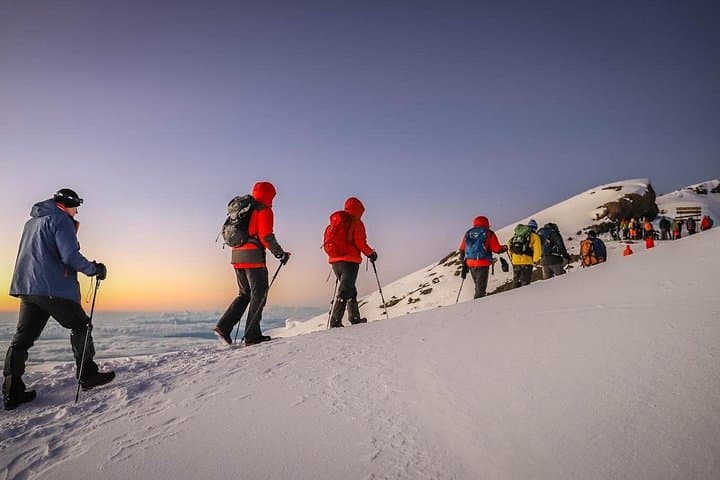


At first light the rainforest breathes steam onto your sleeves and the trail slides up through a ceiling of moss and strangler figs. On day two the jungle loosens its grip, heather and lobelia replace the ferns, and the mountain opens like a page — each camp a paragraph in a slow, breath-checked narrative toward Africa’s roof. The Machame Route takes you on that arc: steep, scenic, and deliberately paced to coax your body into high altitude.
At first light the rainforest breathes steam onto your sleeves and the trail slides up through a ceiling of moss and strangler figs. On day two the jungle loosens its grip, heather and lobelia replace the ferns, and the mountain opens like a page — each camp a paragraph in a slow, breath-checked narrative toward Africa’s roof. The Machame Route takes you on that arc: steep, scenic, and deliberately paced to coax your body into high altitude.
Machame was popularized because it balances drama with solid acclimatization. Geologically Kilimanjaro is a three-coned stratovolcano — Kibo, Mawenzi and Shira — built from successive eruptions and carved by glaciers that once draped the summit. The Machame path sweeps west then south, crossing montane forest into moorland and finally the alpine desert below the crater rim. Culturally the climb threads you through Chagga country; you’ll leave from Moshi, a compact town of coffee farms and hospitality that has long supplied guides and porters for the mountain.
Your crew is central to the trip: porters set tents and cook hearty meals, guides read the mountain’s moods and manage pacing, and kitchen teams keep hot drinks flowing at camp. The itinerary is intentionally conservative — lava tower acclimatization, a long traverse across the Shira Plateau, then the long push from Barafu to Uhuru Peak at dawn. Success is as much about respecting incremental gains in elevation as it is about physical strength.
Practical edge: expect a mix of terrain — slushy scree, dusty scree slopes, and possible snow or ice near the rim. Nights drop sharply; sleeping bags and insulated layers are essential. Hydration and slow, steady steps are your best defenses against altitude. Guides carry pulse oximeters and oxygen for emergencies; wilderness first responders are included with the climb.
The payoff is precise: a sunrise on Stella Point, the crater rim unfurling and glaciers glinting in a thin air that feels both ancient and immediate. Descending through the mossy forest to Mweka is a softer conclusion — damp, green, and generous with birdsong.
If you’re planning this climb, give yourself arrival time in Moshi for a pre-trek briefing, budget for porter and guide tips, and train with long uphill hikes and altitude awareness. The Machame Route demands stamina and patience, but it rewards you with a full experience of Kilimanjaro’s ecological zones and the clear, unforgettable summit of Uhuru Peak.