THE ADVENTURE COLLECTIVE® · Independent discovery and booking for outdoor travel

Climb to the rim of Lascar—Atacama’s active volcano—and watch sunrise light the lagoon and crater in a breathless sweep. This full‑day, high‑altitude hike demands acclimatization but rewards with stark volcanic panoramas and a dramatic dawn over Laguna Lejía.
Climb to the rim of Lascar—Atacama’s active volcano—and watch sunrise light the lagoon and crater in a breathless sweep. This full‑day, high‑altitude hike demands acclimatization but rewards with stark volcanic panoramas and a dramatic dawn over Laguna Lejía.
Before dawn the Atacama sky hardens into a sheet of stars and the silhouette of Lascar rises like a dark promise on the horizon. Small groups depart San Pedro de Atacama in the black, crossing salt flats until the road narrows and the desert wind begins to push. By the time the party reaches Laguna Lejía, the horizon has already brightened; the crater’s rim takes on a sudden, raw clarity as the first light hits volcanic rock and fumarole steam.
Verified experiences and guided adventures in the surrounding area.
Operated by Jaes Adventure Chile · San Pedro de Atacama, Antofagasta
Before dawn the Atacama sky hardens into a sheet of stars and the silhouette of Lascar rises like a dark promise on the horizon. Small groups depart San Pedro de Atacama in the black, crossing salt flats until the road narrows and the desert wind begins to push. By the time the party reaches Laguna Lejía, the horizon has already brightened; the crater’s rim takes on a sudden, raw clarity as the first light hits volcanic rock and fumarole steam.
Lascar is the only active volcano in the Atacama range; its frequent fumarolic emissions and relatively recent eruptions make it a compact lesson in regional volcanology. The mountain is a stratovolcano carved by lava domes, tephra and high-desert erosion. Indigenous Atacameño communities historically traversed the high plateaus here, and modern guides often share local place names and lore near the lagoon.
The guided route typically begins around 4,800 m.a.s.l., climbing roughly 700–800 m to near 5,600 m in about 3.5 hours, with a faster 2-hour descent. The terrain is loose volcanic scree, steep switchbacks and occasional hard-packed patches; it’s non-technical but demanding because of altitude and exposure.
Practical notes: acclimatize in San Pedro for at least 24–48 hours, bring layered insulation, carry 2–3 liters of water, and use trekking poles to protect knees on descent. The tour includes breakfast, operates in small groups (max 5), and is not recommended for pregnant travelers or those with significant cardiovascular or spinal conditions. Expect long transit, thin air, stark vistas—and a sunrise that makes the climb worth the effort.
The guided climb typically starts near 4,800 m and ascends to roughly 5,600 m, with the uphill section taking about 3.5 hours and the descent about 2 hours.
No technical gear is needed for the standard route—it's non‑technical hiking on scree—but good boots, poles and high‑altitude experience are essential.
Participants must be reasonably fit and acclimatized; the operator does not recommend the trip for pregnant travelers or those with significant cardiovascular or spinal conditions.
Most departures are from San Pedro de Atacama with long road transfers; expect a 10–12 hour day including transit, ascent, descent and stops.
Jaes Adventure Chile operates guided outdoor trips and adventures with an emphasis on safety, stewardship, and memorable experiences.
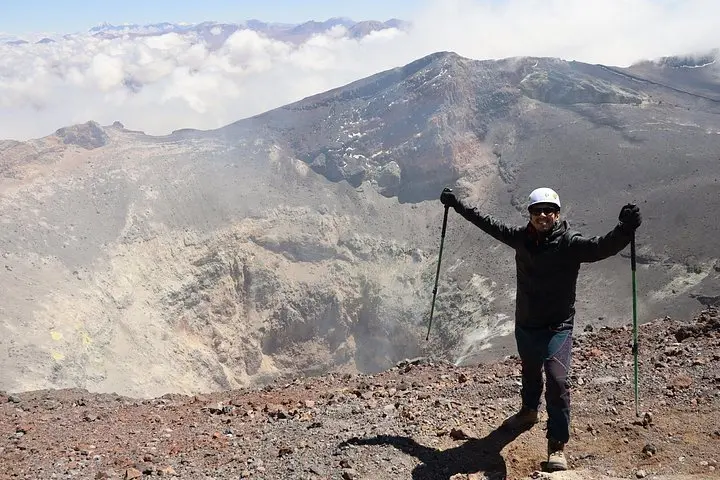
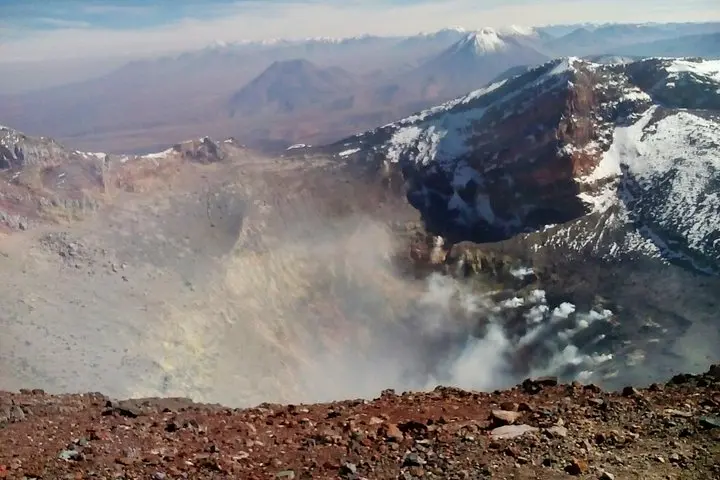
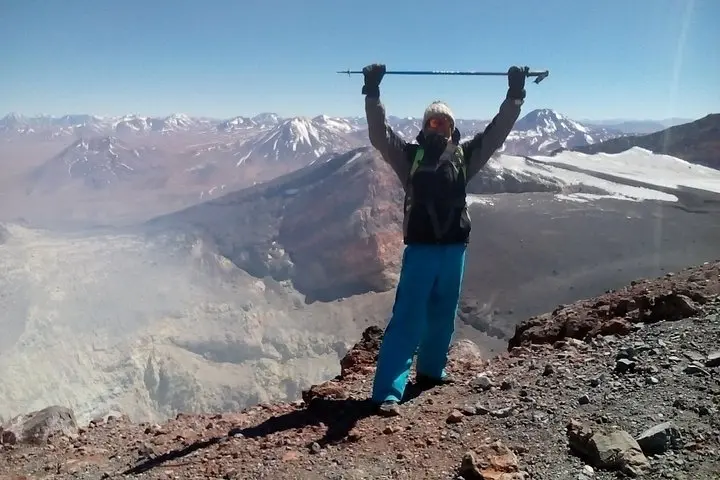
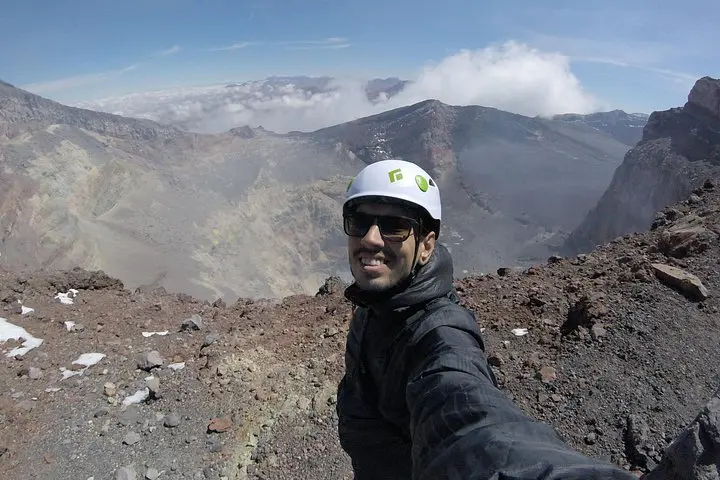
Before dawn the Atacama sky hardens into a sheet of stars and the silhouette of Lascar rises like a dark promise on the horizon. Small groups depart San Pedro de Atacama in the black, crossing salt flats until the road narrows and the desert wind begins to push. By the time the party reaches Laguna Lejía, the horizon has already brightened; the crater’s rim takes on a sudden, raw clarity as the first light hits volcanic rock and fumarole steam.
Before dawn the Atacama sky hardens into a sheet of stars and the silhouette of Lascar rises like a dark promise on the horizon. Small groups depart San Pedro de Atacama in the black, crossing salt flats until the road narrows and the desert wind begins to push. By the time the party reaches Laguna Lejía, the horizon has already brightened; the crater’s rim takes on a sudden, raw clarity as the first light hits volcanic rock and fumarole steam.
Lascar is the only active volcano in the Atacama range; its frequent fumarolic emissions and relatively recent eruptions make it a compact lesson in regional volcanology. The mountain is a stratovolcano carved by lava domes, tephra and high-desert erosion. Indigenous Atacameño communities historically traversed the high plateaus here, and modern guides often share local place names and lore near the lagoon.
The guided route typically begins around 4,800 m.a.s.l., climbing roughly 700–800 m to near 5,600 m in about 3.5 hours, with a faster 2-hour descent. The terrain is loose volcanic scree, steep switchbacks and occasional hard-packed patches; it’s non-technical but demanding because of altitude and exposure.
Practical notes: acclimatize in San Pedro for at least 24–48 hours, bring layered insulation, carry 2–3 liters of water, and use trekking poles to protect knees on descent. The tour includes breakfast, operates in small groups (max 5), and is not recommended for pregnant travelers or those with significant cardiovascular or spinal conditions. Expect long transit, thin air, stark vistas—and a sunrise that makes the climb worth the effort.