THE ADVENTURE COLLECTIVE® · Independent discovery and booking for outdoor travel

Climb Mount Longonot in a day for rim-to-rim views of Lake Naivasha and the Great Rift Valley. This accessible yet steep hike offers dramatic crater scenery and a compact dose of Kenyan volcanic landscape.
Climb Mount Longonot in a day for rim-to-rim views of Lake Naivasha and the Great Rift Valley. This accessible yet steep hike offers dramatic crater scenery and a compact dose of Kenyan volcanic landscape.
A single-track climb pushes through dry acacia and low scrub as the Rift Valley opens beneath you; the crater rim of Mount Longonot looms ahead, a raw circle of volcanic rock and wind-scoured grass. Hikers begin at the base and push steadily upward, the trail switching back across steep spurs until the caldera’s rim unfolds — a ring-road of volcanic lip with views down to Lake Naivasha and across to Hell’s Gate.
Verified experiences and guided adventures in the surrounding area.
Operated by Bush Thorns Adventures and Safaris · Naivasha, Nakuru County
A single-track climb pushes through dry acacia and low scrub as the Rift Valley opens beneath you; the crater rim of Mount Longonot looms ahead, a raw circle of volcanic rock and wind-scoured grass. Hikers begin at the base and push steadily upward, the trail switching back across steep spurs until the caldera’s rim unfolds — a ring-road of volcanic lip with views down to Lake Naivasha and across to Hell’s Gate.
Geology here reads like a recent page in the earth’s biography: Longonot is a stratovolcano formed by Rift Valley tectonics, last active in the 19th century, its inner bowl now holding a tree-filled hollow and a solitary steam vent. The Maasai named it oloonong'ot, “mountains of many spurs,” a functional description that still fits the walking experience. Local guides point out ancient lava flows and the park’s mix of grassland and acacia woodland, and the human history of grazing and small-scale farming on the escarpments.
Practically, expect steep pitches and exposed ridgelines with sustained, rhythmic climbing. The standard day covers 6–10 hours including transport; allow time for breaks and photography on the rim. Carry sun protection, at least 2–3 liters of water, and layered clothing for wind on the summit. Trails are clear but rough underfoot — trekking poles help on descents. Groups commonly depart Nairobi early morning and return by evening; permits and a park fee apply. The mountain rewards effort with sweeping Rift Valley panoramas and a compact, elemental hike that feels remote despite being a day trip from the capital.
Typical time on the mountain is 3–5 hours of hiking (6–10 hours including transport); the rim sits around 2,600–2,800 m above sea level with sustained climbs from the trailhead.
Longonot is inside a managed park and fees apply; tours commonly include guide fees and permit arrangements — verify with your operator.
It's accessible to fit beginners with moderate experience, but requires steady pacing and basic fitness due to steep, exposed sections.
Dry months (June–September and December–February) provide more stable weather and clearer vistas; avoid heavy rains when trails get slippery.
Bush Thorns Adventures and Safaris operates guided outdoor trips and adventures with an emphasis on safety, stewardship, and memorable experiences.
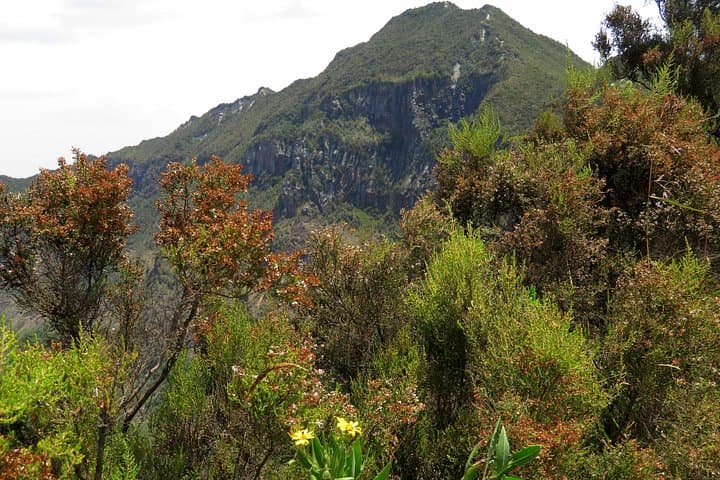

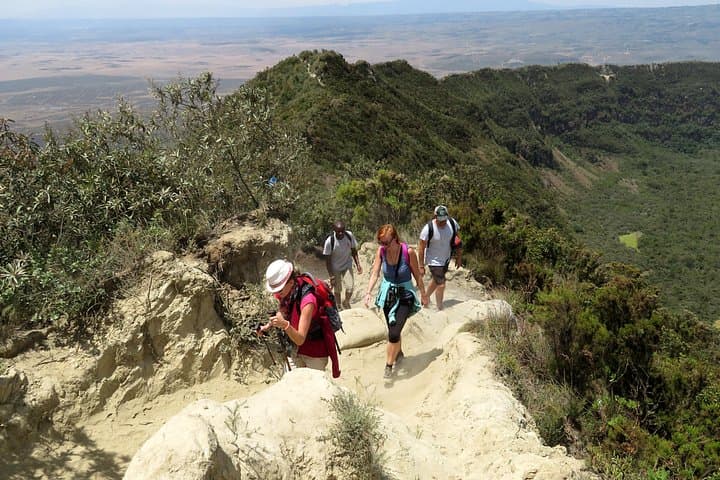

A single-track climb pushes through dry acacia and low scrub as the Rift Valley opens beneath you; the crater rim of Mount Longonot looms ahead, a raw circle of volcanic rock and wind-scoured grass. Hikers begin at the base and push steadily upward, the trail switching back across steep spurs until the caldera’s rim unfolds — a ring-road of volcanic lip with views down to Lake Naivasha and across to Hell’s Gate.
A single-track climb pushes through dry acacia and low scrub as the Rift Valley opens beneath you; the crater rim of Mount Longonot looms ahead, a raw circle of volcanic rock and wind-scoured grass. Hikers begin at the base and push steadily upward, the trail switching back across steep spurs until the caldera’s rim unfolds — a ring-road of volcanic lip with views down to Lake Naivasha and across to Hell’s Gate.
Geology here reads like a recent page in the earth’s biography: Longonot is a stratovolcano formed by Rift Valley tectonics, last active in the 19th century, its inner bowl now holding a tree-filled hollow and a solitary steam vent. The Maasai named it oloonong'ot, “mountains of many spurs,” a functional description that still fits the walking experience. Local guides point out ancient lava flows and the park’s mix of grassland and acacia woodland, and the human history of grazing and small-scale farming on the escarpments.
Practically, expect steep pitches and exposed ridgelines with sustained, rhythmic climbing. The standard day covers 6–10 hours including transport; allow time for breaks and photography on the rim. Carry sun protection, at least 2–3 liters of water, and layered clothing for wind on the summit. Trails are clear but rough underfoot — trekking poles help on descents. Groups commonly depart Nairobi early morning and return by evening; permits and a park fee apply. The mountain rewards effort with sweeping Rift Valley panoramas and a compact, elemental hike that feels remote despite being a day trip from the capital.