THE ADVENTURE COLLECTIVE® · Independent discovery and booking for outdoor travel

A compact, technical alpine trek that takes you from Arusha’s highland forests to Meru’s 4,566m crater rim in three days. Expect wildlife on day one, ridge-line walking on day two, and a pre-dawn summit scramble at sunrise.
A compact, technical alpine trek that takes you from Arusha’s highland forests to Meru’s 4,566m crater rim in three days. Expect wildlife on day one, ridge-line walking on day two, and a pre-dawn summit scramble at sunrise.
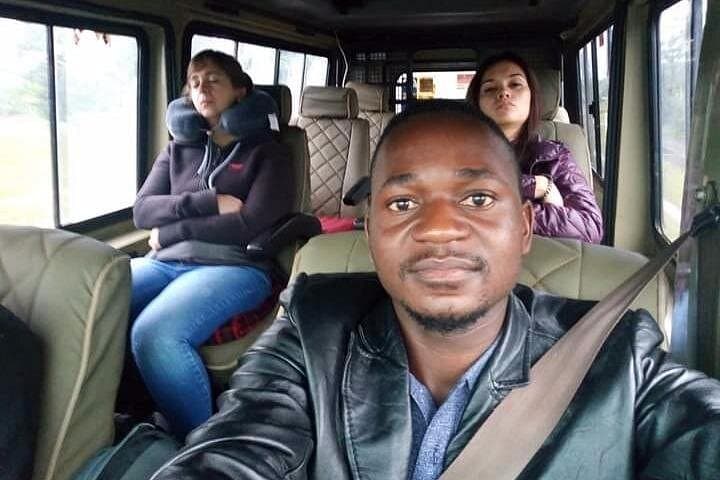
You begin before dawn in Arusha, the city lights shrinking behind the minibus as the road climbs toward Momella Gate. The trailhead opens into a highland forest that smells of damp earth and eucalyptus; ferns brush your calves and the path threads around fever trees that seem to lean in to watch. Giraffes and zebra graze in clearing edges like quiet witnesses while the trail climbs steady toward Miriakamba Hut at 2,500m.
Verified experiences and guided adventures in the surrounding area.
Operated by Rupia Adventure · Arusha, Arusha Region
You begin before dawn in Arusha, the city lights shrinking behind the minibus as the road climbs toward Momella Gate. The trailhead opens into a highland forest that smells of damp earth and eucalyptus; ferns brush your calves and the path threads around fever trees that seem to lean in to watch. Giraffes and zebra graze in clearing edges like quiet witnesses while the trail climbs steady toward Miriakamba Hut at 2,500m.
Mount Meru is an ancient stratovolcano whose flanks hold the ecological transition from savanna to montane cloud forest. Geologically younger than Kilimanjaro, Meru’s crater and ash-tray formations read like pages in a volcanic diary—steep ridges, collapsed cliffs and a final rocky crest that demands hands as much as legs. The route passes Ngare Nanyuki waterfall, Momella lakes views, and on the second day climbs the saddle with long vistas that open toward Kilimanjaro on clear mornings.
Culturally, trails are threaded with the practical systems of Tanzanian mountain guiding: TANAPA permits, an armed ranger for wildlife safety, porters who handle camp logistics, and cooks who make a camp kitchen feel like home. The huts—Miriakamba and Saddle—are Basic but warm, designed for quick recovery before a midnight summit push.
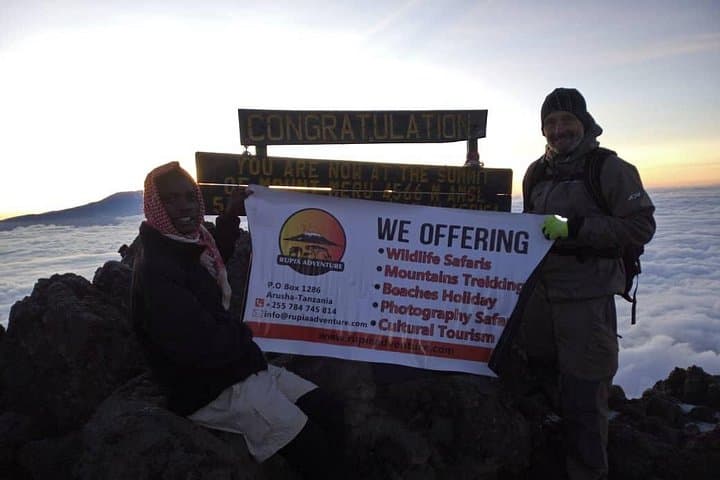
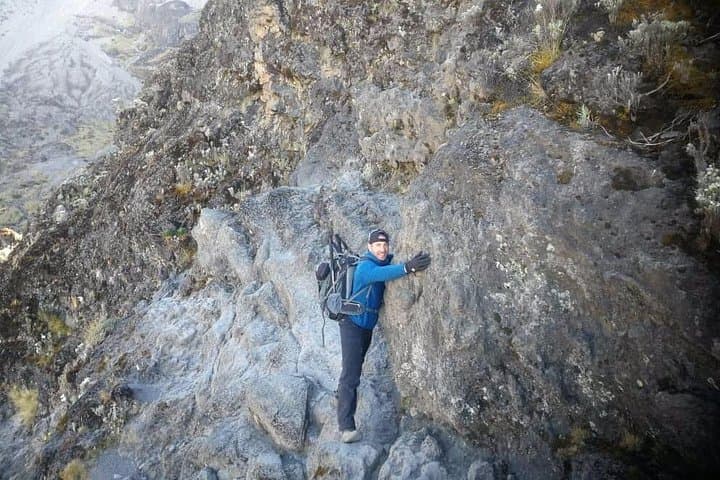
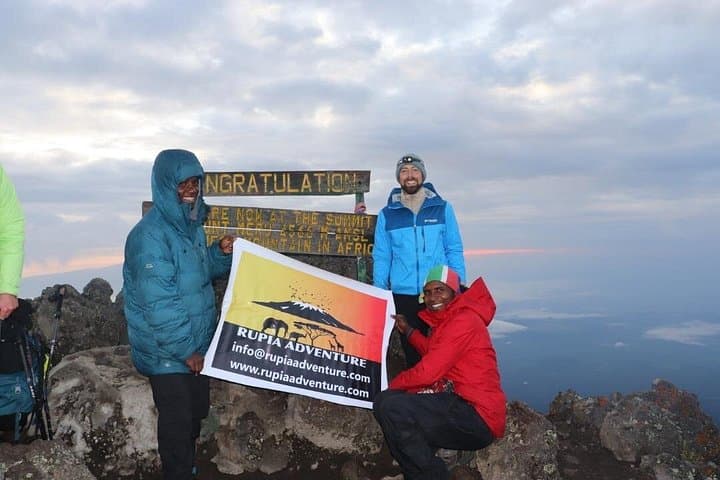
The summit day is 15–18 hours from camp to Arusha: a 01:30 start, stiff switchbacks to Rhino Point (≈3,800m), a high ridge to Cobra Point and a final scramble along a volcanic rim to 4,566m as the sun strikes the crater lip. Summit views include the Meru Ash Tray and, on good days, Kilimanjaro framed in the far distance. The descent is long but merciful, returning by mid-to-late afternoon to Momella Gate and Arusha.
Practical edge: this is a challenging, high-altitude trek best suited to fit, experienced hikers. Expect steep, rocky sections and a brief scramble near the top; weather can flip from clear to sleet at higher camps. Hydrate beyond thirst, layer aggressively for night and pre-dawn cold, and use a headlamp with fresh batteries. Bookings include park fees, meals as listed, private transport and hut accommodation; all-sales-final policy applies. Guides manage acclimatization with a possible Little Meru side-hike at 3,820m to reduce summit shock.
Timing and footwork matter: start training on long uphill days with a loaded pack, break your summit night into manageable steps, and keep your kit light and weatherproof. Come prepared, and Mount Meru delivers a compact, dramatic high-altitude climb that rewards persistence with a sunrise over volcanic teeth and the slow, steady satisfaction of standing above the clouds.
Yes—TANAPA fees and required ranger/permits are handled by the operator and included in the listed inclusions.
Porters and camp cooks are part of the standard service; they carry communal gear and prepare meals at huts and campsites.
The final hour involves exposed rocky scrambling but no technical climbing; comfortable hands-on scrambling and good balance are required.
The clearest windows are June–October and late December–February; avoid long rains (March–May) for more stable trail conditions.
This tour is all-sales-final—no refunds for cancellations; the operator may cancel for bad weather or insufficient travelers per policy.
Standard travel vaccinations for Tanzania are recommended; consult a travel clinic for malaria prophylaxis and altitude-sickness guidance before travel.
Rupia Adventure operates guided outdoor trips and adventures with an emphasis on safety, stewardship, and memorable experiences.
You begin before dawn in Arusha, the city lights shrinking behind the minibus as the road climbs toward Momella Gate. The trailhead opens into a highland forest that smells of damp earth and eucalyptus; ferns brush your calves and the path threads around fever trees that seem to lean in to watch. Giraffes and zebra graze in clearing edges like quiet witnesses while the trail climbs steady toward Miriakamba Hut at 2,500m.
You begin before dawn in Arusha, the city lights shrinking behind the minibus as the road climbs toward Momella Gate. The trailhead opens into a highland forest that smells of damp earth and eucalyptus; ferns brush your calves and the path threads around fever trees that seem to lean in to watch. Giraffes and zebra graze in clearing edges like quiet witnesses while the trail climbs steady toward Miriakamba Hut at 2,500m.
Mount Meru is an ancient stratovolcano whose flanks hold the ecological transition from savanna to montane cloud forest. Geologically younger than Kilimanjaro, Meru’s crater and ash-tray formations read like pages in a volcanic diary—steep ridges, collapsed cliffs and a final rocky crest that demands hands as much as legs. The route passes Ngare Nanyuki waterfall, Momella lakes views, and on the second day climbs the saddle with long vistas that open toward Kilimanjaro on clear mornings.
Culturally, trails are threaded with the practical systems of Tanzanian mountain guiding: TANAPA permits, an armed ranger for wildlife safety, porters who handle camp logistics, and cooks who make a camp kitchen feel like home. The huts—Miriakamba and Saddle—are Basic but warm, designed for quick recovery before a midnight summit push.
The summit day is 15–18 hours from camp to Arusha: a 01:30 start, stiff switchbacks to Rhino Point (≈3,800m), a high ridge to Cobra Point and a final scramble along a volcanic rim to 4,566m as the sun strikes the crater lip. Summit views include the Meru Ash Tray and, on good days, Kilimanjaro framed in the far distance. The descent is long but merciful, returning by mid-to-late afternoon to Momella Gate and Arusha.
Practical edge: this is a challenging, high-altitude trek best suited to fit, experienced hikers. Expect steep, rocky sections and a brief scramble near the top; weather can flip from clear to sleet at higher camps. Hydrate beyond thirst, layer aggressively for night and pre-dawn cold, and use a headlamp with fresh batteries. Bookings include park fees, meals as listed, private transport and hut accommodation; all-sales-final policy applies. Guides manage acclimatization with a possible Little Meru side-hike at 3,820m to reduce summit shock.
Timing and footwork matter: start training on long uphill days with a loaded pack, break your summit night into manageable steps, and keep your kit light and weatherproof. Come prepared, and Mount Meru delivers a compact, dramatic high-altitude climb that rewards persistence with a sunrise over volcanic teeth and the slow, steady satisfaction of standing above the clouds.