THE ADVENTURE COLLECTIVE® · Independent discovery and booking for outdoor travel

A five-day, expert-only expedition that climbs to 6,893 m on Ojos del Salado from Laguna Verde. Expect glacier travel, desert crossings, hot-spring recovery and extreme altitude—prepare with prior high-altitude climbs.
A five-day, expert-only expedition that climbs to 6,893 m on Ojos del Salado from Laguna Verde. Expect glacier travel, desert crossings, hot-spring recovery and extreme altitude—prepare with prior high-altitude climbs.
A thin wind pushes across a salt-bleached plain as the Andes rise like a broken rampart. Camp at Laguna Verde sits under an open sky where stars feel close enough to touch and a steaming hot spring softens tired muscles. Over five days, the expedition moves from desert basins into a high, glacial corridor that ends at the summit of Ojos del Salado (6,893 m).
Verified experiences and guided adventures in the surrounding area.
Operated by Peru Expeditions Tours · Copiapó, Atacama Region
A thin wind pushes across a salt-bleached plain as the Andes rise like a broken rampart. Camp at Laguna Verde sits under an open sky where stars feel close enough to touch and a steaming hot spring softens tired muscles. Over five days, the expedition moves from desert basins into a high, glacial corridor that ends at the summit of Ojos del Salado (6,893 m).
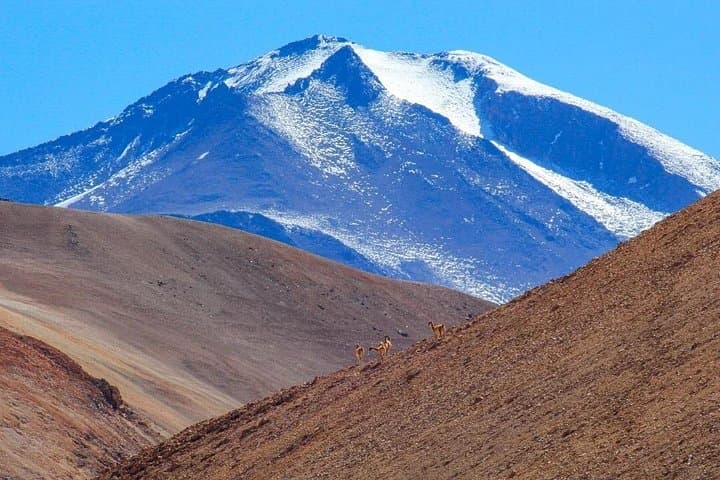
Geology and human traces shape the route: volcanic strata of rhyolite and andesite rise from the Atacama’s arid floor, and the massif marks the convergent margin that built the central Andes. The peak is the tallest volcano on Earth and dominates Nevado Tres Cruces National Park; its slopes are carved by wind, ice patches and loose rock. Local culture in nearby Copiapó reflects mining and ranching traditions; llamas and Andean wildlife still thread the high lakes. Guides emphasize respect for fragile wetlands and cultural sites.
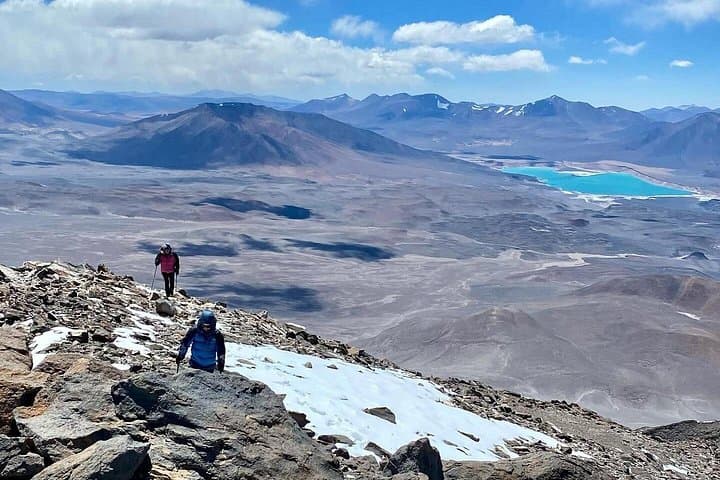
Practical guidance is straightforward. This is an expert-level climb: expect glacier crossings, steep rocky pitches and severe altitude. Prior acclimatization above 6,500 m is required; the itinerary uses staged camps, 4x4 transfers and hot-spring recovery to manage exposure. Bring technical gear for crampon-and-ice-axe travel, layered cold-weather clothing and systems for hydration and sun protection. Weather can change rapidly—clear blue one hour, wind-driven snow the next—so plan conservative turnaround times. The experience rewards careful preparation: the summit view takes in the high plateau, distant salt pans and an emptiness that tests resolve as much as fitness.
Yes—organizers require recent climbs above ~6,500 m (e.g., Aconcagua) and demonstrated acclimatization and fitness.
Yes—the expedition inclusions list a climbing permit and park access within the package.
Summit day includes ~1,000 m ascent, glacier travel and mixed rock—participants must be comfortable on crampons and roped travel.
Southern summer (December–March) offers the most stable weather and accessible approaches, though conditions remain variable.
Peru Expeditions Tours operates guided outdoor trips and adventures with an emphasis on safety, stewardship, and memorable experiences.
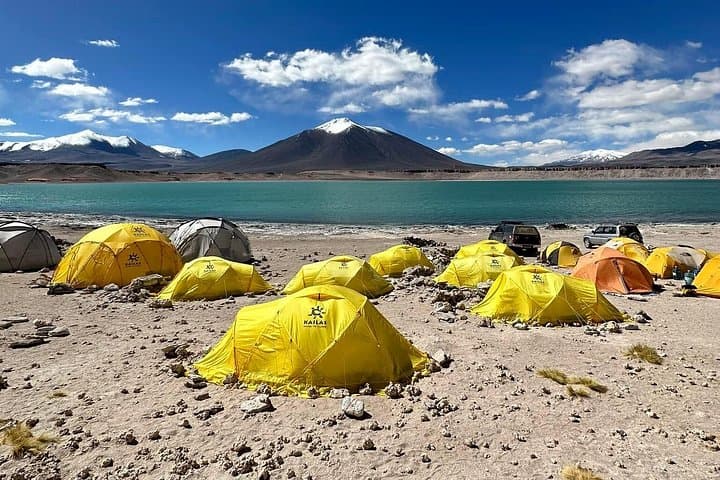
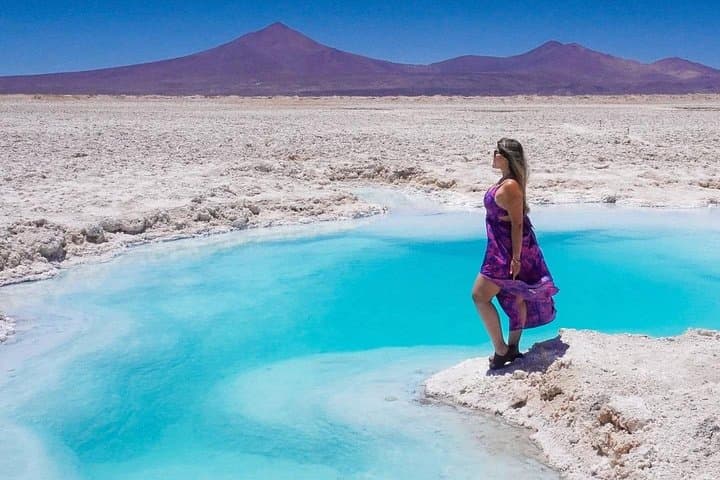
A thin wind pushes across a salt-bleached plain as the Andes rise like a broken rampart. Camp at Laguna Verde sits under an open sky where stars feel close enough to touch and a steaming hot spring softens tired muscles. Over five days, the expedition moves from desert basins into a high, glacial corridor that ends at the summit of Ojos del Salado (6,893 m).
A thin wind pushes across a salt-bleached plain as the Andes rise like a broken rampart. Camp at Laguna Verde sits under an open sky where stars feel close enough to touch and a steaming hot spring softens tired muscles. Over five days, the expedition moves from desert basins into a high, glacial corridor that ends at the summit of Ojos del Salado (6,893 m).
Geology and human traces shape the route: volcanic strata of rhyolite and andesite rise from the Atacama’s arid floor, and the massif marks the convergent margin that built the central Andes. The peak is the tallest volcano on Earth and dominates Nevado Tres Cruces National Park; its slopes are carved by wind, ice patches and loose rock. Local culture in nearby Copiapó reflects mining and ranching traditions; llamas and Andean wildlife still thread the high lakes. Guides emphasize respect for fragile wetlands and cultural sites.
Practical guidance is straightforward. This is an expert-level climb: expect glacier crossings, steep rocky pitches and severe altitude. Prior acclimatization above 6,500 m is required; the itinerary uses staged camps, 4x4 transfers and hot-spring recovery to manage exposure. Bring technical gear for crampon-and-ice-axe travel, layered cold-weather clothing and systems for hydration and sun protection. Weather can change rapidly—clear blue one hour, wind-driven snow the next—so plan conservative turnaround times. The experience rewards careful preparation: the summit view takes in the high plateau, distant salt pans and an emptiness that tests resolve as much as fitness.