THE ADVENTURE COLLECTIVE® · Independent discovery and booking for outdoor travel

Board a cruiser at Khulna and spend three days navigating tidal creeks, guided mangrove hikes, and dusk-to-dawn wildlife watching in the Sundarbans. This accessible cruise combines onboard comfort with short hikes and country-boat forays to key sanctuaries.
Board a cruiser at Khulna and spend three days navigating tidal creeks, guided mangrove hikes, and dusk-to-dawn wildlife watching in the Sundarbans. This accessible cruise combines onboard comfort with short hikes and country-boat forays to key sanctuaries.
Morning light slants across the muddy creeks as the cruiser slips away from Khulna Jahaj Ghat. Salt-scented air and the metallic creak of the ship set the pace; mangrove roots loom like ancient hands reaching into the water, and the river seems to push you deeper into a living labyrinth.
Verified experiences and guided adventures in the surrounding area.
Operated by Touristta Bangladesh · Khulna, Khulna Division
Morning light slants across the muddy creeks as the cruiser slips away from Khulna Jahaj Ghat. Salt-scented air and the metallic creak of the ship set the pace; mangrove roots loom like ancient hands reaching into the water, and the river seems to push you deeper into a living labyrinth.
The Sundarbans is the largest single tract of mangrove forest on Earth, formed where the Ganges-Brahmaputra meets the Bay of Bengal. This trip threads history and ecology—tidal mudflats, shifting silt, centuries of human adaptation—into a compact three-day loop. Local communities around Khulna have long depended on these waterways for fishing and honey; forest guards and guided country-boat pilots carry that practical knowledge into each outing.
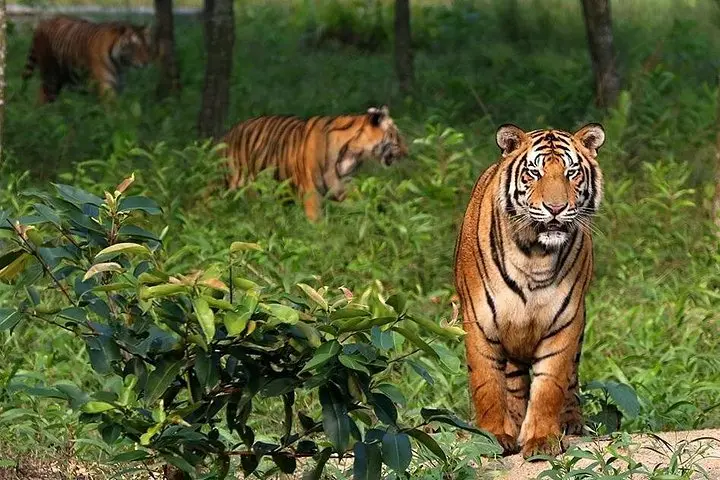
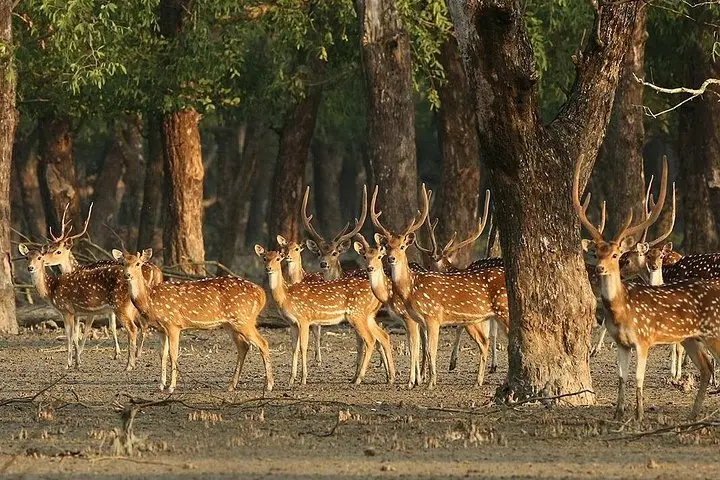
Expect low, flat terrain punctuated by raised earthen paths and short beach walks at Dimerchor. Wildlife moves in subtle ways: otters slip like shadows, resident crocodiles sun themselves near sandbanks, and birds paint the sky with purposeful strokes. Tigers are rare to spot but are part of the ecosystem that makes the Sundarbans unique.
Practical notes: cruises include meals and onboard sleeping on twin-share cabins; days mix ship cruising and short guided hikes inside sanctuaries like Kochikhali and Kotka. Wear quick-dry clothing, carry insect repellent and waterproof bags, and time excursions around low-tide windows—creeks can narrow dramatically. Hydrate often; sun and humidity are constant companions. Respect local rules: stay with your guide, keep noise minimal, and pack out any trash. For first-time mangrove travelers, this trip balances immersive wildlife viewing with straightforward logistics—ideal for travelers wanting an accessible, multi-day nature experience.
Dry winter months (November–February) offer cooler temperatures and clearer skies, making wildlife viewing and travel logistics easiest.
Tigers in the Sundarbans are elusive; sightings are rare—the cruise focuses on birds, crocodiles, and the forest ecosystem rather than guaranteed tiger encounters.
The itinerary is described as physically easy with short walks, but shore landings can be uneven; infants must sit on laps and specialized seats are available—check with the operator for specific mobility needs.
Khulna Jahaj Ghat is accessible by road from Khulna city; many travelers arrive by bus or private car. Allow time for city transfers and local check-in procedures.
Touristta Bangladesh operates guided outdoor trips and adventures with an emphasis on safety, stewardship, and memorable experiences.
Morning light slants across the muddy creeks as the cruiser slips away from Khulna Jahaj Ghat. Salt-scented air and the metallic creak of the ship set the pace; mangrove roots loom like ancient hands reaching into the water, and the river seems to push you deeper into a living labyrinth.
Morning light slants across the muddy creeks as the cruiser slips away from Khulna Jahaj Ghat. Salt-scented air and the metallic creak of the ship set the pace; mangrove roots loom like ancient hands reaching into the water, and the river seems to push you deeper into a living labyrinth.
The Sundarbans is the largest single tract of mangrove forest on Earth, formed where the Ganges-Brahmaputra meets the Bay of Bengal. This trip threads history and ecology—tidal mudflats, shifting silt, centuries of human adaptation—into a compact three-day loop. Local communities around Khulna have long depended on these waterways for fishing and honey; forest guards and guided country-boat pilots carry that practical knowledge into each outing.
Expect low, flat terrain punctuated by raised earthen paths and short beach walks at Dimerchor. Wildlife moves in subtle ways: otters slip like shadows, resident crocodiles sun themselves near sandbanks, and birds paint the sky with purposeful strokes. Tigers are rare to spot but are part of the ecosystem that makes the Sundarbans unique.
Practical notes: cruises include meals and onboard sleeping on twin-share cabins; days mix ship cruising and short guided hikes inside sanctuaries like Kochikhali and Kotka. Wear quick-dry clothing, carry insect repellent and waterproof bags, and time excursions around low-tide windows—creeks can narrow dramatically. Hydrate often; sun and humidity are constant companions. Respect local rules: stay with your guide, keep noise minimal, and pack out any trash. For first-time mangrove travelers, this trip balances immersive wildlife viewing with straightforward logistics—ideal for travelers wanting an accessible, multi-day nature experience.