THE ADVENTURE COLLECTIVE® · Independent discovery and booking for outdoor travel

Catch sunrise at Angkor Wat and sunset from Phnom Bakheng on this focused 2-day temple tour. Expect early mornings, long temple walks, and a local guide to unpack centuries of Khmer history and architecture.
Catch sunrise at Angkor Wat and sunset from Phnom Bakheng on this focused 2-day temple tour. Expect early mornings, long temple walks, and a local guide to unpack centuries of Khmer history and architecture.
You rise before dawn, cool air cutting through the motorbike hum as the silhouette of Angkor Wat sharpens against a pale sky. The first light finds the temple’s towers reflected in the western moat while vendors fold up mats along the pathway—an ordered, hushed chaos that makes the stones feel alive.
Verified experiences and guided adventures in the surrounding area.
Operated by Travel to Inspire · Siem Reap, Siem Reap Province
You rise before dawn, cool air cutting through the motorbike hum as the silhouette of Angkor Wat sharpens against a pale sky. The first light finds the temple’s towers reflected in the western moat while vendors fold up mats along the pathway—an ordered, hushed chaos that makes the stones feel alive.
Over two days the route moves from the monumental geometry of Angkor Wat to the leafy corridors of Ta Prohm and the stone faces of Bayon. These temples span the Angkorian arc—9th to 12th centuries—when Khmer kings engineered reservoirs, roads and temple-mountains that reclaimed the seasonal floodplain and anchored a complex, syncretic culture of Hindu and Buddhist practice.
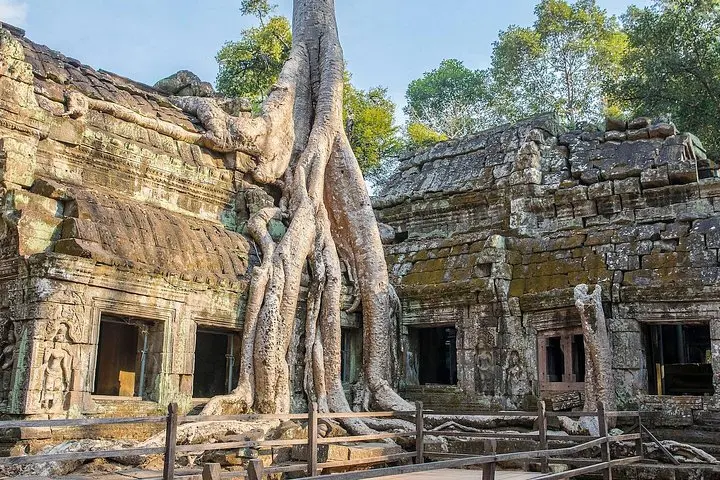
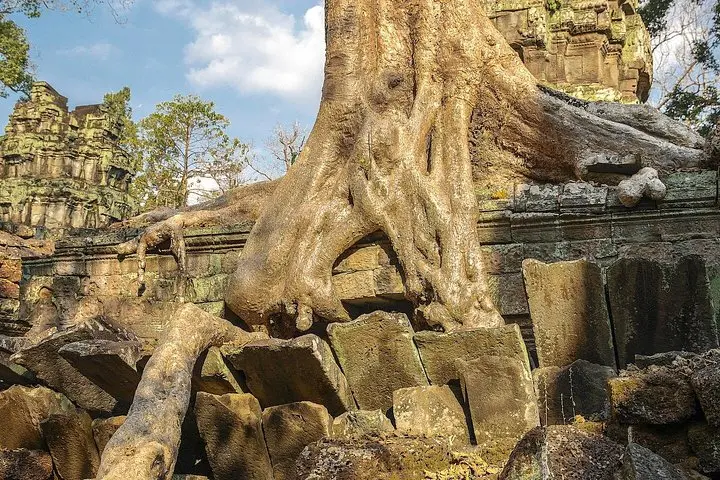
Geologically the region sits on shallow alluvial plains; sandstone blocks quarried from nearby ridges were sculpted and laterite cores keep the structures sturdy, now softened by lichen and fig roots. Culturally, local guides will point out bas-reliefs that read like civic records: processions, battles and harvests carved in stone.
Practical guidance: bring a reusable water bottle and sun protection, plan for early starts and late afternoons to avoid midday heat, and expect uneven steps—Phnom Bakheng’s summit is steep. Admission (Angkor Pass) is separate; carry cash and a small tip budget for guides. Wear supportive shoes with good traction for mixed surfaces: compacted dirt, laterite steps, and polished sandstone.
Timing is everything: sunrise at Angkor Wat and sunset from Phnom Bakheng are the highlights, but quieter corners—Neak Pean’s island pools or the leaf-shadowed corridors of Preah Khan—reward those who arrive between crowds.
No; the Angkor pass (1-, 3- or 7-day) is purchased separately at the official ticket center in Siem Reap and should be carried during visits.
Expect a pre-dawn pickup—typically 4:30–5:00 AM depending on sunrise time—to reach Angkor Wat before crowds.
Transport and some areas are accessible, but many temples have uneven terrain and steep steps that limit full access to older structures.
Sunrise and sunset vantage points give the best photos; arrive early at popular sites or explore secondary temples like Ta Som or Neak Pean for quieter frames.
Travel to Inspire operates guided outdoor trips and adventures with an emphasis on safety, stewardship, and memorable experiences.
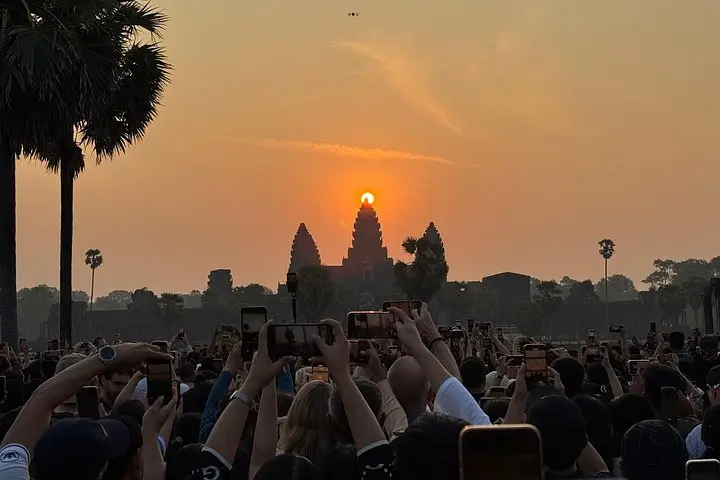
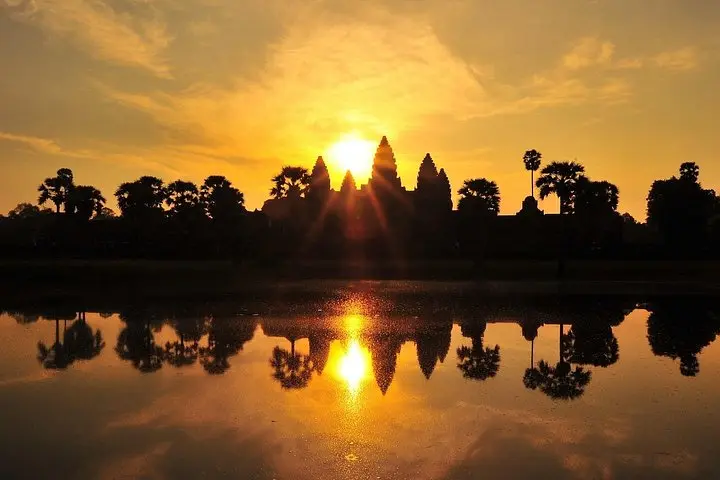
You rise before dawn, cool air cutting through the motorbike hum as the silhouette of Angkor Wat sharpens against a pale sky. The first light finds the temple’s towers reflected in the western moat while vendors fold up mats along the pathway—an ordered, hushed chaos that makes the stones feel alive.
You rise before dawn, cool air cutting through the motorbike hum as the silhouette of Angkor Wat sharpens against a pale sky. The first light finds the temple’s towers reflected in the western moat while vendors fold up mats along the pathway—an ordered, hushed chaos that makes the stones feel alive.
Over two days the route moves from the monumental geometry of Angkor Wat to the leafy corridors of Ta Prohm and the stone faces of Bayon. These temples span the Angkorian arc—9th to 12th centuries—when Khmer kings engineered reservoirs, roads and temple-mountains that reclaimed the seasonal floodplain and anchored a complex, syncretic culture of Hindu and Buddhist practice.
Geologically the region sits on shallow alluvial plains; sandstone blocks quarried from nearby ridges were sculpted and laterite cores keep the structures sturdy, now softened by lichen and fig roots. Culturally, local guides will point out bas-reliefs that read like civic records: processions, battles and harvests carved in stone.
Practical guidance: bring a reusable water bottle and sun protection, plan for early starts and late afternoons to avoid midday heat, and expect uneven steps—Phnom Bakheng’s summit is steep. Admission (Angkor Pass) is separate; carry cash and a small tip budget for guides. Wear supportive shoes with good traction for mixed surfaces: compacted dirt, laterite steps, and polished sandstone.
Timing is everything: sunrise at Angkor Wat and sunset from Phnom Bakheng are the highlights, but quieter corners—Neak Pean’s island pools or the leaf-shadowed corridors of Preah Khan—reward those who arrive between crowds.