THE ADVENTURE COLLECTIVE® · Independent discovery and booking for outdoor travel

Race across sand on a guided quad-bike loop with panoramic views of the Great Pyramids at sunrise or sunset. Fast, photo-ready and close enough to taste the history—this short desert ride pairs adrenaline with ancient perspective.
Race across sand on a guided quad-bike loop with panoramic views of the Great Pyramids at sunrise or sunset. Fast, photo-ready and close enough to taste the history—this short desert ride pairs adrenaline with ancient perspective.
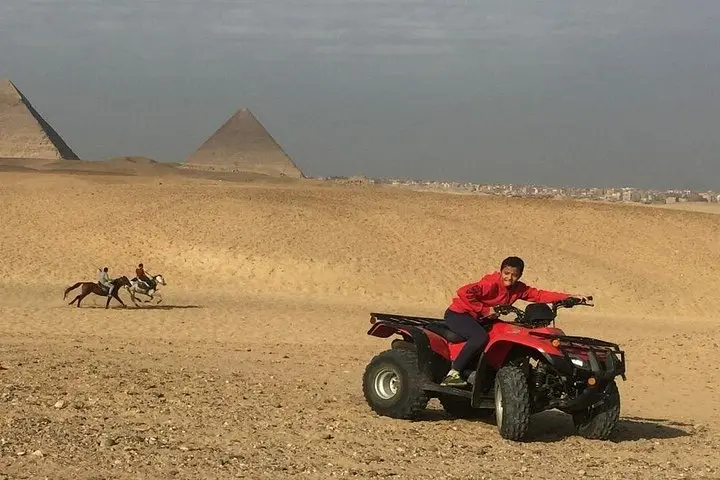
Sand sings under the tires as you roll onto the plateau above Giza, the three great pyramids rising like silent, sun-baked cliffs against the horizon. Morning light strips the stone to raw ochre; at sunset the same faces burn gold and crimson. You feel the city fall away—traffic noise becomes a distant hum—and the desert pushes back, daring you to race its ridges.
Verified experiences and guided adventures in the surrounding area.
Operated by Tamer Safari · Giza, Giza Governorate
Sand sings under the tires as you roll onto the plateau above Giza, the three great pyramids rising like silent, sun-baked cliffs against the horizon. Morning light strips the stone to raw ochre; at sunset the same faces burn gold and crimson. You feel the city fall away—traffic noise becomes a distant hum—and the desert pushes back, daring you to race its ridges.
The pyramids you circle are Khufu (Cheops), Khafre (Chephren) and Menkaure (Mykerinus), built during Egypt’s Fourth Dynasty some 4,500 years ago. Geologically the Giza Plateau is limestone bedrock capped in aeolian sand; culturally it’s a meeting point where modern Cairo meets one of history’s largest man-made landscapes. Local Bedouin families and guides still work the outskirts, offering insights into desert life and the small markets that spring up around tour operations.
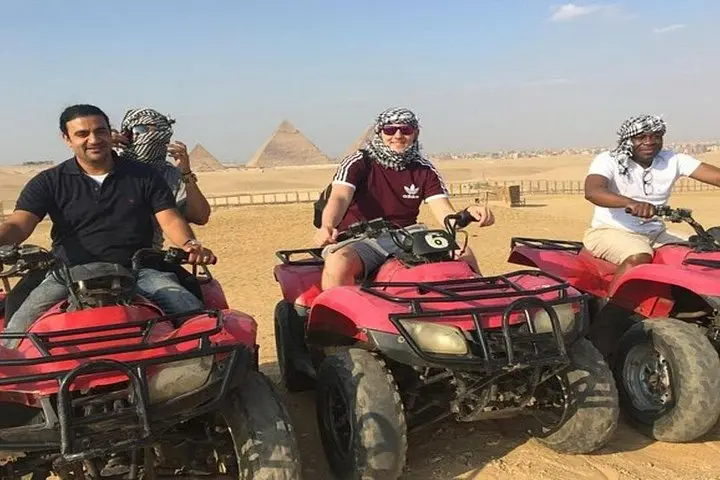
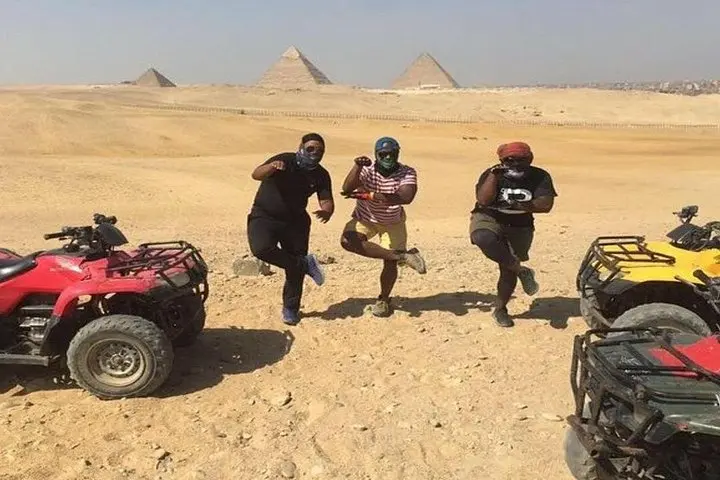
Practically, the ride is short, fast and exposed: expect loose sand, occasional rocky patches and a plateau vantage that gives uninterrupted views of the monuments and the Nile valley beyond. Guides usually provide a safety briefing and helmets; you’ll switch between standing on footrests for balance and sitting for longer runs. Bring face protection for dust, hydrate before departure, and plan your session for golden hour to avoid midday heat.
Respect the archaeological zone: stick to permitted routes, avoid climbing on structures, and carry out all trash. The experience is part adrenaline run, part history lesson—an accessible way to feel the scale of Giza while staying grounded in practical safety and cultural respect.
No—most tours include a brief training session; basic balance and the ability to follow instructions are sufficient.
Rides operate on permitted tracks around the plateau; climbing or driving on the monuments themselves is prohibited to protect the site.
Tours commonly require a minimum age (often 16) and are not recommended for pregnant travelers or those with serious back or heart conditions—check booking rules.
Most operators provide hotel pickup in Cairo or Giza and return by private air-conditioned vehicle; confirm exact pickup time and meeting point when you book.
Tamer Safari operates guided outdoor trips and adventures with an emphasis on safety, stewardship, and memorable experiences.
Sand sings under the tires as you roll onto the plateau above Giza, the three great pyramids rising like silent, sun-baked cliffs against the horizon. Morning light strips the stone to raw ochre; at sunset the same faces burn gold and crimson. You feel the city fall away—traffic noise becomes a distant hum—and the desert pushes back, daring you to race its ridges.
Sand sings under the tires as you roll onto the plateau above Giza, the three great pyramids rising like silent, sun-baked cliffs against the horizon. Morning light strips the stone to raw ochre; at sunset the same faces burn gold and crimson. You feel the city fall away—traffic noise becomes a distant hum—and the desert pushes back, daring you to race its ridges.
The pyramids you circle are Khufu (Cheops), Khafre (Chephren) and Menkaure (Mykerinus), built during Egypt’s Fourth Dynasty some 4,500 years ago. Geologically the Giza Plateau is limestone bedrock capped in aeolian sand; culturally it’s a meeting point where modern Cairo meets one of history’s largest man-made landscapes. Local Bedouin families and guides still work the outskirts, offering insights into desert life and the small markets that spring up around tour operations.
Practically, the ride is short, fast and exposed: expect loose sand, occasional rocky patches and a plateau vantage that gives uninterrupted views of the monuments and the Nile valley beyond. Guides usually provide a safety briefing and helmets; you’ll switch between standing on footrests for balance and sitting for longer runs. Bring face protection for dust, hydrate before departure, and plan your session for golden hour to avoid midday heat.
Respect the archaeological zone: stick to permitted routes, avoid climbing on structures, and carry out all trash. The experience is part adrenaline run, part history lesson—an accessible way to feel the scale of Giza while staying grounded in practical safety and cultural respect.