THE ADVENTURE COLLECTIVE® · Independent discovery and booking for outdoor travel

Catch sunrise over Angkor Wat before heading off the main circuit to Beng Mealea’s jungle-claimed ruins. This private, full-day tour combines iconic temple views with lesser-seen corridors where roots and stone wrestle for dominance.
Catch sunrise over Angkor Wat before heading off the main circuit to Beng Mealea’s jungle-claimed ruins. This private, full-day tour combines iconic temple views with lesser-seen corridors where roots and stone wrestle for dominance.
Before the sun clears the horizon, the causeway leading to Angkor Wat drinks the light and throws it back in a long, mirrored reflection. Travelers arrive in the dark, cameras and blankets in hand, as the eastern face of the temple slowly pulls color out of the sky. The stones cool from night, and the first shafts of light reveal bas-reliefs and mossy corners that look almost alive.
Verified experiences and guided adventures in the surrounding area.
Operated by ANGKOR CAB-OFF BEATEN TRUCK · Siem Reap, Siem Reap Province
Before the sun clears the horizon, the causeway leading to Angkor Wat drinks the light and throws it back in a long, mirrored reflection. Travelers arrive in the dark, cameras and blankets in hand, as the eastern face of the temple slowly pulls color out of the sky. The stones cool from night, and the first shafts of light reveal bas-reliefs and mossy corners that look almost alive.
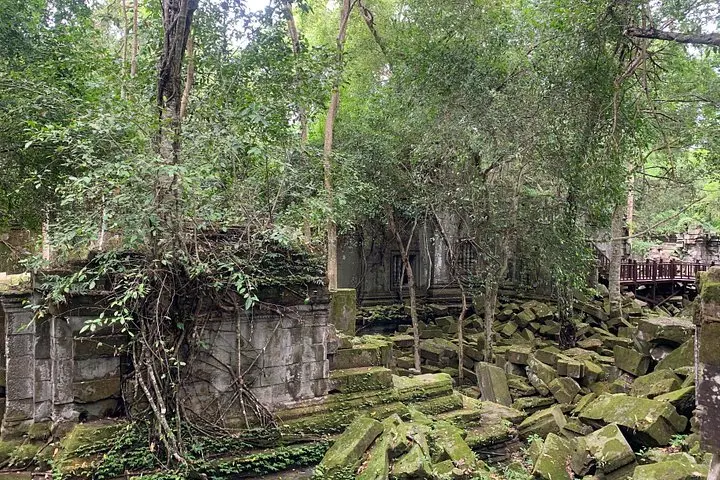
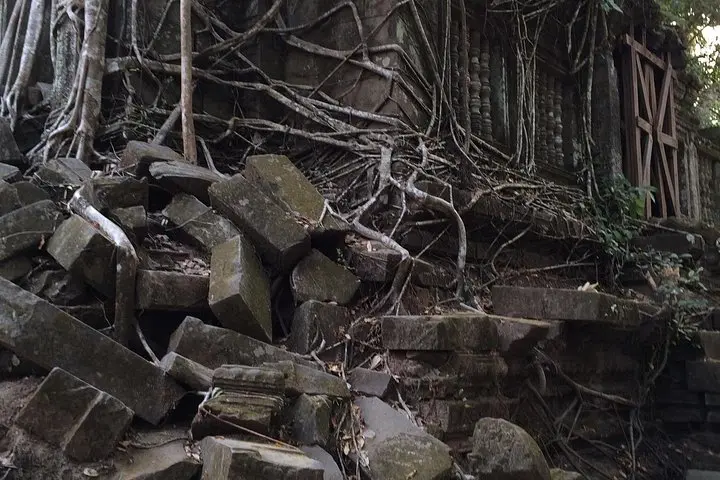
Angkor Wat began as a 12th-century Hindu temple dedicated to Vishnu under King Suryavarman II and later became a major Buddhist site; its scale — over 400 acres — explains why it dominates any visit. Beng Mealea, about 70–80 km east of Siem Reap, offers a counterpoint: a largely unrestored jungle temple where roots push between fallen blocks and courtyards have become habitats for vines and birds. Both sites are sandstone works carved in a period of intense Khmer engineering, with moats, galleries, and sculpted narratives of gods and kings.
On a practical level, expect an early start, an 8-hour private tour with driver and guide, and a lot of walking on uneven, sometimes damp stone. Dress modestly (shoulders and knees covered for temples), bring a refillable water bottle, insect repellent, and a headlamp or small flashlight for pre-dawn paths. Photography is rewarding but be ready for crowds at sunrise; if you want quieter corners, linger at secondary galleries or explore Beng Mealea’s outer enclosures where the jungle often gets the last word.
Yes—Angkor Wat requires an Angkor Pass. Guides can help arrange tickets on the way, but buying ahead saves time at dawn.
Expect several hours on foot across uneven stone, short stair climbs, and rough jungle paths—comfortable walking ability is required.
Yes—the typical private tour covers a sunrise at Angkor Wat and a later visit to Beng Mealea within an 8-hour day, though travel between sites takes time.
They are generally safe but include unstable masonry and tangled roots; follow your guide, avoid climbing on fragile structures, and watch your footing.
ANGKOR CAB-OFF BEATEN TRUCK operates guided outdoor trips and adventures with an emphasis on safety, stewardship, and memorable experiences.
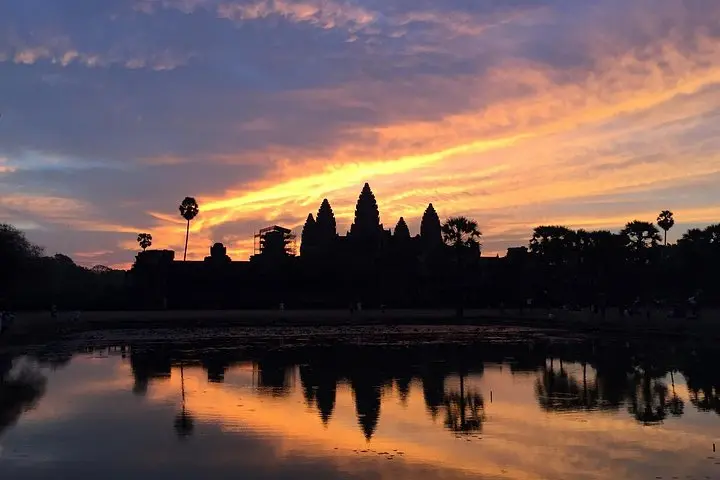
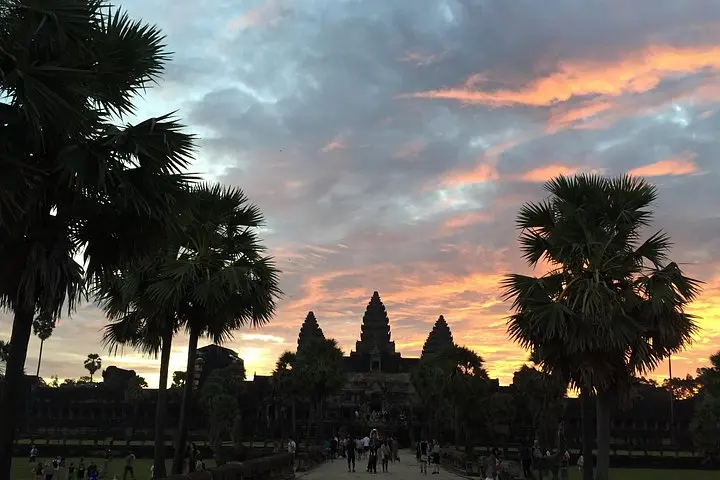
Before the sun clears the horizon, the causeway leading to Angkor Wat drinks the light and throws it back in a long, mirrored reflection. Travelers arrive in the dark, cameras and blankets in hand, as the eastern face of the temple slowly pulls color out of the sky. The stones cool from night, and the first shafts of light reveal bas-reliefs and mossy corners that look almost alive.
Before the sun clears the horizon, the causeway leading to Angkor Wat drinks the light and throws it back in a long, mirrored reflection. Travelers arrive in the dark, cameras and blankets in hand, as the eastern face of the temple slowly pulls color out of the sky. The stones cool from night, and the first shafts of light reveal bas-reliefs and mossy corners that look almost alive.
Angkor Wat began as a 12th-century Hindu temple dedicated to Vishnu under King Suryavarman II and later became a major Buddhist site; its scale — over 400 acres — explains why it dominates any visit. Beng Mealea, about 70–80 km east of Siem Reap, offers a counterpoint: a largely unrestored jungle temple where roots push between fallen blocks and courtyards have become habitats for vines and birds. Both sites are sandstone works carved in a period of intense Khmer engineering, with moats, galleries, and sculpted narratives of gods and kings.
On a practical level, expect an early start, an 8-hour private tour with driver and guide, and a lot of walking on uneven, sometimes damp stone. Dress modestly (shoulders and knees covered for temples), bring a refillable water bottle, insect repellent, and a headlamp or small flashlight for pre-dawn paths. Photography is rewarding but be ready for crowds at sunrise; if you want quieter corners, linger at secondary galleries or explore Beng Mealea’s outer enclosures where the jungle often gets the last word.