THE ADVENTURE COLLECTIVE® · Independent discovery and booking for outdoor travel

Watch the sun rise behind Angkor Wat’s towers from a carefully chosen vantage point, then explore Bayon and Ta Prohm by tuk tuk. This personalized tour pairs early-morning light with local guide insights and private transport for a compact cultural morning.
Watch the sun rise behind Angkor Wat’s towers from a carefully chosen vantage point, then explore Bayon and Ta Prohm by tuk tuk. This personalized tour pairs early-morning light with local guide insights and private transport for a compact cultural morning.
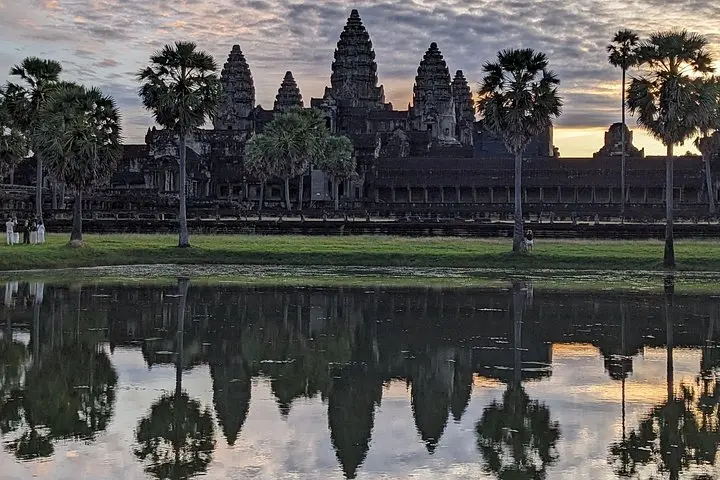
You arrive before dawn, tuk tuk engine a soft heartbeat beneath the sky. The moat holds the first light like a dark mirror and the central towers of Angkor Wat slice the horizon into a precise silhouette. Your guide steers you to a quieter pool; the air cools, birds circle, and the sun lifts slowly behind stone spikes, turning bas-reliefs into long, living lines.
Verified experiences and guided adventures in the surrounding area.
Operated by Siemreapian Tourguide · Siem Reap, Siem Reap Province
You arrive before dawn, tuk tuk engine a soft heartbeat beneath the sky. The moat holds the first light like a dark mirror and the central towers of Angkor Wat slice the horizon into a precise silhouette. Your guide steers you to a quieter pool; the air cools, birds circle, and the sun lifts slowly behind stone spikes, turning bas-reliefs into long, living lines.
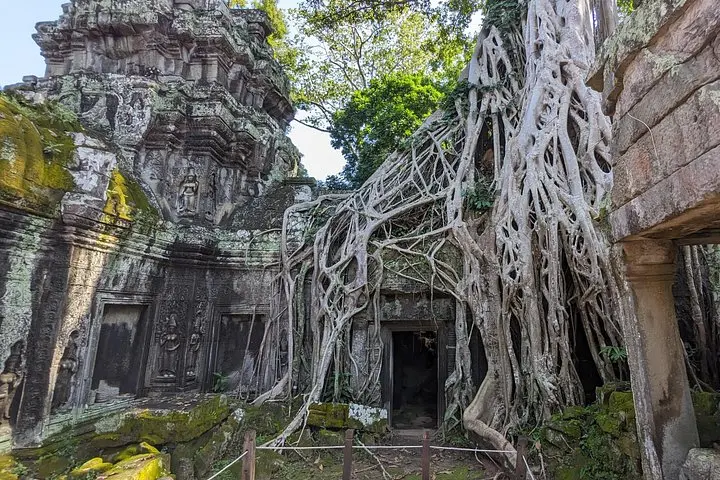
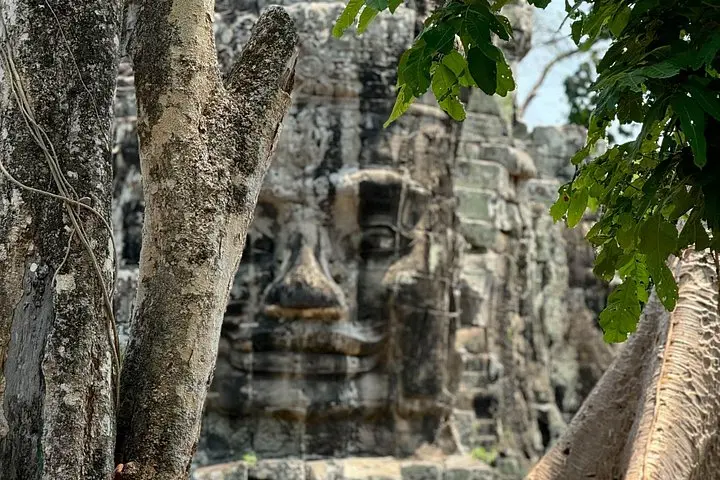
The complex began as a 12th-century temple for King Suryavarman II and later layered in Buddhist practice, its galleries and towers charting the rise and fall of the Khmer capital. Geologically the sandstone blocks were quarried nearby and laid over a vast hydraulic system that once regulated rice fields and reservoirs. Around Angkor, Bayon’s smiling faces and Ta Prohm’s roots — trees that now grip the masonry as if keeping time — show different chapters of the same civilization.
Practicality guides the morning: expect 4–6 hours of activity with a mix of short walks, stairs, and uneven stone. Admission to Angkor Archaeological Park is purchased separately at the ticket center; the tour’s price typically excludes that pass. Dress respectfully — shoulders and knees covered — and bring a headlamp or phone light for pre-dawn paths. Hydrate and carry a spare battery; early light is excellent for photos but crowds swell quickly after sunrise. Tuk tuks provide private transport and door-to-door pick-up, limiting walking between sites but you should be steady on your feet for steps and narrow corridors.
For travelers seeking cultural depth with minimal logistics, a personalized tuk tuk sunrise tour is efficient, evocative, and designed to leave you with lasting images rather than logistical headaches.
No—Angkor Archaeological Park passes are purchased separately at the official ticket center; bring cash or card and arrive early to buy tickets before sunrise.
Expect pickup around 4:00–4:30 AM depending on sunrise time and your hotel’s distance from the park to reach prime viewing spots before dawn.
Many temple areas have uneven stone, steep steps, and narrow passages; access can be limited, though tuk tuk transport reduces walking between sites.
Photography is allowed in most outdoor areas; however, be respectful inside active shrines and follow your guide’s directions about restricted zones.
Siemreapian Tourguide operates guided outdoor trips and adventures with an emphasis on safety, stewardship, and memorable experiences.

You arrive before dawn, tuk tuk engine a soft heartbeat beneath the sky. The moat holds the first light like a dark mirror and the central towers of Angkor Wat slice the horizon into a precise silhouette. Your guide steers you to a quieter pool; the air cools, birds circle, and the sun lifts slowly behind stone spikes, turning bas-reliefs into long, living lines.
You arrive before dawn, tuk tuk engine a soft heartbeat beneath the sky. The moat holds the first light like a dark mirror and the central towers of Angkor Wat slice the horizon into a precise silhouette. Your guide steers you to a quieter pool; the air cools, birds circle, and the sun lifts slowly behind stone spikes, turning bas-reliefs into long, living lines.
The complex began as a 12th-century temple for King Suryavarman II and later layered in Buddhist practice, its galleries and towers charting the rise and fall of the Khmer capital. Geologically the sandstone blocks were quarried nearby and laid over a vast hydraulic system that once regulated rice fields and reservoirs. Around Angkor, Bayon’s smiling faces and Ta Prohm’s roots — trees that now grip the masonry as if keeping time — show different chapters of the same civilization.
Practicality guides the morning: expect 4–6 hours of activity with a mix of short walks, stairs, and uneven stone. Admission to Angkor Archaeological Park is purchased separately at the ticket center; the tour’s price typically excludes that pass. Dress respectfully — shoulders and knees covered — and bring a headlamp or phone light for pre-dawn paths. Hydrate and carry a spare battery; early light is excellent for photos but crowds swell quickly after sunrise. Tuk tuks provide private transport and door-to-door pick-up, limiting walking between sites but you should be steady on your feet for steps and narrow corridors.
For travelers seeking cultural depth with minimal logistics, a personalized tuk tuk sunrise tour is efficient, evocative, and designed to leave you with lasting images rather than logistical headaches.