THE ADVENTURE COLLECTIVE® · Independent discovery and booking for outdoor travel

Witness Angkor Wat at dawn, then spend a private day exploring Banteay Srei, Ta Prohm, and Banteay Samre. This full-day tour combines sunrise access, a private vehicle, and a local guide to make the most of the Angkor Archaeological Park.
Witness Angkor Wat at dawn, then spend a private day exploring Banteay Srei, Ta Prohm, and Banteay Samre. This full-day tour combines sunrise access, a private vehicle, and a local guide to make the most of the Angkor Archaeological Park.
You step out before dawn onto the sandy causeway and watch the silhouette of Angkor Wat sharpen against a pale sky as birds thread sound through the ruins.
Verified experiences and guided adventures in the surrounding area.
Operated by Bravo Asia Tours · Siem Reap, Siem Reap Province
You step out before dawn onto the sandy causeway and watch the silhouette of Angkor Wat sharpen against a pale sky as birds thread sound through the ruins.
This private full-day tour takes that sunrise moment as its hinge, then moves through the medieval Khmer world—Banteay Srei’s pink sandstone carvings, the forest-locked corridors of Ta Prohm, and the rose-hued bas-reliefs of Banteay Samre. Angkor’s geology is soft sandstone and laterite; centuries of monsoon and forest roots have both preserved and pried apart its sculpture, giving each temple a different personality.
Built between the 9th and 12th centuries, the Angkor complex is Cambodia’s cultural heart: temple mountains, kingly bas-reliefs, and living villages that grew up around irrigation works of the Khmer Empire. Local guides add cultural context—how religious shifts reworked iconography, and why the jungle now embraces certain monuments.
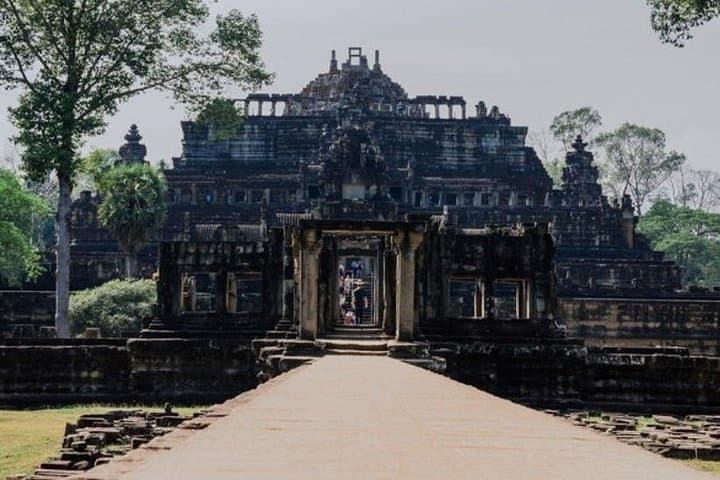
Expect 6–8 hours on the road with an air-conditioned vehicle to move you between sites, and 3–5 km of walking across uneven stone, packed earth, and short flights of steep temple steps (Phnom Bakheng and Ta Prohm require careful footing). Dress respectfully—knees and shoulders covered at sacred sites—and bring sunscreen, insect protection, and plenty of water.
Practical benefits of a private tour: early access for sunrise, flexible pacing for heat or mobility limits, and a local driver to navigate Park roads. Plan for an Angkor pass at the entrance, carry local cash for tips and small purchases, and leave room in your schedule to simply sit and listen to the place awaken.
The park entrance fee (Angkor pass) is not typically included; purchase it at the Angkor Visitor Centre before or at the park entrance.
Tours usually depart very early—around 4:30–5:00 a.m.—to reach Angkor Wat for first light and avoid larger crowds.
Most climbs are short but steep stone steps; anyone with limited mobility should notify the operator to adjust the itinerary.
Yes; private tours generally include hotel or airport pickup and drop-off within Siem Reap city limits—confirm your pickup point when booking.
Bravo Asia Tours operates guided outdoor trips and adventures with an emphasis on safety, stewardship, and memorable experiences.
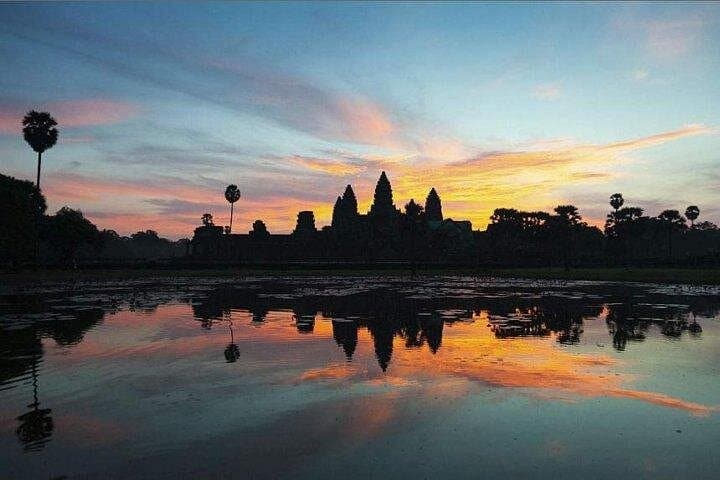
You step out before dawn onto the sandy causeway and watch the silhouette of Angkor Wat sharpen against a pale sky as birds thread sound through the ruins.
You step out before dawn onto the sandy causeway and watch the silhouette of Angkor Wat sharpen against a pale sky as birds thread sound through the ruins.
This private full-day tour takes that sunrise moment as its hinge, then moves through the medieval Khmer world—Banteay Srei’s pink sandstone carvings, the forest-locked corridors of Ta Prohm, and the rose-hued bas-reliefs of Banteay Samre. Angkor’s geology is soft sandstone and laterite; centuries of monsoon and forest roots have both preserved and pried apart its sculpture, giving each temple a different personality.
Built between the 9th and 12th centuries, the Angkor complex is Cambodia’s cultural heart: temple mountains, kingly bas-reliefs, and living villages that grew up around irrigation works of the Khmer Empire. Local guides add cultural context—how religious shifts reworked iconography, and why the jungle now embraces certain monuments.
Expect 6–8 hours on the road with an air-conditioned vehicle to move you between sites, and 3–5 km of walking across uneven stone, packed earth, and short flights of steep temple steps (Phnom Bakheng and Ta Prohm require careful footing). Dress respectfully—knees and shoulders covered at sacred sites—and bring sunscreen, insect protection, and plenty of water.
Practical benefits of a private tour: early access for sunrise, flexible pacing for heat or mobility limits, and a local driver to navigate Park roads. Plan for an Angkor pass at the entrance, carry local cash for tips and small purchases, and leave room in your schedule to simply sit and listen to the place awaken.