THE ADVENTURE COLLECTIVE® · Independent discovery and booking for outdoor travel

Witness Angkor Wat at sunrise and spend a private day moving from Ta Prohm’s tree-entangled ruins to the enigmatic faces of Bayon. This full-day private tour balances early-morning light with a practical route through Angkor Thom’s key monuments.
Witness Angkor Wat at sunrise and spend a private day moving from Ta Prohm’s tree-entangled ruins to the enigmatic faces of Bayon. This full-day private tour balances early-morning light with a practical route through Angkor Thom’s key monuments.
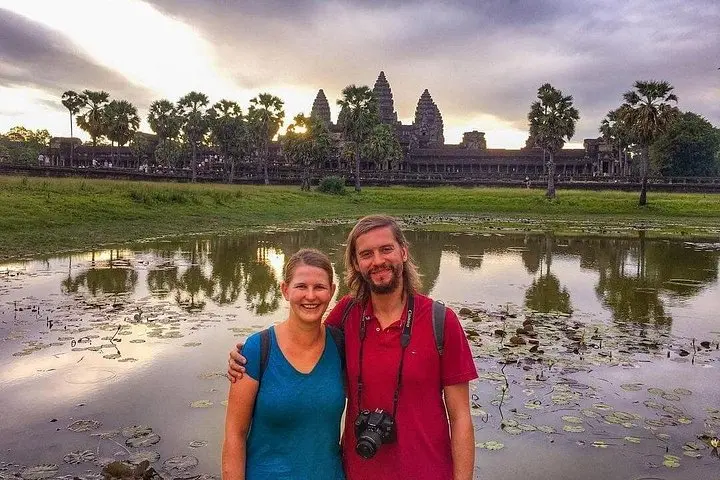
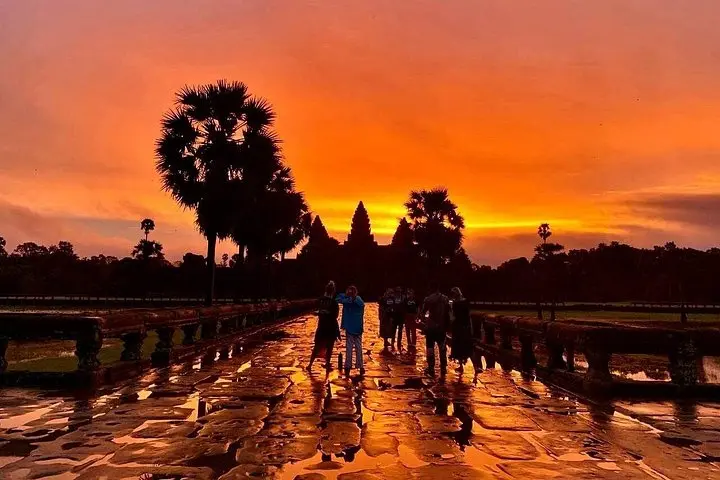
Before the sun lifts over the western moat, your private guide steers through the slow-moving haze around Angkor Wat. The towers silhouette like watchful peaks; bird calls and the distant slap of bicycle tires replace the hum of the modern world. You stand where stone meets dawn, camera warm in hand and the air already sticky with the day’s heat.
Verified experiences and guided adventures in the surrounding area.
Operated by Hidden Angkor Tour · Siem Reap, Siem Reap Province
Before the sun lifts over the western moat, your private guide steers through the slow-moving haze around Angkor Wat. The towers silhouette like watchful peaks; bird calls and the distant slap of bicycle tires replace the hum of the modern world. You stand where stone meets dawn, camera warm in hand and the air already sticky with the day’s heat.
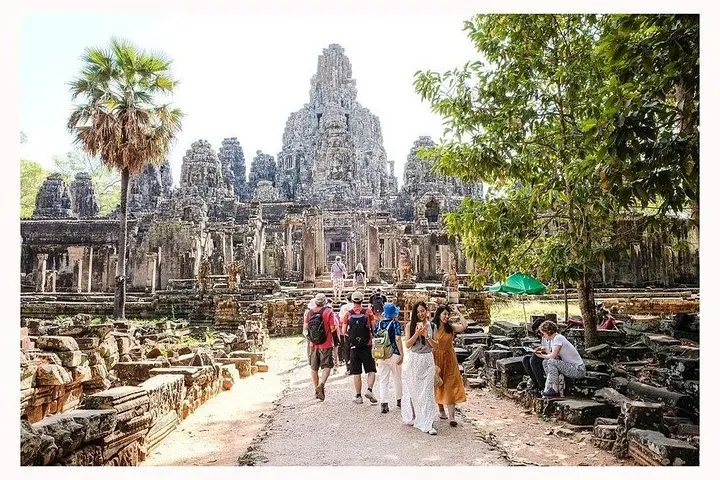
This itinerary threads the high points of the Angkor Archaeological Park. Angkor Wat, built in the 12th century by Suryavarman II, is laid out as a stone model of the Hindu universe; Ta Prohm keeps its jungle armor—roofed by strangler fig roots still clinging to galleries; Bayon, raised by Jayavarman VII, watches from its carved faces at the center of the ancient city of Angkor Thom. The surrounding plain is Tonlé Sap’s former coastline—sandstone temples rise on a limestone and lateritic base and tell a cultural history of empire, religion, and craft.
Practically: expect 8–9 hours with repeated short walks on uneven stone and steep staircases. The tour operates as a private vehicle loop with a local English-speaking guide; entrance passes must be purchased at the park gate in USD. Dress that covers shoulders and knees for temple access, bring sunscreen, and plan for an early pickup to reach Angkor Wat before or at sunrise. Protective covers for cameras are useful—dust, humidity, and sudden showers are common. Move deliberately on worn steps, respect restricted zones, and let your guide direct the flow—this is both an archaeological landscape and a working cultural site.
No—the tour operator does not include the official Angkor Archaeological Park pass; guests must buy the pass at the main gate in USD before entering.
The itinerary typically stops for lunch at a local restaurant but lunch is not guaranteed in the inclusions—confirm at booking and carry cash for food and tips.
No; several temples have steep, uneven steps and areas that are not wheelchair accessible.
Photography is allowed in most areas, but climbing, touching vulnerable carvings, or entering restricted zones is prohibited—follow your guide and posted signs.
Hidden Angkor Tour operates guided outdoor trips and adventures with an emphasis on safety, stewardship, and memorable experiences.

Before the sun lifts over the western moat, your private guide steers through the slow-moving haze around Angkor Wat. The towers silhouette like watchful peaks; bird calls and the distant slap of bicycle tires replace the hum of the modern world. You stand where stone meets dawn, camera warm in hand and the air already sticky with the day’s heat.
Before the sun lifts over the western moat, your private guide steers through the slow-moving haze around Angkor Wat. The towers silhouette like watchful peaks; bird calls and the distant slap of bicycle tires replace the hum of the modern world. You stand where stone meets dawn, camera warm in hand and the air already sticky with the day’s heat.
This itinerary threads the high points of the Angkor Archaeological Park. Angkor Wat, built in the 12th century by Suryavarman II, is laid out as a stone model of the Hindu universe; Ta Prohm keeps its jungle armor—roofed by strangler fig roots still clinging to galleries; Bayon, raised by Jayavarman VII, watches from its carved faces at the center of the ancient city of Angkor Thom. The surrounding plain is Tonlé Sap’s former coastline—sandstone temples rise on a limestone and lateritic base and tell a cultural history of empire, religion, and craft.
Practically: expect 8–9 hours with repeated short walks on uneven stone and steep staircases. The tour operates as a private vehicle loop with a local English-speaking guide; entrance passes must be purchased at the park gate in USD. Dress that covers shoulders and knees for temple access, bring sunscreen, and plan for an early pickup to reach Angkor Wat before or at sunrise. Protective covers for cameras are useful—dust, humidity, and sudden showers are common. Move deliberately on worn steps, respect restricted zones, and let your guide direct the flow—this is both an archaeological landscape and a working cultural site.