THE ADVENTURE COLLECTIVE® · Independent discovery and booking for outdoor travel

Catch Angkor Wat glowing at dawn on a private guided tour that pairs sunrise views with a full day through Angkor’s main temples. Expect early pickup, a knowledgeable guide, and several kilometers of walking over ancient stone.
Catch Angkor Wat glowing at dawn on a private guided tour that pairs sunrise views with a full day through Angkor’s main temples. Expect early pickup, a knowledgeable guide, and several kilometers of walking over ancient stone.
You arrive before dawn, tuk‑tuk rolling over broken laterite toward the low silhouette of Angkor Wat. A cool, river‑flat air presses against the reflection pools while your guide scouts a place where the temple’s five towers catch the first light. For an hour the stone and water trade color—bronze, then gold—while bas‑reliefs and naga balustrades fade into focus.
Verified experiences and guided adventures in the surrounding area.
Operated by Pineapple Cambodia Tours · Siem Reap, Siem Reap
You arrive before dawn, tuk‑tuk rolling over broken laterite toward the low silhouette of Angkor Wat. A cool, river‑flat air presses against the reflection pools while your guide scouts a place where the temple’s five towers catch the first light. For an hour the stone and water trade color—bronze, then gold—while bas‑reliefs and naga balustrades fade into focus.
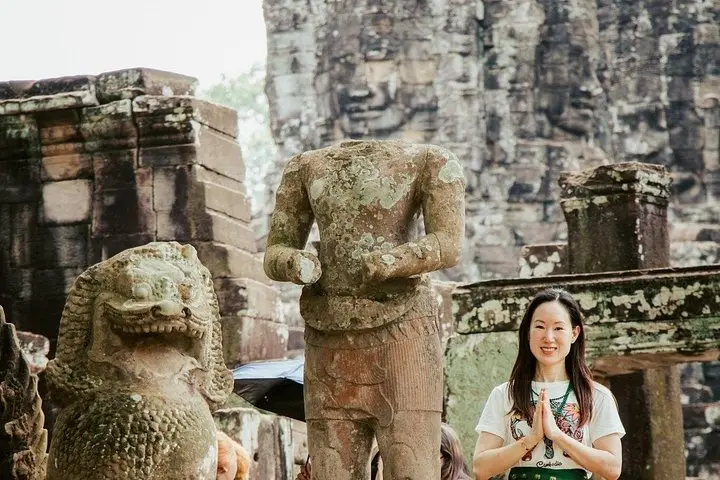
The monuments you’ll walk through were raised by the Khmer kings of the 12th century: Angkor Wat, built by Suryavarman II as a state temple, later reinterpreted through Buddhist practice; Angkor Thom and its Bayon faces reflect Jayavarman VII’s era. Geologically the complex sits on sandstone platforms and laterite foundations that weather unevenly—expect carved blocks, moss, and roots where jungle claims stone.
Culturally, temples remain active places of worship; monks, local vendors, and guides keep traditions visible. Smaller sites like Banteay Kdei offer quiet contrasts to the busiest galleries at Ta Prohm and Bayon.
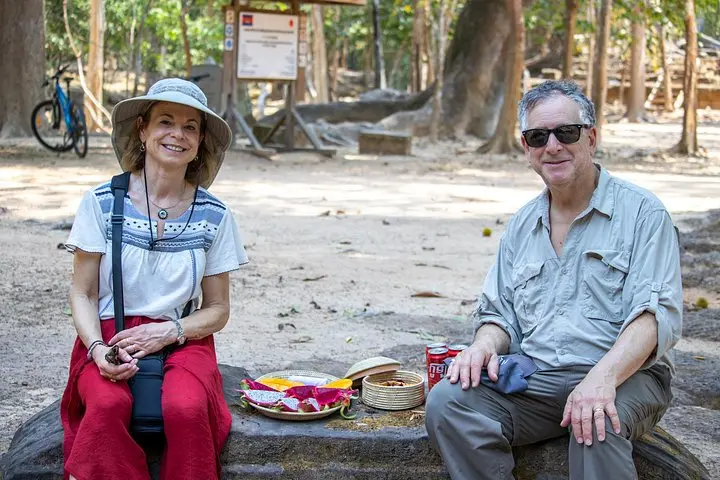
Practicalities are straightforward: arrive with an Angkor pass, wear covered shoulders and sturdy shoes for irregular steps, and bring water—the guide supplies bottled water but personal refill bottles save plastic. The tour is private and runs roughly 7–8 hours: sunrise at Angkor Wat, breakfast near Srah Srang, then Ta Prohm, Angkor Thom and Bayon. Expect 6–10 km of walking over compacted dirt and stone with minimal elevation change. Early starts beat heat and crowds; midmorning, seek shaded breaks and pace your camera time. Respect ropes and bas‑reliefs—these sites survive because visitors follow rules.
No; the Angkor Archaeological Park pass is not included—purchase at the official ticket center or online before your tour.
Pickup is very early—typically around 4:00–4:30 AM depending on season—to reach viewing areas before first light.
Yes; the tour notes stroller and infant seat options and is listed as physically easy, but expect long periods of walking and early hours.
Yes; the full private tour includes Angkor Wat at sunrise, then Ta Prohm, Angkor Thom and Bayon as part of a 7–8 hour itinerary.
Pineapple Cambodia Tours operates guided outdoor trips and adventures with an emphasis on safety, stewardship, and memorable experiences.
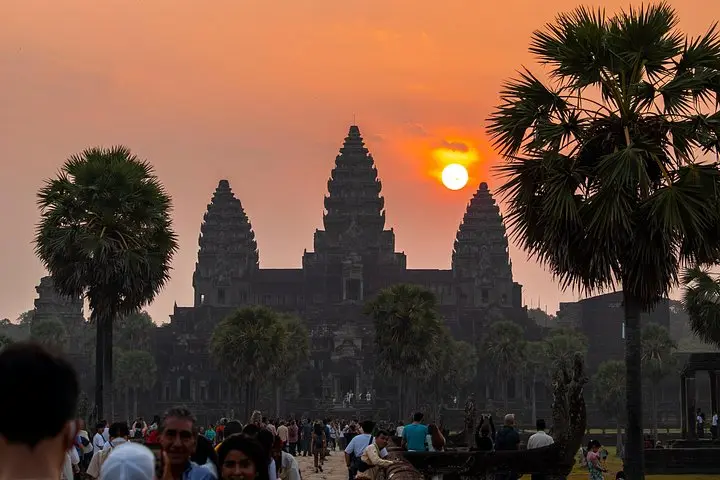
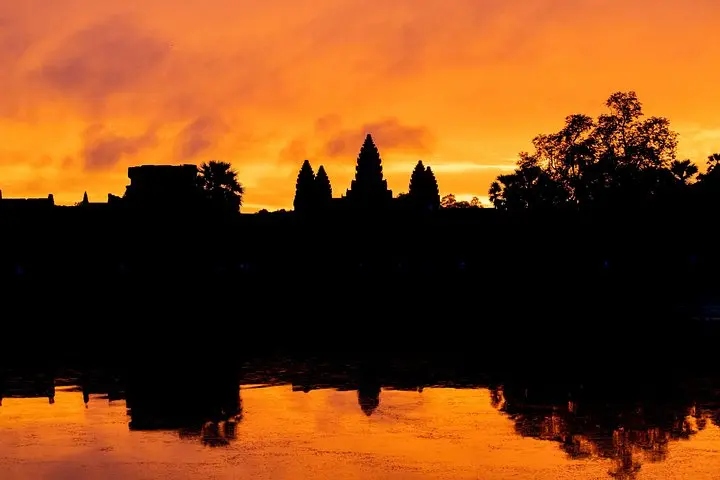
You arrive before dawn, tuk‑tuk rolling over broken laterite toward the low silhouette of Angkor Wat. A cool, river‑flat air presses against the reflection pools while your guide scouts a place where the temple’s five towers catch the first light. For an hour the stone and water trade color—bronze, then gold—while bas‑reliefs and naga balustrades fade into focus.
You arrive before dawn, tuk‑tuk rolling over broken laterite toward the low silhouette of Angkor Wat. A cool, river‑flat air presses against the reflection pools while your guide scouts a place where the temple’s five towers catch the first light. For an hour the stone and water trade color—bronze, then gold—while bas‑reliefs and naga balustrades fade into focus.
The monuments you’ll walk through were raised by the Khmer kings of the 12th century: Angkor Wat, built by Suryavarman II as a state temple, later reinterpreted through Buddhist practice; Angkor Thom and its Bayon faces reflect Jayavarman VII’s era. Geologically the complex sits on sandstone platforms and laterite foundations that weather unevenly—expect carved blocks, moss, and roots where jungle claims stone.
Culturally, temples remain active places of worship; monks, local vendors, and guides keep traditions visible. Smaller sites like Banteay Kdei offer quiet contrasts to the busiest galleries at Ta Prohm and Bayon.
Practicalities are straightforward: arrive with an Angkor pass, wear covered shoulders and sturdy shoes for irregular steps, and bring water—the guide supplies bottled water but personal refill bottles save plastic. The tour is private and runs roughly 7–8 hours: sunrise at Angkor Wat, breakfast near Srah Srang, then Ta Prohm, Angkor Thom and Bayon. Expect 6–10 km of walking over compacted dirt and stone with minimal elevation change. Early starts beat heat and crowds; midmorning, seek shaded breaks and pace your camera time. Respect ropes and bas‑reliefs—these sites survive because visitors follow rules.