THE ADVENTURE COLLECTIVE® · Independent discovery and booking for outdoor travel

Experience dawn at Angkor Wat on a private sunrise tour that pairs quiet early-morning views with guided visits to Bayon, Angkor Thom and the jungle-wrapped Ta Prohm. Practical tips and cultural context help you move smoothly between iconic viewpoints and lesser-known corners.
Experience dawn at Angkor Wat on a private sunrise tour that pairs quiet early-morning views with guided visits to Bayon, Angkor Thom and the jungle-wrapped Ta Prohm. Practical tips and cultural context help you move smoothly between iconic viewpoints and lesser-known corners.
Before the sun clears the horizon, the air at Angkor Wat is cool and quiet, the reflection pools like glass holding a waiting sky. The tour begins at dawn, standing at the temple’s edge as the first light lifts carved galleries and shadowed bas-reliefs into relief. That moment—crowd-thinned and almost private—frames a day of stone, jungle, and history.
Verified experiences and guided adventures in the surrounding area.
Operated by Tourme ANGKOR · Siem Reap, Siem Reap Province
Before the sun clears the horizon, the air at Angkor Wat is cool and quiet, the reflection pools like glass holding a waiting sky. The tour begins at dawn, standing at the temple’s edge as the first light lifts carved galleries and shadowed bas-reliefs into relief. That moment—crowd-thinned and almost private—frames a day of stone, jungle, and history.
Angkor was the capital of the Khmer Empire from the 9th–15th centuries. Its temples are built of sandstone and laterite; Angkor Wat’s relieving chambers and Ta Prohm’s root-woven walls tell a story of devotion, collapse, and rediscovery by 19th-century explorers. Bayon’s smiling faces were once part of a state temple at the heart of Angkor Thom and reflect both religious and political shifts in Khmer life.
Culturally, the complex remains active—monks still pass through courtyards and local guides explain iconography and ritual practice. Geologically, the sandstone blocks show grain and erosion patterns influenced by monsoon cycles; keep an eye on slick steps after rain.
Practically: plan for a long day (about eight hours), dress respectfully—shoulders and knees covered—and bring a refillable water bottle. Comfortable walking shoes and a light layer for early-morning chill are essential. Expect uneven stone floors, narrow stairways, and crowds around peak viewpoints; a private guide keeps the pace flexible and ensures access to quieter corners.
Timing tips: arrive at Angkor Wat before sunrise, visit Angkor Thom and Bayon midmorning, and save Ta Prohm for late morning when light filters through the trees. Permit (site entry) is purchased onsite or in advance; carry cash or card.
The tour begins before sunrise so participants should be ready for pickup in the dark; exact pickup time depends on your hotel location in Siem Reap.
Entrance fees are not included and can be purchased onsite or at ticket booths before you enter the complex; cards are typically accepted.
Yes—this private tour is paced flexibly and described as physically easy, but participants should be able to walk short distances and negotiate uneven steps.
Yes—many hotels provide a breakfast pack on request so you can eat after the sunrise viewing at Angkor Wat.
Tourme ANGKOR operates guided outdoor trips and adventures with an emphasis on safety, stewardship, and memorable experiences.
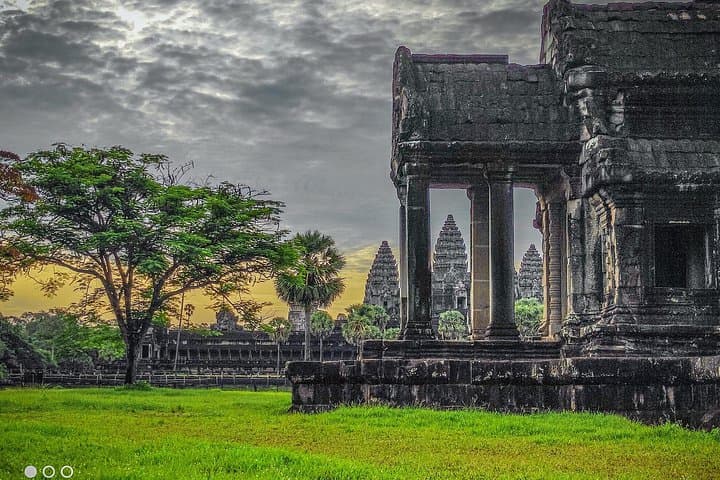
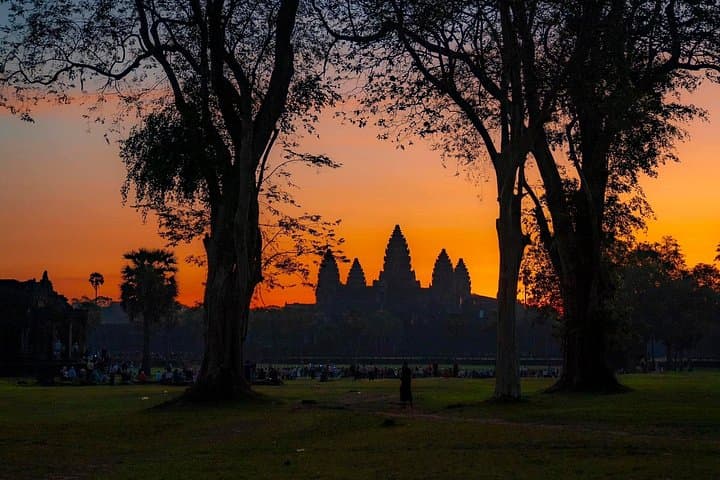
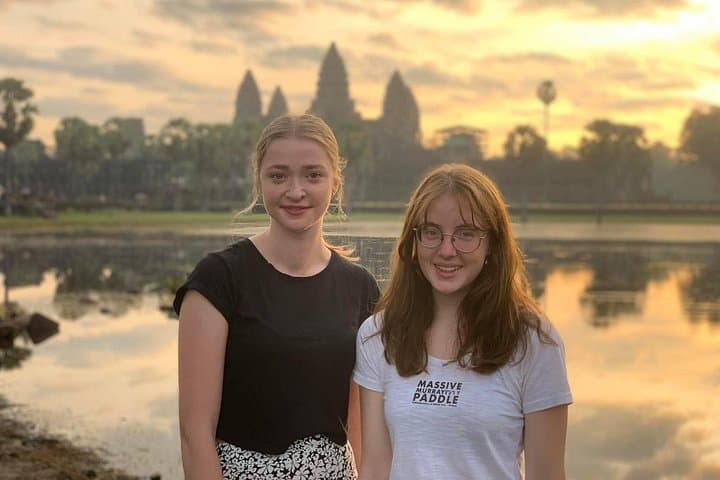
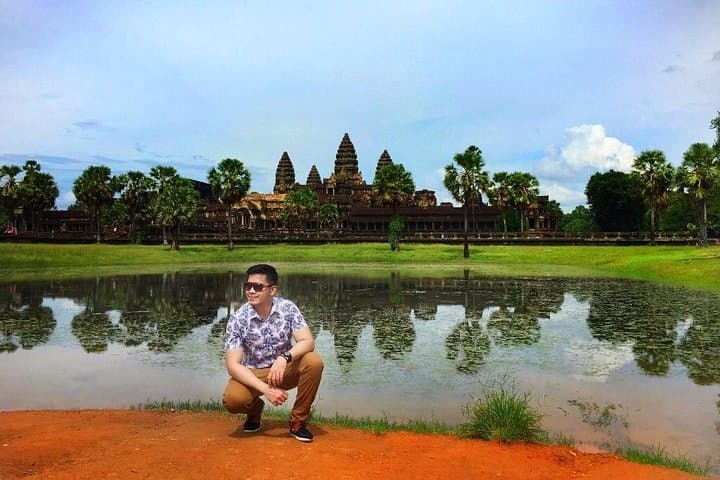
Before the sun clears the horizon, the air at Angkor Wat is cool and quiet, the reflection pools like glass holding a waiting sky. The tour begins at dawn, standing at the temple’s edge as the first light lifts carved galleries and shadowed bas-reliefs into relief. That moment—crowd-thinned and almost private—frames a day of stone, jungle, and history.
Before the sun clears the horizon, the air at Angkor Wat is cool and quiet, the reflection pools like glass holding a waiting sky. The tour begins at dawn, standing at the temple’s edge as the first light lifts carved galleries and shadowed bas-reliefs into relief. That moment—crowd-thinned and almost private—frames a day of stone, jungle, and history.
Angkor was the capital of the Khmer Empire from the 9th–15th centuries. Its temples are built of sandstone and laterite; Angkor Wat’s relieving chambers and Ta Prohm’s root-woven walls tell a story of devotion, collapse, and rediscovery by 19th-century explorers. Bayon’s smiling faces were once part of a state temple at the heart of Angkor Thom and reflect both religious and political shifts in Khmer life.
Culturally, the complex remains active—monks still pass through courtyards and local guides explain iconography and ritual practice. Geologically, the sandstone blocks show grain and erosion patterns influenced by monsoon cycles; keep an eye on slick steps after rain.
Practically: plan for a long day (about eight hours), dress respectfully—shoulders and knees covered—and bring a refillable water bottle. Comfortable walking shoes and a light layer for early-morning chill are essential. Expect uneven stone floors, narrow stairways, and crowds around peak viewpoints; a private guide keeps the pace flexible and ensures access to quieter corners.
Timing tips: arrive at Angkor Wat before sunrise, visit Angkor Thom and Bayon midmorning, and save Ta Prohm for late morning when light filters through the trees. Permit (site entry) is purchased onsite or in advance; carry cash or card.