THE ADVENTURE COLLECTIVE® · Independent discovery and booking for outdoor travel

Witness Angkor Wat at first light, then explore Bayon’s carved faces, Ta Prohm’s tree-claimed ruins and the quieter Kravan temple on a compact shared tour. Ideal for early risers who want a focused, cultural morning with practical transport and local guidance.
Witness Angkor Wat at first light, then explore Bayon’s carved faces, Ta Prohm’s tree-claimed ruins and the quieter Kravan temple on a compact shared tour. Ideal for early risers who want a focused, cultural morning with practical transport and local guidance.
Before the sun clears the horizon, a line of silhouettes forms on the causeway to Angkor Wat — tourists, photographers and early risers waiting for the stone towers to catch light. The temple’s reflecting pools mirror the sky as a hush falls over the moat, and the first rays rake the carved bas‑reliefs into sharp relief.
Verified experiences and guided adventures in the surrounding area.
Operated by Siem Reap Guide · Siem Reap, Siem Reap Province
Before the sun clears the horizon, a line of silhouettes forms on the causeway to Angkor Wat — tourists, photographers and early risers waiting for the stone towers to catch light. The temple’s reflecting pools mirror the sky as a hush falls over the moat, and the first rays rake the carved bas‑reliefs into sharp relief.
This shared morning excursion moves from that dawn spectacle into the crowded, layered history of Angkor Thom’s Bayon — the famous carved faces that seem to turn with you — then on to Ta Prohm, where roots and masonry argue over ownership. Kravan, small and brick‑built, offers quieter carvings and a sense of scale that contrasts with the main sites. Geologically the area sits on flat alluvial plains; the heavy sandstone blocks and laterite foundations make for uneven walking surfaces and steps carved centuries ago.
Culturally, these temples are devotional centers and national icons; respectful dress (knees and shoulders covered) is required at some sites. Expect humid mornings, brief insect presence, and a steady stream of tour groups after sunrise. Practical details: this is a 6–8 hour shared trip, usually by air‑conditioned minivan with hotel pickup and dropoff; admission (Angkor Pass) is commonly not included. Wear sturdy walking shoes, bring 1–2 liters of water, sun protection and insect repellent. Move deliberately on slick stones, allow extra time for photography, and plan a later afternoon nap — the day’s heat arrives fast. For a compact introduction to Angkor’s major moods, this shared itinerary balances spectacle with manageable logistics.
Most shared tours do not include the Angkor Pass; purchase a 1‑day or multi‑day pass at the official ticket center in Siem Reap before departure.
Pickup is typically before dawn to reach Angkor Wat for sunrise; the full tour lasts about 6–8 hours including multiple temple stops and transfers.
Photography is allowed at most outdoor areas; avoid flash inside certain enclosed sanctuaries and respect signs prohibiting photos of active religious practices.
Children can participate but must be supervised; the itinerary includes steps and uneven terrain, so it’s not recommended for those with serious mobility or spinal issues.
Siem Reap Guide operates guided outdoor trips and adventures with an emphasis on safety, stewardship, and memorable experiences.
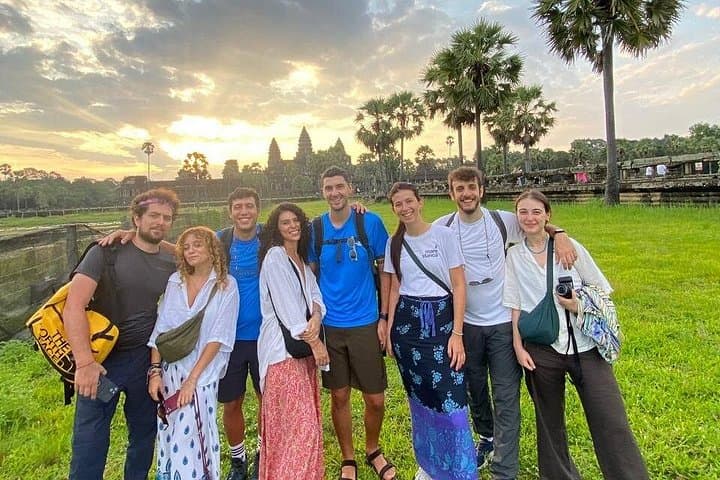
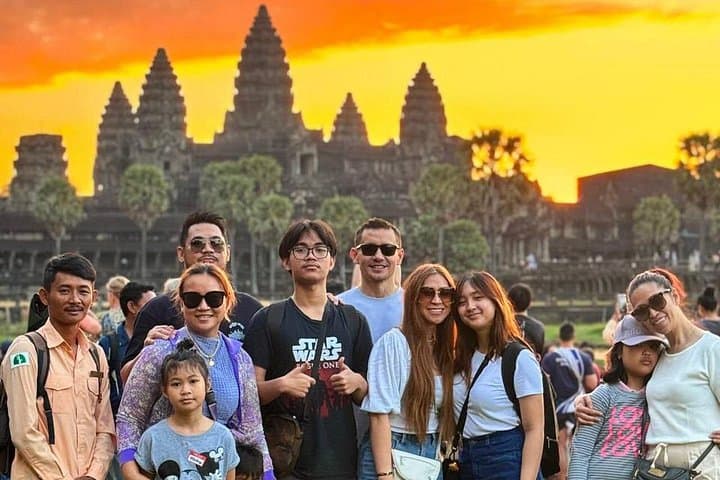
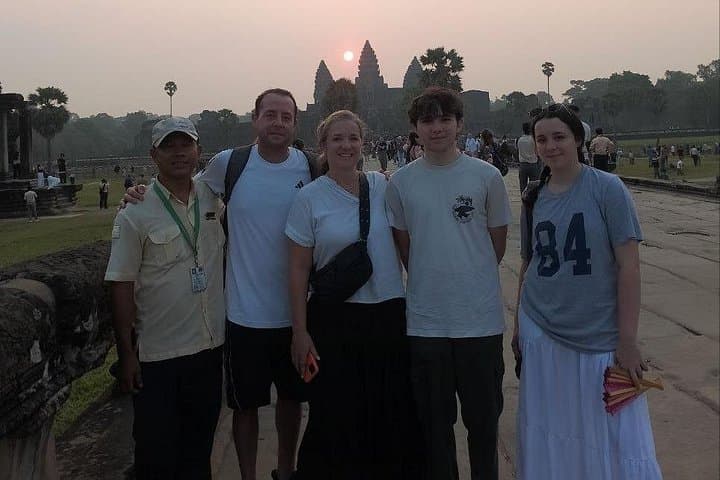
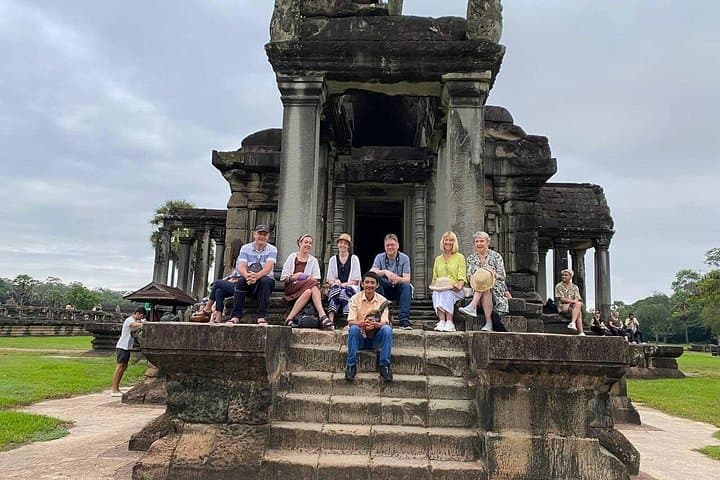
Before the sun clears the horizon, a line of silhouettes forms on the causeway to Angkor Wat — tourists, photographers and early risers waiting for the stone towers to catch light. The temple’s reflecting pools mirror the sky as a hush falls over the moat, and the first rays rake the carved bas‑reliefs into sharp relief.
Before the sun clears the horizon, a line of silhouettes forms on the causeway to Angkor Wat — tourists, photographers and early risers waiting for the stone towers to catch light. The temple’s reflecting pools mirror the sky as a hush falls over the moat, and the first rays rake the carved bas‑reliefs into sharp relief.
This shared morning excursion moves from that dawn spectacle into the crowded, layered history of Angkor Thom’s Bayon — the famous carved faces that seem to turn with you — then on to Ta Prohm, where roots and masonry argue over ownership. Kravan, small and brick‑built, offers quieter carvings and a sense of scale that contrasts with the main sites. Geologically the area sits on flat alluvial plains; the heavy sandstone blocks and laterite foundations make for uneven walking surfaces and steps carved centuries ago.
Culturally, these temples are devotional centers and national icons; respectful dress (knees and shoulders covered) is required at some sites. Expect humid mornings, brief insect presence, and a steady stream of tour groups after sunrise. Practical details: this is a 6–8 hour shared trip, usually by air‑conditioned minivan with hotel pickup and dropoff; admission (Angkor Pass) is commonly not included. Wear sturdy walking shoes, bring 1–2 liters of water, sun protection and insect repellent. Move deliberately on slick stones, allow extra time for photography, and plan a later afternoon nap — the day’s heat arrives fast. For a compact introduction to Angkor’s major moods, this shared itinerary balances spectacle with manageable logistics.