THE ADVENTURE COLLECTIVE® · Independent discovery and booking for outdoor travel

Witness Angkor Wat’s silhouette ignite at dawn on a small-group tour that pairs sunrise photography with escorted explorations of Angkor Thom, Bayon and Ta Prohm. Practical timing, local context and respectful tips make this a full-day cultural outing.
Witness Angkor Wat’s silhouette ignite at dawn on a small-group tour that pairs sunrise photography with escorted explorations of Angkor Thom, Bayon and Ta Prohm. Practical timing, local context and respectful tips make this a full-day cultural outing.
Before dawn the moats flatten into glass and the towers of Angkor Wat sharpen against a cold, violet sky. You arrive in a small group, the bus doors opening to the scent of damp earth and incense — a hush that only lifts when the sun pries light from the temple’s silhouette. The first hour is all silhouette and slow revelation: bas-reliefs breathe detail into the day and mossed laterite steps reveal centuries of feet.
Verified experiences and guided adventures in the surrounding area.
Operated by Namo Angkor Travel · Siem Reap, Siem Reap Province
Before dawn the moats flatten into glass and the towers of Angkor Wat sharpen against a cold, violet sky. You arrive in a small group, the bus doors opening to the scent of damp earth and incense — a hush that only lifts when the sun pries light from the temple’s silhouette. The first hour is all silhouette and slow revelation: bas-reliefs breathe detail into the day and mossed laterite steps reveal centuries of feet.
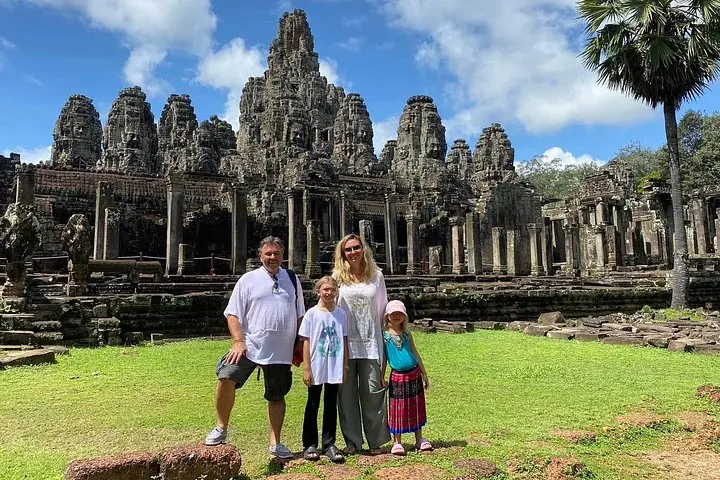
This circuit follows the arc of the Khmer Empire: Angkor Wat’s 12th-century sandstone walls, the fortified gates of Angkor Thom, the enigmatic smiling faces of Bayon and Ta Prohm’s roots reclaiming stone. Geologically, the complex sits on Cenozoic sediments capped by compacted sandstone, sculpted over centuries into tiers and galleries that trap shadow and cool the air.
Locally, temples remain active sites of worship and community ritual; guides will point out royal epigraphy, iconography and the ongoing restoration by Cambodian and international teams.
Practical guide: the tour runs about 6–7 hours and begins pre-dawn; expect 1–2 hours at Angkor Wat and shorter stops at Bayon, Ta Prohm and smaller temples. Bring a printed or mobile Angkor pass (admission is separate), lightweight walking shoes, sun protection and respectful clothing that covers shoulders and knees. Hydrate early—Siem Reap’s heat arrives fast and the walk between sites can be exposed.
Timing is everything: plan photo time at the west reflecting pool before crowds form, and save quieter temples like Banteay Kdei for later in the morning. Listen to your guide — they’re the best map to both stories and shortcuts through the ruins.
No. The Angkor pass (1-, 3- or 7-day) is purchased separately at the Official Ticket Center and must be shown for entry.
Pickup is early (typically 4:20–4:50am) to reach the west platform for sunrise; the full tour lasts roughly 6–7 hours, returning mid- to late morning.
Some areas and transport can accommodate mobility needs, but many temples have uneven steps and restricted access; check with the operator in advance for specific arrangements.
Photography is allowed at most sites, but avoid flash in enclosed sanctuaries, don’t climb on carvings, and follow monk- and site-specific rules.
Namo Angkor Travel operates guided outdoor trips and adventures with an emphasis on safety, stewardship, and memorable experiences.
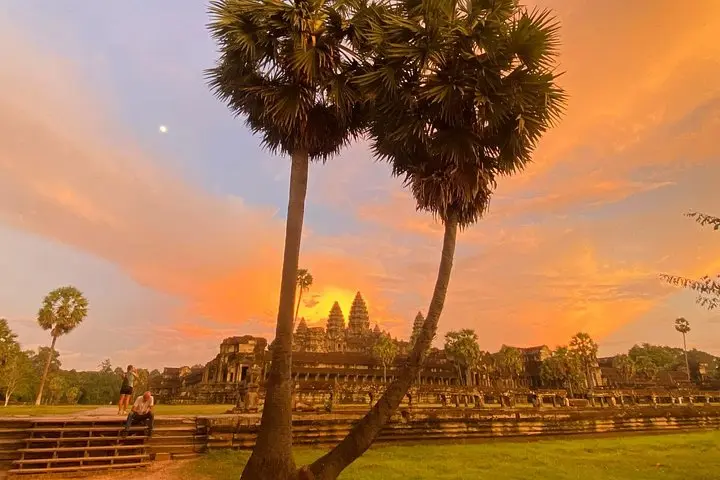

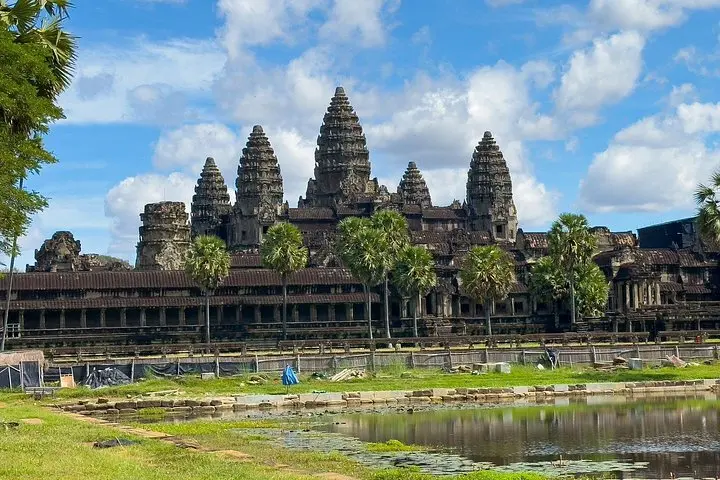
Before dawn the moats flatten into glass and the towers of Angkor Wat sharpen against a cold, violet sky. You arrive in a small group, the bus doors opening to the scent of damp earth and incense — a hush that only lifts when the sun pries light from the temple’s silhouette. The first hour is all silhouette and slow revelation: bas-reliefs breathe detail into the day and mossed laterite steps reveal centuries of feet.
Before dawn the moats flatten into glass and the towers of Angkor Wat sharpen against a cold, violet sky. You arrive in a small group, the bus doors opening to the scent of damp earth and incense — a hush that only lifts when the sun pries light from the temple’s silhouette. The first hour is all silhouette and slow revelation: bas-reliefs breathe detail into the day and mossed laterite steps reveal centuries of feet.
This circuit follows the arc of the Khmer Empire: Angkor Wat’s 12th-century sandstone walls, the fortified gates of Angkor Thom, the enigmatic smiling faces of Bayon and Ta Prohm’s roots reclaiming stone. Geologically, the complex sits on Cenozoic sediments capped by compacted sandstone, sculpted over centuries into tiers and galleries that trap shadow and cool the air.
Locally, temples remain active sites of worship and community ritual; guides will point out royal epigraphy, iconography and the ongoing restoration by Cambodian and international teams.
Practical guide: the tour runs about 6–7 hours and begins pre-dawn; expect 1–2 hours at Angkor Wat and shorter stops at Bayon, Ta Prohm and smaller temples. Bring a printed or mobile Angkor pass (admission is separate), lightweight walking shoes, sun protection and respectful clothing that covers shoulders and knees. Hydrate early—Siem Reap’s heat arrives fast and the walk between sites can be exposed.
Timing is everything: plan photo time at the west reflecting pool before crowds form, and save quieter temples like Banteay Kdei for later in the morning. Listen to your guide — they’re the best map to both stories and shortcuts through the ruins.