THE ADVENTURE COLLECTIVE® · Independent discovery and booking for outdoor travel

Catch Himalayan sunrises from a 2,100 m ridge above Kathmandu on a short, easy day tour to Nagarkot. Expect panoramic peak views, village walks, and a relaxed morning that pairs fresh mountain air with accessible cultural glimpses.
Catch Himalayan sunrises from a 2,100 m ridge above Kathmandu on a short, easy day tour to Nagarkot. Expect panoramic peak views, village walks, and a relaxed morning that pairs fresh mountain air with accessible cultural glimpses.
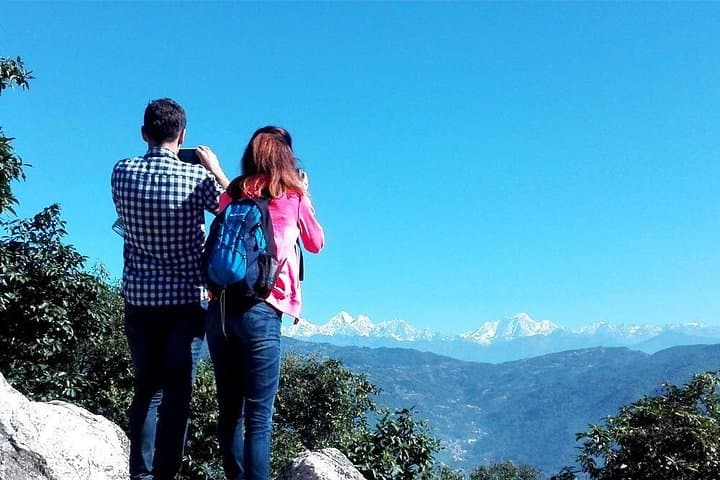
Before dawn the road from Kathmandu unfurls through sleeping rice terraces and small stone villages, the van's headlights carving a path toward a sharp ridge where sky meets snow. By the time you step onto Nagarkot’s viewing platform at about 2,100 m, the eastern horizon is already testing the patience of the high peaks, their snow fields catching the first clean light.
Verified experiences and guided adventures in the surrounding area.
Operated by Transport Hub Nepal · Nagarkot, Bagmati Province
Before dawn the road from Kathmandu unfurls through sleeping rice terraces and small stone villages, the van's headlights carving a path toward a sharp ridge where sky meets snow. By the time you step onto Nagarkot’s viewing platform at about 2,100 m, the eastern horizon is already testing the patience of the high peaks, their snow fields catching the first clean light.
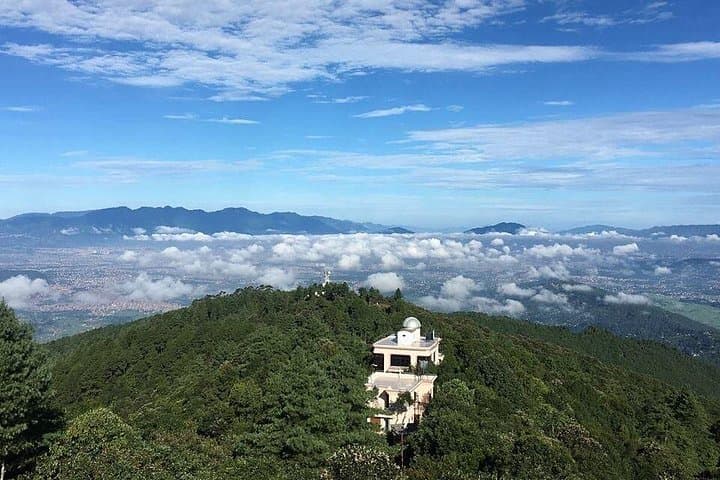
Nagarkot sits on the rim of the Kathmandu Valley, a vantage that has served local communities for centuries — both as lookout and seasonal pastureland. Geologically, the ridgeline is part of the Lesser Himalaya: folded slopes of shale, sandstone and ancient forest soils that support rhododendron, oak and blue pine. Culturally, the area is informed by Newar and Tamang hill villages; morning walks often pass small farmsteads, terraced fields and shrines that reveal rural Nepali life.
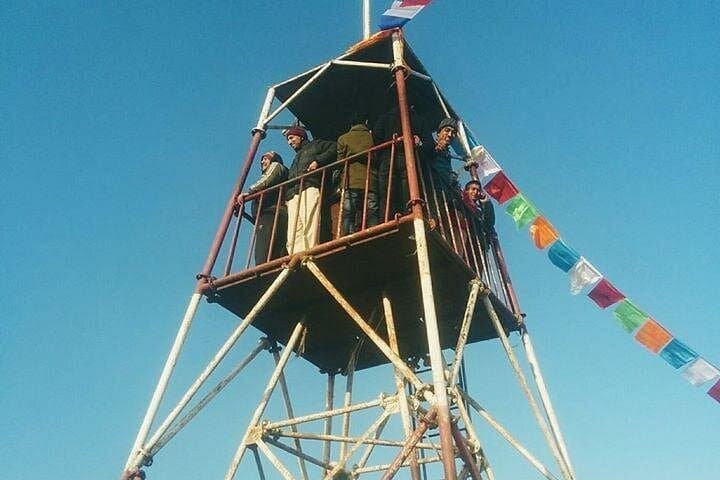
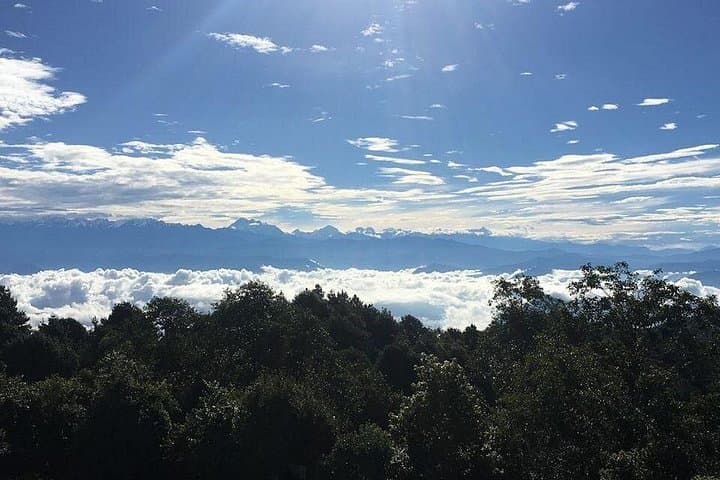
The tour compresses these elements into a manageable half-day: a 28 km drive east of Kathmandu, a short climb to an observation tower, sunrise watching, a village walk, and breakfast at a local guesthouse. Expect crisp air, sudden wind gusts, and wide, layered mountain views stretching from Manaslu and Ganesh Himal in the west to the Langtang and Jugal ranges toward the east.
Practical guidance: dress in layers for pre-dawn chill, bring a small daypack with water and camera/binoculars, and allow time to stroll the nearby lanes — Telkot and local farm tracks reveal quieter viewpoints. If you have extra time, combine the return with a stop in Bhaktapur for Newari architecture.
The experience is low-impact but weather-dependent; clear skies reward early starts, while mist can soften the panorama into a different, quieter kind of beauty.
The trip is roughly 28 km and typically takes about 1–1.5 hours each way depending on traffic and road conditions.
Nagarkot sits near 2,100 m—most visitors do not experience serious symptoms, but stay hydrated, avoid heavy exertion, and consult a doctor if you have respiratory or heart conditions.
Yes; many itineraries offer a time-permitting extension or a combined stop in Bhaktapur to see historic Newari architecture.
Late autumn to early spring (October to March) often yields the clearest skies for long-range visibility, though early mornings in most months can produce dramatic light.
Transport Hub Nepal operates guided outdoor trips and adventures with an emphasis on safety, stewardship, and memorable experiences.
Before dawn the road from Kathmandu unfurls through sleeping rice terraces and small stone villages, the van's headlights carving a path toward a sharp ridge where sky meets snow. By the time you step onto Nagarkot’s viewing platform at about 2,100 m, the eastern horizon is already testing the patience of the high peaks, their snow fields catching the first clean light.
Before dawn the road from Kathmandu unfurls through sleeping rice terraces and small stone villages, the van's headlights carving a path toward a sharp ridge where sky meets snow. By the time you step onto Nagarkot’s viewing platform at about 2,100 m, the eastern horizon is already testing the patience of the high peaks, their snow fields catching the first clean light.
Nagarkot sits on the rim of the Kathmandu Valley, a vantage that has served local communities for centuries — both as lookout and seasonal pastureland. Geologically, the ridgeline is part of the Lesser Himalaya: folded slopes of shale, sandstone and ancient forest soils that support rhododendron, oak and blue pine. Culturally, the area is informed by Newar and Tamang hill villages; morning walks often pass small farmsteads, terraced fields and shrines that reveal rural Nepali life.
The tour compresses these elements into a manageable half-day: a 28 km drive east of Kathmandu, a short climb to an observation tower, sunrise watching, a village walk, and breakfast at a local guesthouse. Expect crisp air, sudden wind gusts, and wide, layered mountain views stretching from Manaslu and Ganesh Himal in the west to the Langtang and Jugal ranges toward the east.
Practical guidance: dress in layers for pre-dawn chill, bring a small daypack with water and camera/binoculars, and allow time to stroll the nearby lanes — Telkot and local farm tracks reveal quieter viewpoints. If you have extra time, combine the return with a stop in Bhaktapur for Newari architecture.
The experience is low-impact but weather-dependent; clear skies reward early starts, while mist can soften the panorama into a different, quieter kind of beauty.