THE ADVENTURE COLLECTIVE® · Independent discovery and booking for outdoor travel

Beat the crowds and watch Rio wake from the ledge of Telegraph Rock. This early-morning hike delivers sweeping coastal views, dramatic light for photos, and a guided approach timed to sunrise.
Beat the crowds and watch Rio wake from the ledge of Telegraph Rock. This early-morning hike delivers sweeping coastal views, dramatic light for photos, and a guided approach timed to sunrise.
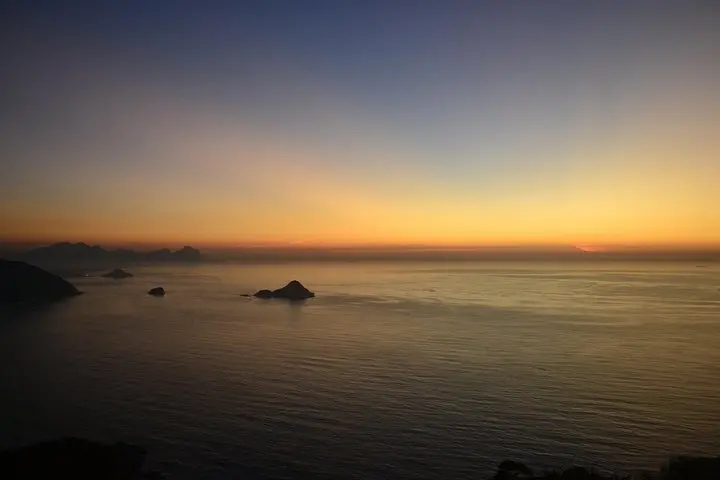
Before dawn you step from an air-conditioned van into a gray coastal chill, the city lights of Rio shrinking behind you as the trail pulls you uphill. Telegraph Rock (Pedra do Telégrafo) crowns a basalt outcrop that throws the coastline into sharp relief; by the time the sun clears the horizon the rock and ocean trade the kind of light that makes every contour count.
Verified experiences and guided adventures in the surrounding area.
Operated by Be Adventure · Rio de Janeiro, Rio de Janeiro
Before dawn you step from an air-conditioned van into a gray coastal chill, the city lights of Rio shrinking behind you as the trail pulls you uphill. Telegraph Rock (Pedra do Telégrafo) crowns a basalt outcrop that throws the coastline into sharp relief; by the time the sun clears the horizon the rock and ocean trade the kind of light that makes every contour count.
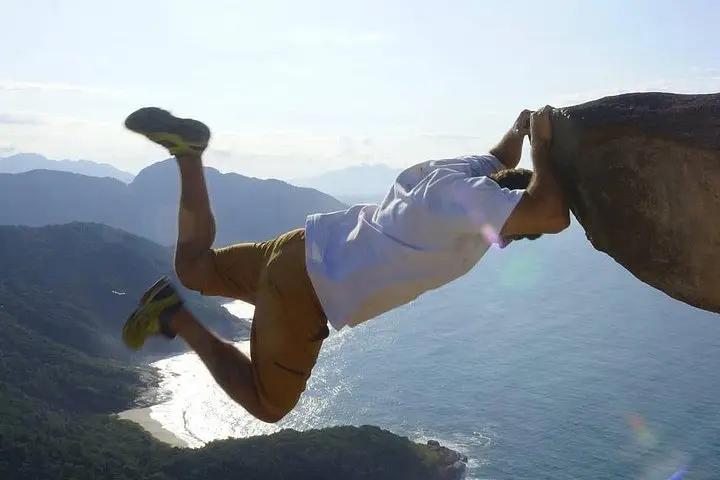
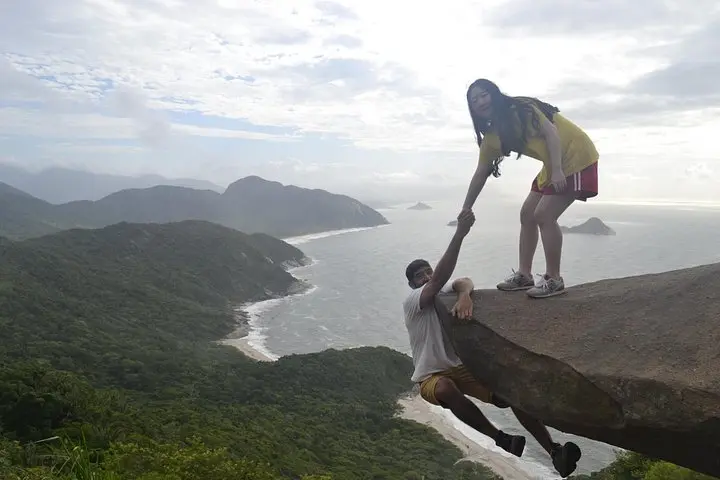
The ledge earned its name from an old telegraph post once used by fishermen and local rangers; today it’s famous for gravity-defying photos and panoramic views of the western shore, Grumari cliffs, and the distant silhouette of Sugarloaf. Geologically, the viewpoint sits on hardened intrusive rock that resists the softer coastal sediment—hence the abrupt, photogenic promontory. Culturally, early starts are part ritual: locals and guides beat the daytime crowds and long queues to claim the best angles.
Expect a steady, sometimes rocky ascent of a few hundred vertical meters over narrow paths and exposed sections. The guide provided with this tour times the approach for sunrise, leads the group to safer photo spots (rather than the most viral poses), and supplies local context on flora, access rules, and etiquette.
Practical guidance: wear grippy shoes, layer for a cold-to-warm transition, carry 1–2 liters of water, and plan for tight parking and short, steep sections. The best photos come in the first 30 minutes after sunrise—arrive early, respect rope barriers, and leave no trace so the viewpoint remains open for the next dawn.
This tour schedules about 4 hours total including transfers; the uphill approach is typically 30–60 minutes depending on pace and stopping for photos.
Children over 10 may be suitable if supervised; the operator advises it is not appropriate for younger kids and some sections are exposed.
Parking is limited near the start; many visitors opt for a guided transfer included with tours to avoid early-parking issues and navigation.
Yes—this tour includes a bilingual guide who manages logistics, route choice, and local interpretation.
Be Adventure operates guided outdoor trips and adventures with an emphasis on safety, stewardship, and memorable experiences.
Before dawn you step from an air-conditioned van into a gray coastal chill, the city lights of Rio shrinking behind you as the trail pulls you uphill. Telegraph Rock (Pedra do Telégrafo) crowns a basalt outcrop that throws the coastline into sharp relief; by the time the sun clears the horizon the rock and ocean trade the kind of light that makes every contour count.
Before dawn you step from an air-conditioned van into a gray coastal chill, the city lights of Rio shrinking behind you as the trail pulls you uphill. Telegraph Rock (Pedra do Telégrafo) crowns a basalt outcrop that throws the coastline into sharp relief; by the time the sun clears the horizon the rock and ocean trade the kind of light that makes every contour count.
The ledge earned its name from an old telegraph post once used by fishermen and local rangers; today it’s famous for gravity-defying photos and panoramic views of the western shore, Grumari cliffs, and the distant silhouette of Sugarloaf. Geologically, the viewpoint sits on hardened intrusive rock that resists the softer coastal sediment—hence the abrupt, photogenic promontory. Culturally, early starts are part ritual: locals and guides beat the daytime crowds and long queues to claim the best angles.
Expect a steady, sometimes rocky ascent of a few hundred vertical meters over narrow paths and exposed sections. The guide provided with this tour times the approach for sunrise, leads the group to safer photo spots (rather than the most viral poses), and supplies local context on flora, access rules, and etiquette.
Practical guidance: wear grippy shoes, layer for a cold-to-warm transition, carry 1–2 liters of water, and plan for tight parking and short, steep sections. The best photos come in the first 30 minutes after sunrise—arrive early, respect rope barriers, and leave no trace so the viewpoint remains open for the next dawn.