THE ADVENTURE COLLECTIVE® · Independent discovery and booking for outdoor travel

A compact two-day private itinerary from Delhi to Agra that times a sunrise visit to the Taj Mahal and pairs Delhi’s key Mughal monuments with private transport and a night in a 4-star hotel. Ideal for travelers with limited time who want sunrise photos and efficient logistics.
A compact two-day private itinerary from Delhi to Agra that times a sunrise visit to the Taj Mahal and pairs Delhi’s key Mughal monuments with private transport and a night in a 4-star hotel. Ideal for travelers with limited time who want sunrise photos and efficient logistics.
You step from a sleeping Delhi hotel into a pre-dawn hush, the city’s rumble fading as your private car threads north toward Agra. By the time pale light washes the Yamuna’s surface, the Taj Mahal opens like a palimpsest — white marble cooling from night, gardens holding their breath while the mausoleum slowly reveals its contours.
Verified experiences and guided adventures in the surrounding area.
Operated by INDIA TRIP DESIGNER India · Agra, Uttar Pradesh
You step from a sleeping Delhi hotel into a pre-dawn hush, the city’s rumble fading as your private car threads north toward Agra. By the time pale light washes the Yamuna’s surface, the Taj Mahal opens like a palimpsest — white marble cooling from night, gardens holding their breath while the mausoleum slowly reveals its contours.
The route links two layers of Mughal history: Humayun’s Tomb and Qutub Minar in Delhi, stone records of imperial ambition and early Indo-Islamic architecture, then the silent, ordered geometry of Shah Jahan’s era in Agra. Geologically, the Ganges-Brahmaputra plains give the region its flat horizon; the Taj’s marble was quarried hundreds of kilometres away and transported here by skilled artisans.
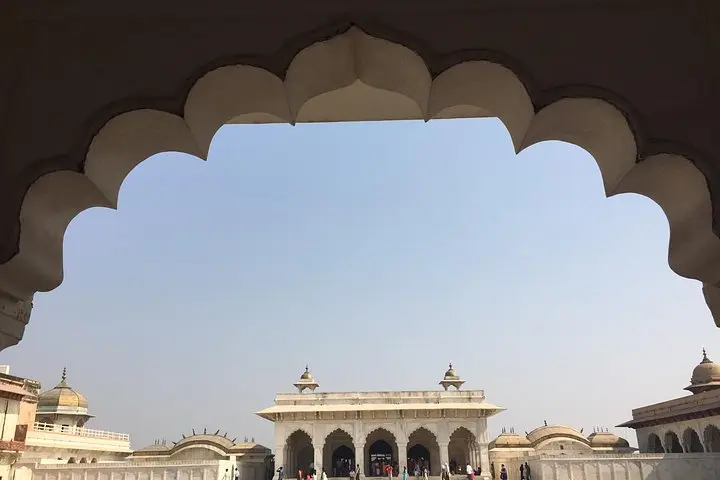
Culturally, the tour moves through living marketplaces, Mughal-era mosques, and the fortifications of Agra Fort — sites where craft, court life, and devotion intersect. The Yamuna plays a quiet role, its current framing views from the Taj’s rear and reminding visitors that monuments sit in a landscape as much as history.
Practical guidance: plan for early starts (pickup around 2:30 AM on day two), wear closed walking shoes for uneven stone, and bring sun protection for mid-day walking. Carry small cash for local vendors and leave large bags at the hotel or in your private vehicle; many heritage sites enforce strict bag rules. Expect two full days with light walking and several short climbs of ramps and steps inside forts. If you want sunrise photos on the Taj’s reflecting pool, aim to arrive before gates open and be ready for controlled entry and security checks.
The private transfer takes about 3 to 4 hours depending on traffic; the operator typically departs very early to reach Agra for sunrise.
Yes, this itinerary includes monument entrance fees for the Taj Mahal and other listed sites.
The tour lists 4-star accommodation and transport as included; confirm specific meal arrangements at booking.
Yes—physical demand is low, but the itinerary notes restrictions for travelers with serious heart or spinal conditions and recommends accompaniment for children.
INDIA TRIP DESIGNER India operates guided outdoor trips and adventures with an emphasis on safety, stewardship, and memorable experiences.
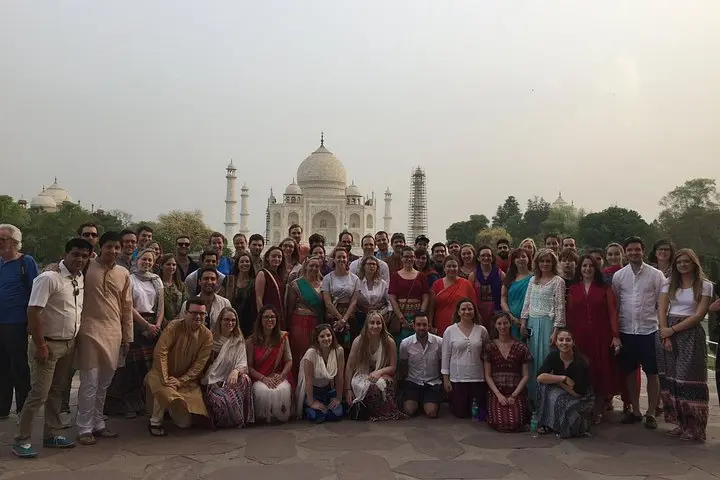
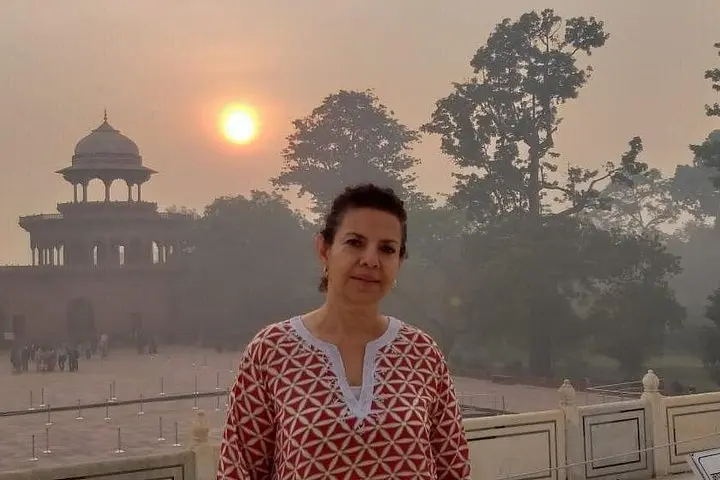
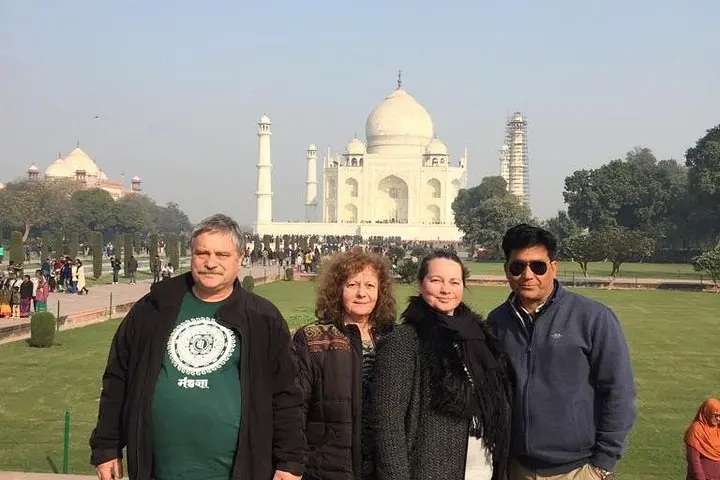
You step from a sleeping Delhi hotel into a pre-dawn hush, the city’s rumble fading as your private car threads north toward Agra. By the time pale light washes the Yamuna’s surface, the Taj Mahal opens like a palimpsest — white marble cooling from night, gardens holding their breath while the mausoleum slowly reveals its contours.
You step from a sleeping Delhi hotel into a pre-dawn hush, the city’s rumble fading as your private car threads north toward Agra. By the time pale light washes the Yamuna’s surface, the Taj Mahal opens like a palimpsest — white marble cooling from night, gardens holding their breath while the mausoleum slowly reveals its contours.
The route links two layers of Mughal history: Humayun’s Tomb and Qutub Minar in Delhi, stone records of imperial ambition and early Indo-Islamic architecture, then the silent, ordered geometry of Shah Jahan’s era in Agra. Geologically, the Ganges-Brahmaputra plains give the region its flat horizon; the Taj’s marble was quarried hundreds of kilometres away and transported here by skilled artisans.
Culturally, the tour moves through living marketplaces, Mughal-era mosques, and the fortifications of Agra Fort — sites where craft, court life, and devotion intersect. The Yamuna plays a quiet role, its current framing views from the Taj’s rear and reminding visitors that monuments sit in a landscape as much as history.
Practical guidance: plan for early starts (pickup around 2:30 AM on day two), wear closed walking shoes for uneven stone, and bring sun protection for mid-day walking. Carry small cash for local vendors and leave large bags at the hotel or in your private vehicle; many heritage sites enforce strict bag rules. Expect two full days with light walking and several short climbs of ramps and steps inside forts. If you want sunrise photos on the Taj’s reflecting pool, aim to arrive before gates open and be ready for controlled entry and security checks.