THE ADVENTURE COLLECTIVE® · Independent discovery and booking for outdoor travel

Catch sunrise at the Taj Mahal and combine it with focused sightseeing in Delhi on a private 2-day itinerary. Expect early starts, historic forts and markets, and practical tips for making the most of the sunrise experience.
Catch sunrise at the Taj Mahal and combine it with focused sightseeing in Delhi on a private 2-day itinerary. Expect early starts, historic forts and markets, and practical tips for making the most of the sunrise experience.
You step out before dawn in Agra, the air carrying the river’s coolness as the marble of the Taj Mahal catches first light—its white surface a quiet, slow reveal. The guide’s torch bobbing, the city still folding into the day, this tour stacks a sunrise at one of the world’s most photographed monuments onto a compact circuit through the political boulevards and old bazaars of Delhi.
Verified experiences and guided adventures in the surrounding area.
Operated by Jaipur Trip · Agra, Uttar Pradesh
You step out before dawn in Agra, the air carrying the river’s coolness as the marble of the Taj Mahal catches first light—its white surface a quiet, slow reveal. The guide’s torch bobbing, the city still folding into the day, this tour stacks a sunrise at one of the world’s most photographed monuments onto a compact circuit through the political boulevards and old bazaars of Delhi.
The route threads Mughal history and British-era planning: Shah Jahan’s grief made manifest in marble, Akbar’s red-sandstone citadel at Agra Fort, and in Delhi the Qutub Minar’s brick-and-stone minaret alongside the ceremonial sweep of India Gate. Geology here is visible in material—white Makrana marble of the Taj, the iron-rich red sandstone of Agra Fort—each carrying stories of quarrying, craft, and imperial ambition.
Culturally, expect lively markets, street food aromas, and a layered urban rhythm that contrasts Old Delhi’s narrow lanes with New Delhi’s broad avenues. Locals move the day: vendors setting up, riverbank gardeners, and pilgrims at memorials.
Practical guidance: plan for early starts, modest dress for religious sites, and comfortable shoes for uneven stone and courtyard walks. Bottled water and a light layer for cool mornings are useful; mid-day in summer can be hot and humid. The private transfer between cities makes the 2-day schedule achievable for travelers who want a concentrated, low-hassle experience of both cities.
Yes—this itinerary schedules an early visit to align with sunrise entry; expect metal detectors and small-bag rules, and some areas may be closed for conservation.
The tour description notes admission is not included, so budget for monument entry tickets which vary for domestic and foreign visitors.
The drive typically takes 3–4 hours each way by private car, depending on traffic and the route taken.
Breakfast and one night’s twin-share hotel accommodation in Agra are included; other meals are generally not included unless specified.
Jaipur Trip operates guided outdoor trips and adventures with an emphasis on safety, stewardship, and memorable experiences.

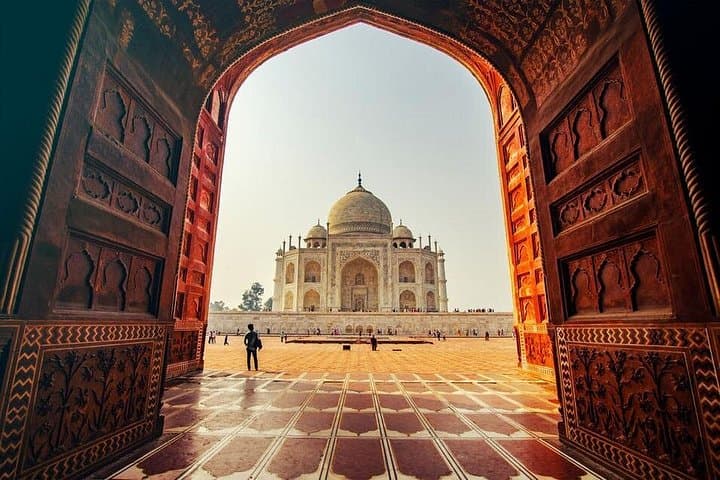


You step out before dawn in Agra, the air carrying the river’s coolness as the marble of the Taj Mahal catches first light—its white surface a quiet, slow reveal. The guide’s torch bobbing, the city still folding into the day, this tour stacks a sunrise at one of the world’s most photographed monuments onto a compact circuit through the political boulevards and old bazaars of Delhi.
You step out before dawn in Agra, the air carrying the river’s coolness as the marble of the Taj Mahal catches first light—its white surface a quiet, slow reveal. The guide’s torch bobbing, the city still folding into the day, this tour stacks a sunrise at one of the world’s most photographed monuments onto a compact circuit through the political boulevards and old bazaars of Delhi.
The route threads Mughal history and British-era planning: Shah Jahan’s grief made manifest in marble, Akbar’s red-sandstone citadel at Agra Fort, and in Delhi the Qutub Minar’s brick-and-stone minaret alongside the ceremonial sweep of India Gate. Geology here is visible in material—white Makrana marble of the Taj, the iron-rich red sandstone of Agra Fort—each carrying stories of quarrying, craft, and imperial ambition.
Culturally, expect lively markets, street food aromas, and a layered urban rhythm that contrasts Old Delhi’s narrow lanes with New Delhi’s broad avenues. Locals move the day: vendors setting up, riverbank gardeners, and pilgrims at memorials.
Practical guidance: plan for early starts, modest dress for religious sites, and comfortable shoes for uneven stone and courtyard walks. Bottled water and a light layer for cool mornings are useful; mid-day in summer can be hot and humid. The private transfer between cities makes the 2-day schedule achievable for travelers who want a concentrated, low-hassle experience of both cities.