THE ADVENTURE COLLECTIVE® · Independent discovery and booking for outdoor travel

Catch the Taj Mahal at first light on a private two-day tour that pairs Delhi’s world-class monuments with Agra’s Mughal brilliance. Ideal for travelers who want curated history, early-morning photography, and minimal logistics, this itinerary delivers highlights across two compact days.
Catch the Taj Mahal at first light on a private two-day tour that pairs Delhi’s world-class monuments with Agra’s Mughal brilliance. Ideal for travelers who want curated history, early-morning photography, and minimal logistics, this itinerary delivers highlights across two compact days.
You step from the car before dawn and the Taj Mahal is already working on the light — marble cooling from gold to pale blue as the sun clears the horizon. The Yamuna slides by like a slow mirror, daring you to catch the first photo before tour groups arrive.
Verified experiences and guided adventures in the surrounding area.
Operated by Private Taj Tour · Agra, Uttar Pradesh
You step from the car before dawn and the Taj Mahal is already working on the light — marble cooling from gold to pale blue as the sun clears the horizon. The Yamuna slides by like a slow mirror, daring you to catch the first photo before tour groups arrive.
This private two-day itinerary pairs New Delhi’s imperial and colonial landmarks with Agra’s Mughal masterpieces. In Delhi, the Qutub Minar and Humayun’s Tomb trace the city’s medieval and Mughal eras; geometric gardens and red sandstone fortresses speak to centuries of contest and patronage. Agra’s Taj Mahal, built by Shah Jahan in the 17th century as a mausoleum for Mumtaz Mahal, sits on the riverbank, its white façade sensitive to weather and air — the monument’s maintenance has long been tied to conservation efforts for the Yamuna and local air quality.
Expect a mix of city traffic and rural plains on the three-hour drive between capitals. The program includes a pre-dawn visit to the Taj, a walk through Agra Fort, and curated stops around Delhi’s Lutyens’ architecture and modern temples. Local culture is immediate: street markets, roadside chai, and vendors selling marble inlay souvenirs.
Practical guidance: book the sunrise entry in advance (Taj closed Fridays), wear supportive walking shoes and modest layers for indoor shrines, and bring sun protection and bottled water. Mornings are best for photos and crowds; mid-day in Agra can be hot and dusty. If mobility is a concern, note that both cities offer accessibility options but expect steps at some heritage sites.
No — the Taj Mahal is closed on Fridays for prayer; plan sunrise visits on other days and book tickets ahead.
Typical drive time is about 3 to 4 hours each way depending on traffic; the itinerary schedules a late-afternoon transfer and an early-morning return.
Some options include a one-night 3-star hotel and monument tickets if the booking selected that package; confirm inclusions when you reserve.
The tour lists wheelchair-accessible transport and many sites have accessible areas, but some historic structures have steps—notify operators of mobility needs in advance.
Private Taj Tour operates guided outdoor trips and adventures with an emphasis on safety, stewardship, and memorable experiences.
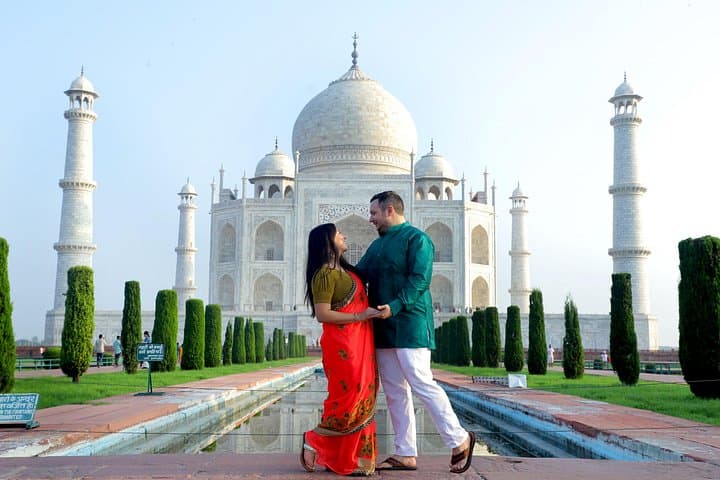


You step from the car before dawn and the Taj Mahal is already working on the light — marble cooling from gold to pale blue as the sun clears the horizon. The Yamuna slides by like a slow mirror, daring you to catch the first photo before tour groups arrive.
You step from the car before dawn and the Taj Mahal is already working on the light — marble cooling from gold to pale blue as the sun clears the horizon. The Yamuna slides by like a slow mirror, daring you to catch the first photo before tour groups arrive.
This private two-day itinerary pairs New Delhi’s imperial and colonial landmarks with Agra’s Mughal masterpieces. In Delhi, the Qutub Minar and Humayun’s Tomb trace the city’s medieval and Mughal eras; geometric gardens and red sandstone fortresses speak to centuries of contest and patronage. Agra’s Taj Mahal, built by Shah Jahan in the 17th century as a mausoleum for Mumtaz Mahal, sits on the riverbank, its white façade sensitive to weather and air — the monument’s maintenance has long been tied to conservation efforts for the Yamuna and local air quality.
Expect a mix of city traffic and rural plains on the three-hour drive between capitals. The program includes a pre-dawn visit to the Taj, a walk through Agra Fort, and curated stops around Delhi’s Lutyens’ architecture and modern temples. Local culture is immediate: street markets, roadside chai, and vendors selling marble inlay souvenirs.
Practical guidance: book the sunrise entry in advance (Taj closed Fridays), wear supportive walking shoes and modest layers for indoor shrines, and bring sun protection and bottled water. Mornings are best for photos and crowds; mid-day in Agra can be hot and dusty. If mobility is a concern, note that both cities offer accessibility options but expect steps at some heritage sites.