THE ADVENTURE COLLECTIVE® · Independent discovery and booking for outdoor travel

Watch the sun carve light across Guilin’s karst peaks on a half-day sunrise tour to Xianggong Mountain. This small-group outing combines a short pre-dawn drive, a brisk ascent, and a cinematic river-valley vista ideal for photographers.
Watch the sun carve light across Guilin’s karst peaks on a half-day sunrise tour to Xianggong Mountain. This small-group outing combines a short pre-dawn drive, a brisk ascent, and a cinematic river-valley vista ideal for photographers.
Before first light, Xianggong Mountain feels like a stage: jagged karst peaks rise from a sleeping river valley while the Lijiang River coils below like a dark ribbon. Guides lead small groups up stone steps; headlamps bob and thermoses steam as the horizon sings the sun into the limestone teeth. On a good morning, low cloud and changing light turn the valley into bands of shadow and gold.
Verified experiences and guided adventures in the surrounding area.
Operated by happychinatours · Yangshuo, Guangxi
Before first light, Xianggong Mountain feels like a stage: jagged karst peaks rise from a sleeping river valley while the Lijiang River coils below like a dark ribbon. Guides lead small groups up stone steps; headlamps bob and thermoses steam as the horizon sings the sun into the limestone teeth. On a good morning, low cloud and changing light turn the valley into bands of shadow and gold.
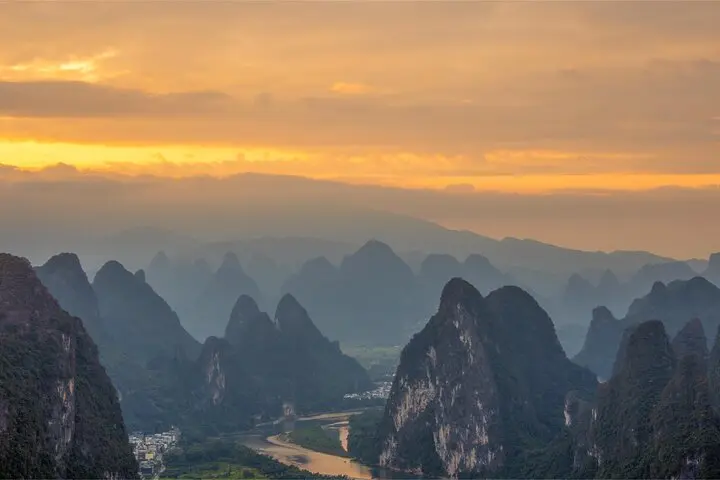
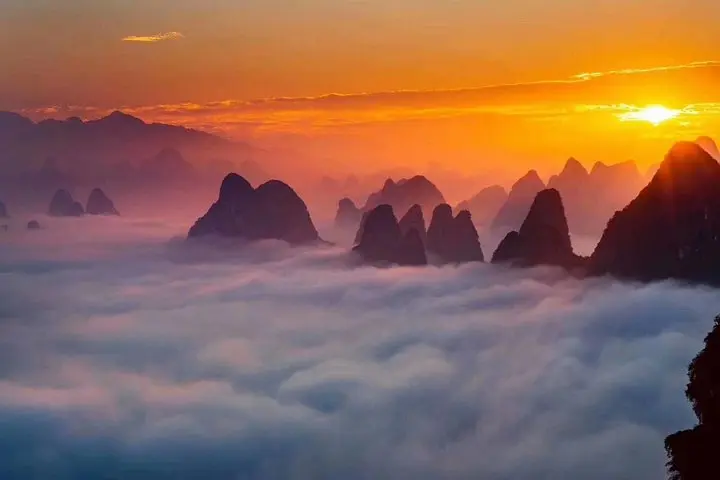
Xianggong perches on the west bank of the Lijiang River between Huangbu Shoal and the famed Nine-Horse Mural. The peaks are classic Guilin karst—limestone sculpted by tropical weathering over millions of years—with terraced fields and riverside villages that reflect a long history of rice cultivation and river trade. Photographers prize this viewpoint: the angle compresses peaks into dramatic layers and often captures the sea of clouds that forms when cool valley air meets warm sunlight.
Logistics are simple but time-sensitive. Most tours pick up in Yangshuo around 4:30 a.m., drive ~40 minutes, and allow 60–90 minutes on the summit for sunrise and photos; the whole excursion returns by midmorning. Trails are mostly stone steps and loose gravel—steep in spots but short—and the Xianggong ticket is normally included. Bring layers for pre-dawn chill, a headlamp, a compact tripod for long exposures, and sturdy shoes for uneven footing.
Best windows run July through December when thermal conditions favor morning fog; expect other visitors and plan to arrive early for prime viewing. Stick to marked paths to protect fragile karst vegetation and pack out rubbish—this landscape recovers slowly but rewards careful visitors with one of southern China’s most cinematic sunrises.
Most operators drive about 30–45 minutes depending on pickup location and traffic; plan for an early pre-dawn transfer.
The ascent is relatively short but steep in places; it’s suitable for most people with moderate fitness, though not recommended for those with serious mobility issues.
July through December tends to produce the most reliable morning fog and cloud layers that create the sea-of-clouds effect.
Many half-day tours include the Xianggong ticket and round-trip transfer from central Yangshuo—confirm at booking if you need hotel pickup specifics.
happychinatours operates guided outdoor trips and adventures with an emphasis on safety, stewardship, and memorable experiences.
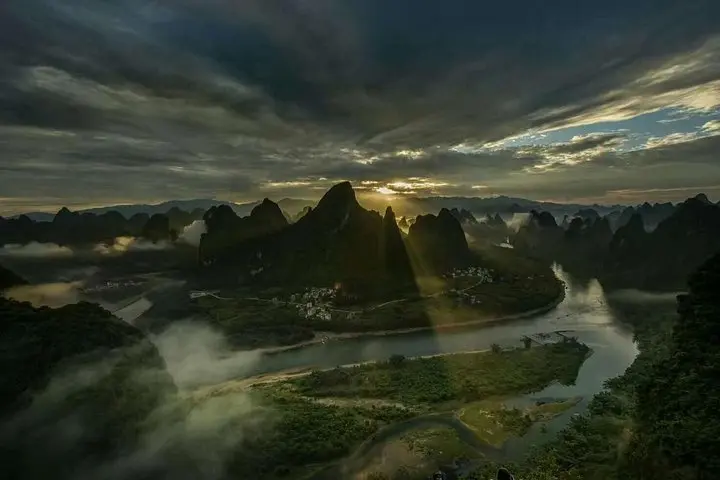
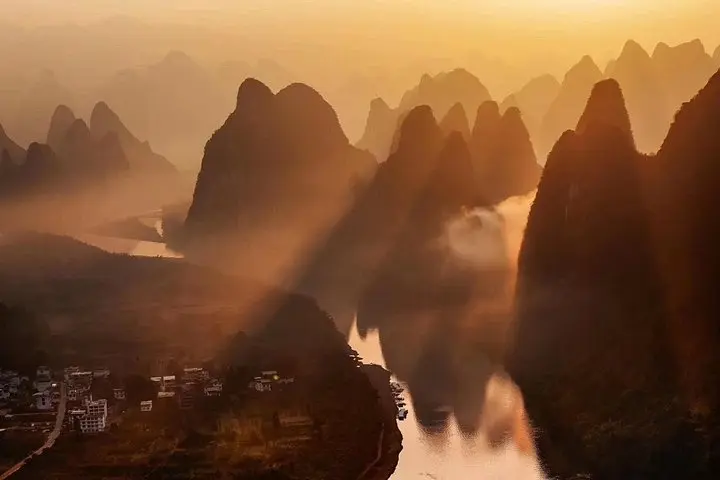
Before first light, Xianggong Mountain feels like a stage: jagged karst peaks rise from a sleeping river valley while the Lijiang River coils below like a dark ribbon. Guides lead small groups up stone steps; headlamps bob and thermoses steam as the horizon sings the sun into the limestone teeth. On a good morning, low cloud and changing light turn the valley into bands of shadow and gold.
Before first light, Xianggong Mountain feels like a stage: jagged karst peaks rise from a sleeping river valley while the Lijiang River coils below like a dark ribbon. Guides lead small groups up stone steps; headlamps bob and thermoses steam as the horizon sings the sun into the limestone teeth. On a good morning, low cloud and changing light turn the valley into bands of shadow and gold.
Xianggong perches on the west bank of the Lijiang River between Huangbu Shoal and the famed Nine-Horse Mural. The peaks are classic Guilin karst—limestone sculpted by tropical weathering over millions of years—with terraced fields and riverside villages that reflect a long history of rice cultivation and river trade. Photographers prize this viewpoint: the angle compresses peaks into dramatic layers and often captures the sea of clouds that forms when cool valley air meets warm sunlight.
Logistics are simple but time-sensitive. Most tours pick up in Yangshuo around 4:30 a.m., drive ~40 minutes, and allow 60–90 minutes on the summit for sunrise and photos; the whole excursion returns by midmorning. Trails are mostly stone steps and loose gravel—steep in spots but short—and the Xianggong ticket is normally included. Bring layers for pre-dawn chill, a headlamp, a compact tripod for long exposures, and sturdy shoes for uneven footing.
Best windows run July through December when thermal conditions favor morning fog; expect other visitors and plan to arrive early for prime viewing. Stick to marked paths to protect fragile karst vegetation and pack out rubbish—this landscape recovers slowly but rewards careful visitors with one of southern China’s most cinematic sunrises.