THE ADVENTURE COLLECTIVE® · Independent discovery and booking for outdoor travel

Float above Luxor at sunrise for a 45-minute hot air balloon flight, then spend a full day exploring the West Bank’s major archaeological sites including the Valley of the Kings and Hatshepsut’s temple. Perfect for travelers who want aerial perspective and hands-on history in one long day.
Float above Luxor at sunrise for a 45-minute hot air balloon flight, then spend a full day exploring the West Bank’s major archaeological sites including the Valley of the Kings and Hatshepsut’s temple. Perfect for travelers who want aerial perspective and hands-on history in one long day.
The basket rises before dawn, and the plain beneath Luxor unfolds like an archaeological map—the Nile a dark ribbon, clumps of fields, and the ochre cliffs of the Theban Hills looming to the west.
Verified experiences and guided adventures in the surrounding area.
Operated by Egypt Lovely Tours · Luxor, Luxor Governorate
The basket rises before dawn, and the plain beneath Luxor unfolds like an archaeological map—the Nile a dark ribbon, clumps of fields, and the ochre cliffs of the Theban Hills looming to the west.
From 45 minutes aloft you read the necropolis at a glance: terraces of tombs carved into limestone, the linear sweep of the Valley of the Kings, and the towering silhouette of Hatshepsut’s mortuary temple. After landing, a private air-conditioned vehicle and motorboat transfer you across the Nile to the West Bank for a focused day among pharaonic sites.
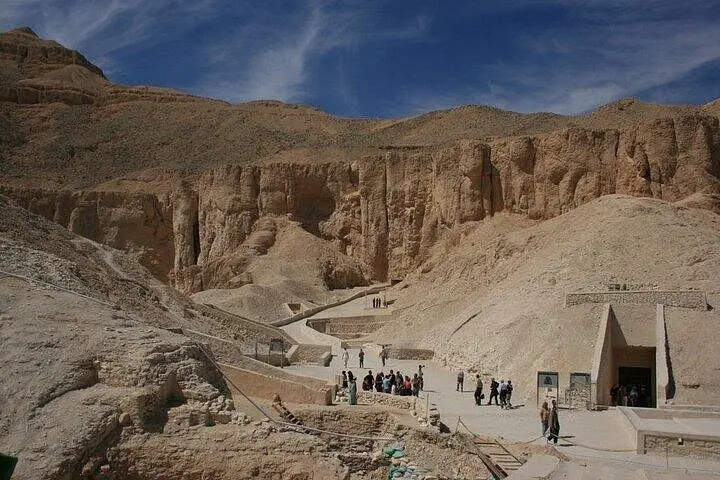
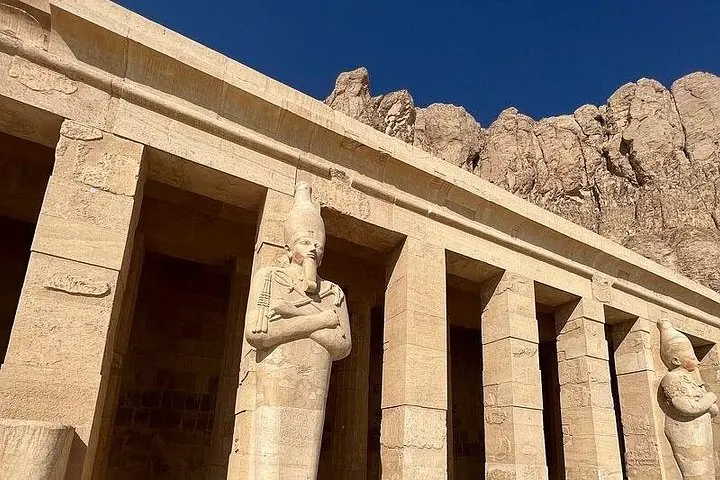
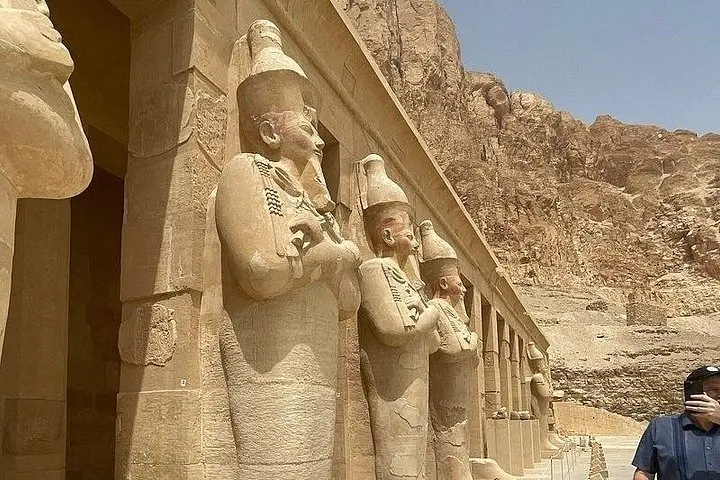
This route threads New Kingdom power centers: Valley of the Kings (royal tombs), Valley of the Queens, Hatshepsut’s architecturally radical temple, the workers’ tombs, and Medinet Habu (Ramses III). Geologically, the area’s soft limestone and sandstone made large-scale carving possible; the Nile’s annual flood historically fed nearby settlements and shaped travel corridors.
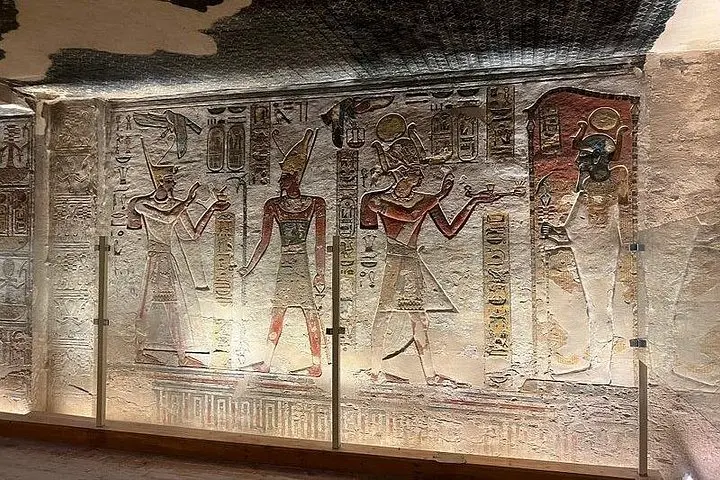
Expect long stretches on foot across sunbaked stones and short climbs at temple ramps. Cultural context matters: guides translate hieroglyphic themes and explain funerary rites that once governed these valley complexes.
Practicalities: pickups are pre-dawn for the balloon; dress in layers, bring sun protection and comfortable walking shoes, and carry local currency for optional tips. Most entry fees and bottled water are included; weather can cancel balloons, so allow a flexible morning. This combination delivers aerial perspective and on-the-ground archaeology in one long, concentrated day.
Hotel pickups are before sunrise for the balloon (usually 4:00–5:00 AM depending on season); the overall tour runs about 12 hours including transfers.
Commercial operators follow safety protocols and brief passengers before flight; balloons can be canceled for unsafe weather and refunds or rescheduling are generally available.
The package lists entry fees for Valley of the Kings, Hatshepsut Temple, Valley of the Queens, workers’ tombs, and Medinet Habu as included.
Policies vary by operator; infants may be restricted for balloon flights and pregnant travelers should consult their doctor and disclose condition when booking.
Egypt Lovely Tours operates guided outdoor trips and adventures with an emphasis on safety, stewardship, and memorable experiences.
The basket rises before dawn, and the plain beneath Luxor unfolds like an archaeological map—the Nile a dark ribbon, clumps of fields, and the ochre cliffs of the Theban Hills looming to the west.
The basket rises before dawn, and the plain beneath Luxor unfolds like an archaeological map—the Nile a dark ribbon, clumps of fields, and the ochre cliffs of the Theban Hills looming to the west.
From 45 minutes aloft you read the necropolis at a glance: terraces of tombs carved into limestone, the linear sweep of the Valley of the Kings, and the towering silhouette of Hatshepsut’s mortuary temple. After landing, a private air-conditioned vehicle and motorboat transfer you across the Nile to the West Bank for a focused day among pharaonic sites.
This route threads New Kingdom power centers: Valley of the Kings (royal tombs), Valley of the Queens, Hatshepsut’s architecturally radical temple, the workers’ tombs, and Medinet Habu (Ramses III). Geologically, the area’s soft limestone and sandstone made large-scale carving possible; the Nile’s annual flood historically fed nearby settlements and shaped travel corridors.
Expect long stretches on foot across sunbaked stones and short climbs at temple ramps. Cultural context matters: guides translate hieroglyphic themes and explain funerary rites that once governed these valley complexes.
Practicalities: pickups are pre-dawn for the balloon; dress in layers, bring sun protection and comfortable walking shoes, and carry local currency for optional tips. Most entry fees and bottled water are included; weather can cancel balloons, so allow a flexible morning. This combination delivers aerial perspective and on-the-ground archaeology in one long, concentrated day.