THE ADVENTURE COLLECTIVE® · Independent discovery and booking for outdoor travel

Float over Pamukkale’s white travertines at sunrise, then explore the Roman ruins of Hierapolis and bathe in warm thermal pools. This full-day combo pairs a 45–60 minute balloon flight with guided site visits and a swim in Cleopatra’s Pool.
Float over Pamukkale’s white travertines at sunrise, then explore the Roman ruins of Hierapolis and bathe in warm thermal pools. This full-day combo pairs a 45–60 minute balloon flight with guided site visits and a swim in Cleopatra’s Pool.
The basket lifts as dawn unspools across white cliffs — below, terraces of glistening calcium carbonate catch the first light like frozen waves. From the air the landscape reads as geology and history layered together: a patchwork of springs, ancient ruins and agricultural plains stretching toward the Taurus range.
Verified experiences and guided adventures in the surrounding area.
Operated by HARLEY · Pamukkale, Denizli Province
The basket lifts as dawn unspools across white cliffs — below, terraces of glistening calcium carbonate catch the first light like frozen waves. From the air the landscape reads as geology and history layered together: a patchwork of springs, ancient ruins and agricultural plains stretching toward the Taurus range.
On the ground Pamukkale (meaning “cotton castle”) and the neighboring ruins of Hierapolis tell a story of thermal worship and Roman leisure. Travertine formed by hot, mineral-rich waters has built the stepped plates over millennia; Hierapolis grew beside them as a spa city, its theater, necropolis and Roman baths still visible. Cleopatra’s Pool, fed by a warm spring, keeps submerged columns from collapsed temples — a literal intersection of archaeology and bathing culture.
Expect a long, early day: pre-dawn pickup from Kemer, a 45–60 minute balloon flight depending on winds, then guided walks across terraces and through stone streets, a swim option in the thermal pool, and a sit-down lunch. Terrain is mostly paved and soft mineral formations that require barefoot walking in protected zones; the archaeological site includes stairs and uneven paving.
Practical pointers: wear non-marking shoes you can remove, bring sun protection and a small towel for the pool, and plan for minimal phone signal during parts of the site. The balloon portion follows strict weather limits; flights may be rescheduled for safety. Combined, the aerial perspective and on-the-ground archaeology make this day a concise, sensory introduction to one of Turkey’s most singular landscapes.
Flights typically last 45–60 minutes depending on wind conditions; ground transfers and the rest of the tour make the full day approximately 14–15 hours.
Yes—swimming is usually optional and may carry a separate entrance fee; the pool contains ancient columns and warm, mineral-rich water.
Children can usually attend, but the operator notes the balloon ride is not recommended for pregnant travelers—check age and health restrictions when booking.
Operators will postpone or cancel flights for safety; you may be offered an alternate date or refund for the balloon portion depending on policy.
HARLEY operates guided outdoor trips and adventures with an emphasis on safety, stewardship, and memorable experiences.
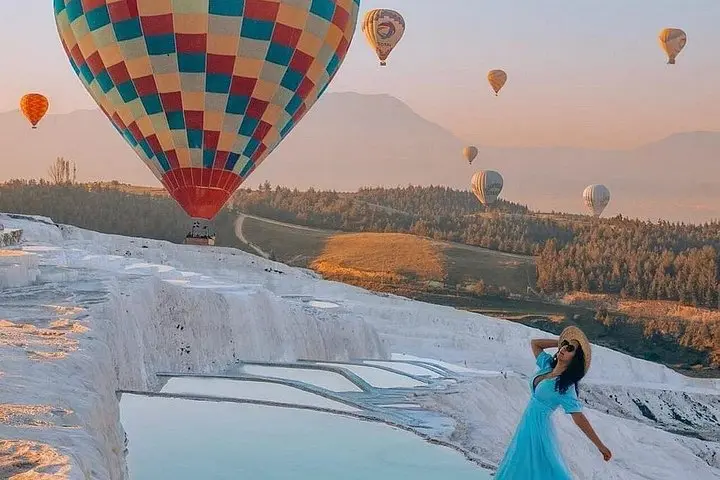


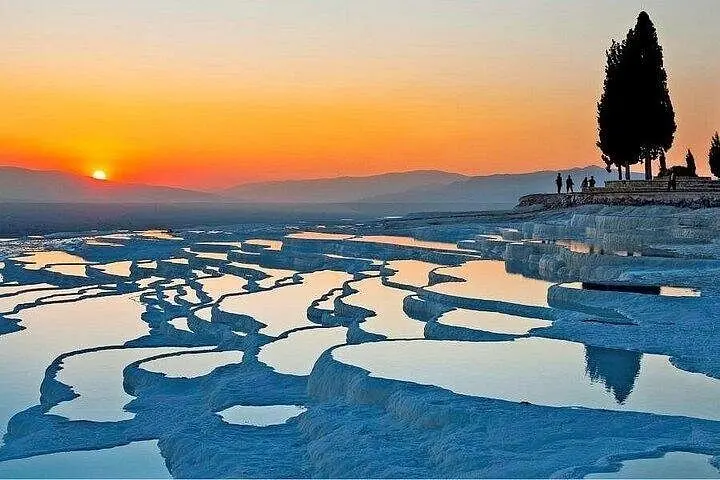
The basket lifts as dawn unspools across white cliffs — below, terraces of glistening calcium carbonate catch the first light like frozen waves. From the air the landscape reads as geology and history layered together: a patchwork of springs, ancient ruins and agricultural plains stretching toward the Taurus range.
The basket lifts as dawn unspools across white cliffs — below, terraces of glistening calcium carbonate catch the first light like frozen waves. From the air the landscape reads as geology and history layered together: a patchwork of springs, ancient ruins and agricultural plains stretching toward the Taurus range.
On the ground Pamukkale (meaning “cotton castle”) and the neighboring ruins of Hierapolis tell a story of thermal worship and Roman leisure. Travertine formed by hot, mineral-rich waters has built the stepped plates over millennia; Hierapolis grew beside them as a spa city, its theater, necropolis and Roman baths still visible. Cleopatra’s Pool, fed by a warm spring, keeps submerged columns from collapsed temples — a literal intersection of archaeology and bathing culture.
Expect a long, early day: pre-dawn pickup from Kemer, a 45–60 minute balloon flight depending on winds, then guided walks across terraces and through stone streets, a swim option in the thermal pool, and a sit-down lunch. Terrain is mostly paved and soft mineral formations that require barefoot walking in protected zones; the archaeological site includes stairs and uneven paving.
Practical pointers: wear non-marking shoes you can remove, bring sun protection and a small towel for the pool, and plan for minimal phone signal during parts of the site. The balloon portion follows strict weather limits; flights may be rescheduled for safety. Combined, the aerial perspective and on-the-ground archaeology make this day a concise, sensory introduction to one of Turkey’s most singular landscapes.