THE ADVENTURE COLLECTIVE® · Independent discovery and booking for outdoor travel

Two days from Marrakech to Zagora compress mountain passes, UNESCO kasbahs and a night in a private desert camp into an accessible Sahara experience. Ride camels at sunrise, explore Ait Ben Haddou, and learn practical tips for desert travel.
Two days from Marrakech to Zagora compress mountain passes, UNESCO kasbahs and a night in a private desert camp into an accessible Sahara experience. Ride camels at sunrise, explore Ait Ben Haddou, and learn practical tips for desert travel.
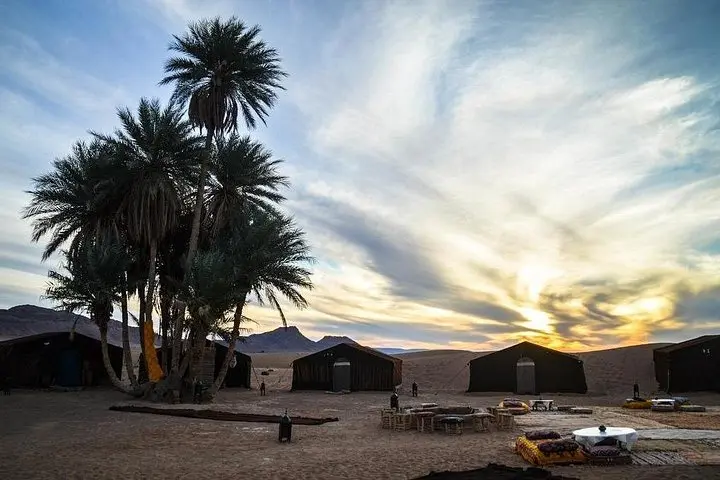
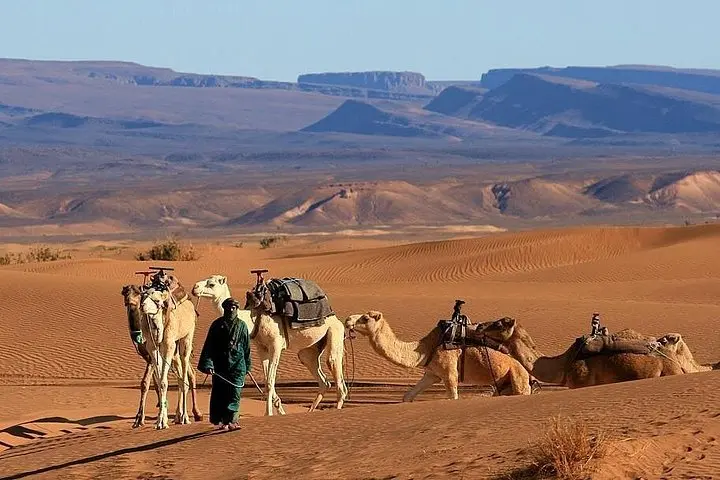
You wake before dawn as the camp exhales a cool desert breath; the dunes silhouette like low waves and a dozen camels stamp quietly while the first light steels the sand into gold. The Tinfou dunes near Zagora offer a short, honest stretch of Sahara that feels immediate—close enough to touch but large enough to reorient your senses.
Verified experiences and guided adventures in the surrounding area.
Operated by Morocco Vacation Travel Guide · Zagora, Drâa-Tafilalet
You wake before dawn as the camp exhales a cool desert breath; the dunes silhouette like low waves and a dozen camels stamp quietly while the first light steels the sand into gold. The Tinfou dunes near Zagora offer a short, honest stretch of Sahara that feels immediate—close enough to touch but large enough to reorient your senses.
This route threads history into landscape: the High Atlas, crossed at Tizi n'Tichka, funnels ancient caravan routes down into the Draa Valley where mud-brick ksars and kasbahs—Ait Ben Haddou and Tamnougalt among them—tell stories of trade, film crews and Berber families. Geologically, the area moves from schist and folded Atlas ridges to alluvial plains and wind-sculpted sand; the dunes are active, shifting with seasonal winds.
Culturally, expect warm hospitality: mule and camel handlers, local guides in small villages, and evening drum circles at camp. Practicalities matter here—days are long with six to eight hours on the road each day, uneven sand underfoot, and limited water points. Bring sun protection, layered clothing for cold desert nights, and closed shoes for dune walking. A private 4x4 and experienced driver shorten transitions, while an arranged camel trek gives a low-impact, traditional glimpse of desert travel.
Timing your sunrise camel ride, carrying a refillable water bottle, and leaving no trace at camps keeps the experience straightforward and respectful. This two-day circuit is compact but immersive: mountain passes, UNESCO kasbah architecture, a night in a private luxury tent, and a dawn that insists you keep moving forward.
The standard camel trek at the Tinfou dunes is about 1–2 hours, timed for sunset or sunrise, depending on the day's schedule.
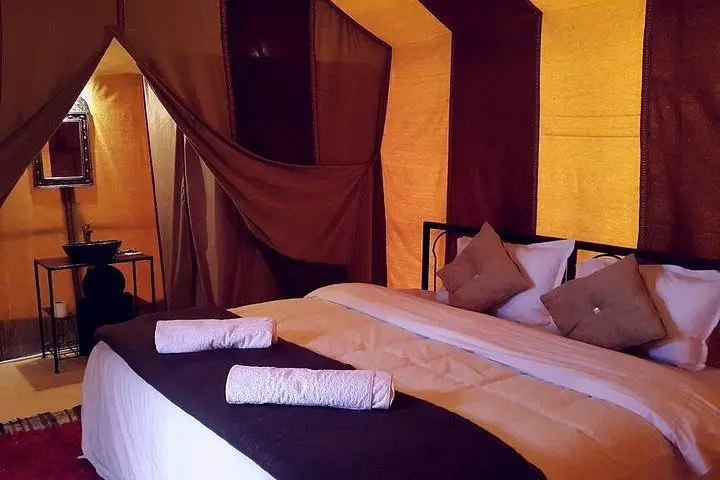
This tour includes private luxury desert tents with bedding, and most camps provide shared or private bathrooms and hot-water facilities at nearby locations.
Yes—infants and small children can be accommodated, but parental discretion is advised for long drives and overnight desert conditions.
Travel insurance that covers medical evacuation and desert activities is recommended due to remote locations and long road transfers.
Morocco Vacation Travel Guide operates guided outdoor trips and adventures with an emphasis on safety, stewardship, and memorable experiences.

You wake before dawn as the camp exhales a cool desert breath; the dunes silhouette like low waves and a dozen camels stamp quietly while the first light steels the sand into gold. The Tinfou dunes near Zagora offer a short, honest stretch of Sahara that feels immediate—close enough to touch but large enough to reorient your senses.
You wake before dawn as the camp exhales a cool desert breath; the dunes silhouette like low waves and a dozen camels stamp quietly while the first light steels the sand into gold. The Tinfou dunes near Zagora offer a short, honest stretch of Sahara that feels immediate—close enough to touch but large enough to reorient your senses.
This route threads history into landscape: the High Atlas, crossed at Tizi n'Tichka, funnels ancient caravan routes down into the Draa Valley where mud-brick ksars and kasbahs—Ait Ben Haddou and Tamnougalt among them—tell stories of trade, film crews and Berber families. Geologically, the area moves from schist and folded Atlas ridges to alluvial plains and wind-sculpted sand; the dunes are active, shifting with seasonal winds.
Culturally, expect warm hospitality: mule and camel handlers, local guides in small villages, and evening drum circles at camp. Practicalities matter here—days are long with six to eight hours on the road each day, uneven sand underfoot, and limited water points. Bring sun protection, layered clothing for cold desert nights, and closed shoes for dune walking. A private 4x4 and experienced driver shorten transitions, while an arranged camel trek gives a low-impact, traditional glimpse of desert travel.
Timing your sunrise camel ride, carrying a refillable water bottle, and leaving no trace at camps keeps the experience straightforward and respectful. This two-day circuit is compact but immersive: mountain passes, UNESCO kasbah architecture, a night in a private luxury tent, and a dawn that insists you keep moving forward.