THE ADVENTURE COLLECTIVE® · Independent discovery and booking for outdoor travel

Catch first light on a luxury catamaran to Phi Phi and Bamboo Island—swim in Pileh Lagoon, step ashore at Maya Bay, and snorkel coral gardens before the crowds arrive. This small-group sunrise tour balances calm crossings with memorable snorkeling and beach time.
Catch first light on a luxury catamaran to Phi Phi and Bamboo Island—swim in Pileh Lagoon, step ashore at Maya Bay, and snorkel coral gardens before the crowds arrive. This small-group sunrise tour balances calm crossings with memorable snorkeling and beach time.
The catamaran slips away from Phuket’s pier before dawn, the hull whispering as the horizon blushes into gold. Ahead, limestone cliffs of Phi Phi Ley rise like slow-moving weather, their sheer faces cleaving the light while the sea dares you to keep watch. Small-group boarding keeps the mood calm—this is a sunrise for the water as much as the people.
Verified experiences and guided adventures in the surrounding area.
The catamaran slips away from Phuket’s pier before dawn, the hull whispering as the horizon blushes into gold. Ahead, limestone cliffs of Phi Phi Ley rise like slow-moving weather, their sheer faces cleaving the light while the sea dares you to keep watch. Small-group boarding keeps the mood calm—this is a sunrise for the water as much as the people.
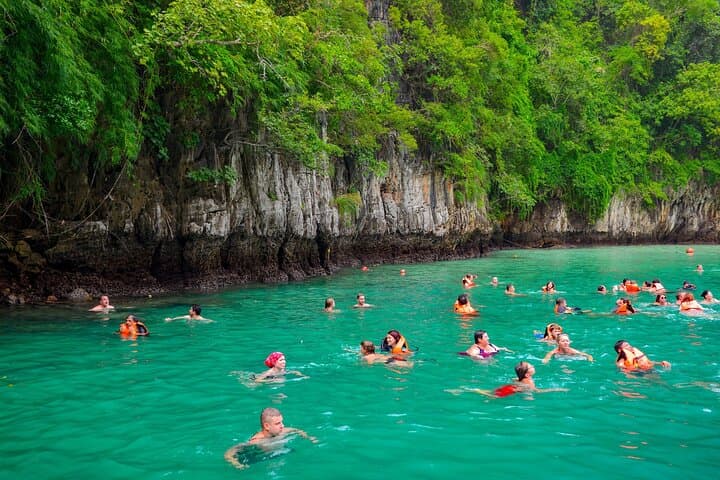
Phi Phi’s islands are young in geological terms: karst limestone carved by waves and monsoon winds into caves, cliffs and hidden lagoons. Maya Bay gained global attention in the 2000s and has since sparked debates about tourism and recovery; Pileh Lagoon, surrounded by vertical rock, offers a quiet counterpoint where currents encourage selfies and silent drifting. On Phi Phi Don, local fishing and tourism coexist—expect small settlements, coconut palms, and a seaside lunch featuring tropical fruit.
Practical rhythm kicks in after the first light. Expect roughly an 8-hour excursion with around 90 minutes of crossing each way, several short snorkel swims, and beach stops. Bring a lightweight towel, reef-safe sunscreen, and footwear that grips sand and boat ladders. Snorkeling here ranges from shallow coral gardens to 3–6 meter visibility pockets—basic swim skills are enough, though a mask that fits well makes the difference.
Plan for wind and sun: mornings are cooler but the day heats quickly. Respect the islands—follow guides on landing zones and avoid touching coral. The reward is simple: turquoise water that pulls you forward and limestone cliffs that seem to watch as you pass.
Crossings on a catamaran are typically around 75–90 minutes each way depending on sea conditions and the exact pier of departure.
Most tours supply masks, snorkels and fins, but bring a well‑fitting personal mask for comfort and better visibility.
Yes—non‑swimmers can participate if they stay with floatation aids and remain near guides during snorkel stops, but basic swimming confidence is recommended.
Access to Maya Bay has been managed in recent years for environmental recovery; tours may offer brief landings when permitted—follow the guide’s instructions and time limits.
The catamaran slips away from Phuket’s pier before dawn, the hull whispering as the horizon blushes into gold. Ahead, limestone cliffs of Phi Phi Ley rise like slow-moving weather, their sheer faces cleaving the light while the sea dares you to keep watch. Small-group boarding keeps the mood calm—this is a sunrise for the water as much as the people.
The catamaran slips away from Phuket’s pier before dawn, the hull whispering as the horizon blushes into gold. Ahead, limestone cliffs of Phi Phi Ley rise like slow-moving weather, their sheer faces cleaving the light while the sea dares you to keep watch. Small-group boarding keeps the mood calm—this is a sunrise for the water as much as the people.
Phi Phi’s islands are young in geological terms: karst limestone carved by waves and monsoon winds into caves, cliffs and hidden lagoons. Maya Bay gained global attention in the 2000s and has since sparked debates about tourism and recovery; Pileh Lagoon, surrounded by vertical rock, offers a quiet counterpoint where currents encourage selfies and silent drifting. On Phi Phi Don, local fishing and tourism coexist—expect small settlements, coconut palms, and a seaside lunch featuring tropical fruit.
Practical rhythm kicks in after the first light. Expect roughly an 8-hour excursion with around 90 minutes of crossing each way, several short snorkel swims, and beach stops. Bring a lightweight towel, reef-safe sunscreen, and footwear that grips sand and boat ladders. Snorkeling here ranges from shallow coral gardens to 3–6 meter visibility pockets—basic swim skills are enough, though a mask that fits well makes the difference.
Plan for wind and sun: mornings are cooler but the day heats quickly. Respect the islands—follow guides on landing zones and avoid touching coral. The reward is simple: turquoise water that pulls you forward and limestone cliffs that seem to watch as you pass.