THE ADVENTURE COLLECTIVE® · Independent discovery and booking for outdoor travel

Beat the crowds and see Lysefjorden wake beneath you on a guided pre-dawn ascent to Preikestolen. This tour times the climb so you stand on the plateau as the sun rises over the fjord.
Beat the crowds and see Lysefjorden wake beneath you on a guided pre-dawn ascent to Preikestolen. This tour times the climb so you stand on the plateau as the sun rises over the fjord.
Before the sun clears the ridge, a string of headlamps threads up a stone path and the fjord waits below like a sleeping blue ribbon. On this guided sunrise hike to Preikestolen (Pulpit Rock), walkers leave Stavanger in dim light, climb through spruce and exposed granite, and reach the 604‑metre cliff-plateau before the first rays split the valley.
Verified experiences and guided adventures in the surrounding area.
Operated by Lysefjorden Adventure · Stavanger, Rogaland
Before the sun clears the ridge, a string of headlamps threads up a stone path and the fjord waits below like a sleeping blue ribbon. On this guided sunrise hike to Preikestolen (Pulpit Rock), walkers leave Stavanger in dim light, climb through spruce and exposed granite, and reach the 604‑metre cliff-plateau before the first rays split the valley.
Lysefjorden was carved by glaciers during the last Ice Age; Preikestolen’s sheer, square face is the geological punchline—an abrupt, flat tabletop dropped above the fjord. The route follows a well‑marked 3.8 km trail one-way (about 7.6 km round-trip) with roughly 330–350 m of elevation gain. Terrain alternates packed dirt, exposed bedrock, wooden steps over wet sections and loose stone higher up. Locals long treated the ledge as a landmark; the last two decades have turned it into a global draw, so guides prioritize timing and safety to avoid daytime crowds.
Practically, expect cool, wind‑scoured air at the plateau even on mild days. Wear layered, windproof clothing, sturdy boots and carry a headlamp, water, and a compact first aid kit. Photography windows are short—arrive early, keep pacing steady on the ascent, and respect narrow edges at the outlook. Transfers from central Stavanger are included in many guided departures and the whole excursion commonly takes most of a day (transfers plus hike). For hikers who want sunrise light without the scramble for space, the guided option times arrival and route breaks to make the moment both safe and memorable.
The trail is about 3.8 km each way (≈7.6 km round-trip) with ~330–350 m elevation gain; it’s classed moderate—rocky footing and some short steep sections require steady footing.
Most guided sunrise tours include hotel pickup/drop-off in Stavanger, private or shared transfer to the trailhead, a professional guide, and return transport; check the specific operator for final details.
Participants should have at least moderate fitness and be able to walk several hours on uneven terrain; operators typically ask for ages and may restrict very young children or those with limited mobility.
Tours often operate in variable conditions but may cancel for safety in severe weather; operators usually offer refunds or rebooking if the hike is cancelled due to conditions.
Lysefjorden Adventure operates guided outdoor trips and adventures with an emphasis on safety, stewardship, and memorable experiences.
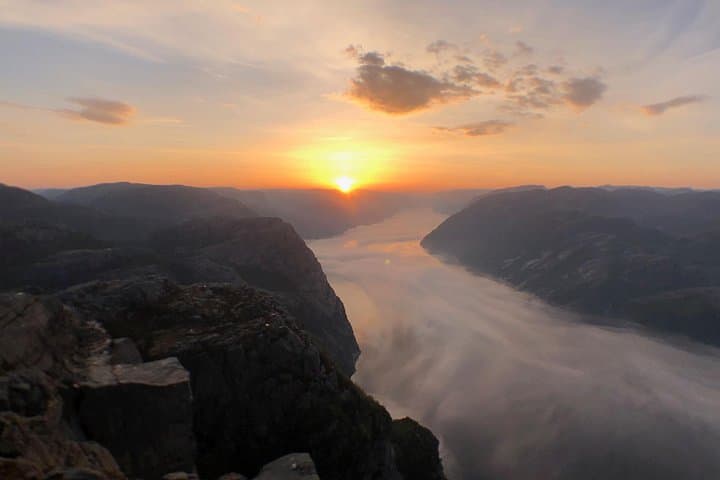

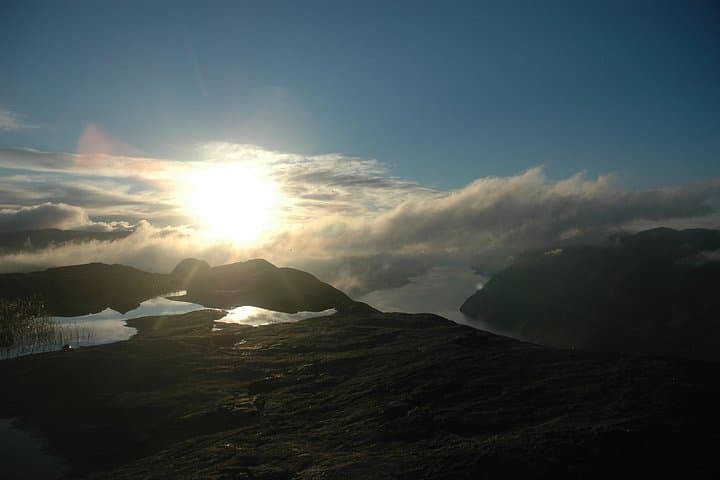

Before the sun clears the ridge, a string of headlamps threads up a stone path and the fjord waits below like a sleeping blue ribbon. On this guided sunrise hike to Preikestolen (Pulpit Rock), walkers leave Stavanger in dim light, climb through spruce and exposed granite, and reach the 604‑metre cliff-plateau before the first rays split the valley.
Before the sun clears the ridge, a string of headlamps threads up a stone path and the fjord waits below like a sleeping blue ribbon. On this guided sunrise hike to Preikestolen (Pulpit Rock), walkers leave Stavanger in dim light, climb through spruce and exposed granite, and reach the 604‑metre cliff-plateau before the first rays split the valley.
Lysefjorden was carved by glaciers during the last Ice Age; Preikestolen’s sheer, square face is the geological punchline—an abrupt, flat tabletop dropped above the fjord. The route follows a well‑marked 3.8 km trail one-way (about 7.6 km round-trip) with roughly 330–350 m of elevation gain. Terrain alternates packed dirt, exposed bedrock, wooden steps over wet sections and loose stone higher up. Locals long treated the ledge as a landmark; the last two decades have turned it into a global draw, so guides prioritize timing and safety to avoid daytime crowds.
Practically, expect cool, wind‑scoured air at the plateau even on mild days. Wear layered, windproof clothing, sturdy boots and carry a headlamp, water, and a compact first aid kit. Photography windows are short—arrive early, keep pacing steady on the ascent, and respect narrow edges at the outlook. Transfers from central Stavanger are included in many guided departures and the whole excursion commonly takes most of a day (transfers plus hike). For hikers who want sunrise light without the scramble for space, the guided option times arrival and route breaks to make the moment both safe and memorable.