THE ADVENTURE COLLECTIVE® · Independent discovery and booking for outdoor travel

Float above the Nile at sunrise, then spend a full day exploring Luxor’s great temples and tombs. This combined balloon-and-guided-tour pairs panoramic views with up-close access to Karnak, the Valley of the Kings, Hatshepsut’s temple and more.
Float above the Nile at sunrise, then spend a full day exploring Luxor’s great temples and tombs. This combined balloon-and-guided-tour pairs panoramic views with up-close access to Karnak, the Valley of the Kings, Hatshepsut’s temple and more.
At dawn the balloon basket tilts as the Nile light stretches across flat, green fields and the silhouette of pharaonic monuments grows from the haze. Floating quietly above Luxor, passengers get a rare aerial reading of the city: the ribbon of the Nile, plots of sugarcane, and the pale stones of temple pylons punctuating the desert.
Verified experiences and guided adventures in the surrounding area.
Operated by Top Tours In Egypt · Luxor, Luxor Governorate
At dawn the balloon basket tilts as the Nile light stretches across flat, green fields and the silhouette of pharaonic monuments grows from the haze. Floating quietly above Luxor, passengers get a rare aerial reading of the city: the ribbon of the Nile, plots of sugarcane, and the pale stones of temple pylons punctuating the desert.
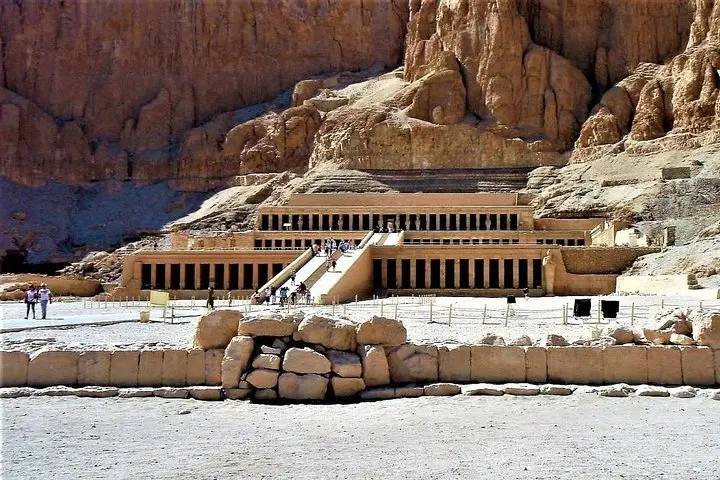
Beneath that slow ascent lies five millennia of history. Luxor occupies the site of ancient Thebes, the ceremonial heart of the New Kingdom; the Valley of the Kings holds rock-cut tombs of pharaohs, Hatshepsut’s terraced mortuary temple crowns Deir el-Bahari, and the Karnak complex accumulates centuries of stone and ritual. The geology is simple—Nile alluvium meets Eocene limestone—yet that contrast produced the ideal materials and climate for monumental construction. Local guides add cultural context: how the Opet Festival linked Karnak and Luxor Temple, and how modern Luxoris a living city built beside its ruins.
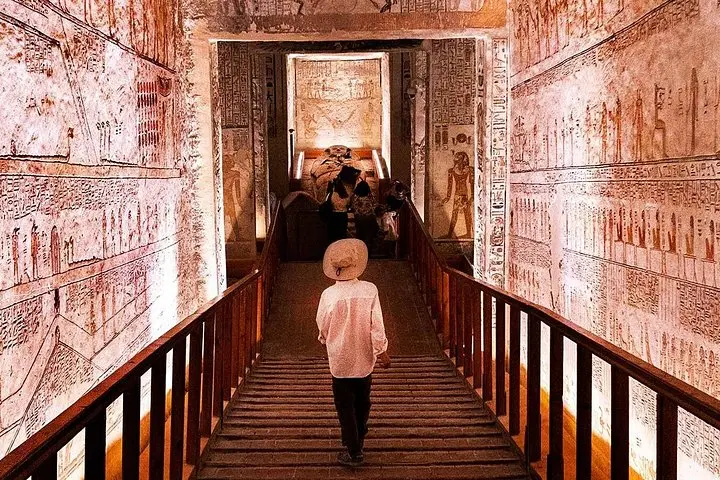
Practical guidance follows the romance: the balloon portion runs about 45 minutes, then an eight-hour private tour by air-conditioned vehicle visiting Colossi of Memnon, Valley of the Kings, Hatshepsut’s temple, Karnak, and Luxor Temple. Wear sturdy walking shoes and layers for cool mornings and hot afternoons; carry sunscreen and plenty of water. Expect uneven steps and low-light tomb interiors; photography rules vary by site. Bookings usually include hotel pickup and a balloon flight certificate; cancellations often require 24+ hours’ notice. For first-time visitors this combination gives both the expansive perspective from the air and the tactile detail of ancient stone—an efficient, sensory way to read Luxor’s landscape and history.
The balloon portion lasts about 45 minutes of airtime, plus setup and post-flight debriefing.
The itinerary includes guided visits to key sites, but some tombs may require separate onsite tickets depending on rotations and conservation rules.
Yes—infants are allowed but must sit on laps during transit; check age and weight limits with the provider for the balloon portion.
Operators usually cancel for unsafe winds or poor visibility; check the 24-hour cancellation policy for refunds or rescheduling options.
Top Tours In Egypt operates guided outdoor trips and adventures with an emphasis on safety, stewardship, and memorable experiences.
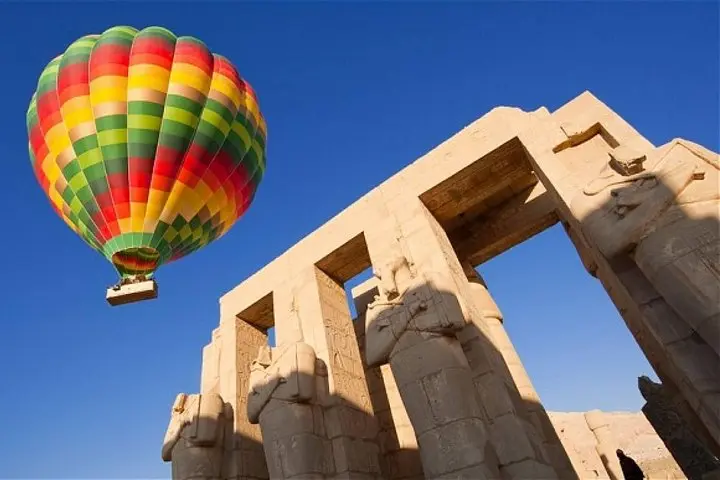
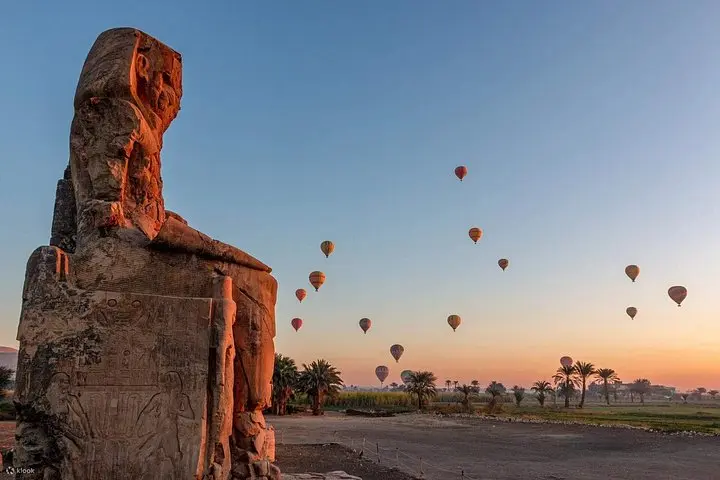
At dawn the balloon basket tilts as the Nile light stretches across flat, green fields and the silhouette of pharaonic monuments grows from the haze. Floating quietly above Luxor, passengers get a rare aerial reading of the city: the ribbon of the Nile, plots of sugarcane, and the pale stones of temple pylons punctuating the desert.
At dawn the balloon basket tilts as the Nile light stretches across flat, green fields and the silhouette of pharaonic monuments grows from the haze. Floating quietly above Luxor, passengers get a rare aerial reading of the city: the ribbon of the Nile, plots of sugarcane, and the pale stones of temple pylons punctuating the desert.
Beneath that slow ascent lies five millennia of history. Luxor occupies the site of ancient Thebes, the ceremonial heart of the New Kingdom; the Valley of the Kings holds rock-cut tombs of pharaohs, Hatshepsut’s terraced mortuary temple crowns Deir el-Bahari, and the Karnak complex accumulates centuries of stone and ritual. The geology is simple—Nile alluvium meets Eocene limestone—yet that contrast produced the ideal materials and climate for monumental construction. Local guides add cultural context: how the Opet Festival linked Karnak and Luxor Temple, and how modern Luxoris a living city built beside its ruins.
Practical guidance follows the romance: the balloon portion runs about 45 minutes, then an eight-hour private tour by air-conditioned vehicle visiting Colossi of Memnon, Valley of the Kings, Hatshepsut’s temple, Karnak, and Luxor Temple. Wear sturdy walking shoes and layers for cool mornings and hot afternoons; carry sunscreen and plenty of water. Expect uneven steps and low-light tomb interiors; photography rules vary by site. Bookings usually include hotel pickup and a balloon flight certificate; cancellations often require 24+ hours’ notice. For first-time visitors this combination gives both the expansive perspective from the air and the tactile detail of ancient stone—an efficient, sensory way to read Luxor’s landscape and history.