THE ADVENTURE COLLECTIVE® · Independent discovery and booking for outdoor travel

Lift off at dawn for a short hot-air balloon flight above Pokhara, watching the Annapurna range and Phewa Lake unfold beneath you. This calm, weather-dependent experience pairs lakeside pickups with a 30-minute flight and easy logistics—ideal for travelers who want dramatic mountain views without technical skill.
Lift off at dawn for a short hot-air balloon flight above Pokhara, watching the Annapurna range and Phewa Lake unfold beneath you. This calm, weather-dependent experience pairs lakeside pickups with a 30-minute flight and easy logistics—ideal for travelers who want dramatic mountain views without technical skill.
The basket rocks gently as you rise above Pokhara’s lakeside, the city shrinking into a patchwork of rice terraces and palm groves while the Annapurna massif sharpens on the horizon. Early light slices between peaks—Dhaulagiri and Annapurna I loom like mapped edges—and the balloon drifts over Laurik Hill toward Dhampus, where launch crews prepare with practiced calm.
Verified experiences and guided adventures in the surrounding area.
Operated by Himalayan Adventure Treks and Tours Pvt Ltd · Pokhara, Gandaki Province
The basket rocks gently as you rise above Pokhara’s lakeside, the city shrinking into a patchwork of rice terraces and palm groves while the Annapurna massif sharpens on the horizon. Early light slices between peaks—Dhaulagiri and Annapurna I loom like mapped edges—and the balloon drifts over Laurik Hill toward Dhampus, where launch crews prepare with practiced calm.
Pokhara began as a trade crossroads between India and Tibet and evolved into the gateway for Annapurna treks; today its calm lake and mountain panorama make it one of Nepal’s most photographed towns. Geologically, the region sits at the collision zone of the Indian and Eurasian plates, which pushed the Himalaya skyward and carved the deep eastern valleys you’ll glimpse from the air. Local culture remains visible on the shore: fishermen tending nets, temple roofs peeking through trees, and small tea houses on hill trails.
Practically, expect a dawn pickup from Lakeside, a short transfer to the launch field, a flight of about 30 minutes, then return to the hotel by mid-morning. Weather drives the schedule—calm mornings are best for ballooning—and flights operate with small groups for a more personal view. Bring layered clothing for chilly altitude, a camera with a secure strap, and a light daypack for your phone, water, and permits.
This experience is low-impact but weather-dependent; choose operators who follow local safety rules and respect landing sites. For an effortless way to see the Annapurnas from above, the balloon ride delivers sweeping mountain theatre and a different kind of Himalayan quiet—slow, wind-guided, and unmistakably high-altitude.
The airborne portion is typically about 30 minutes; door-to-door service including pickup and transfers takes roughly 2–3 hours.
Flights are canceled or rescheduled for safety in high winds, rain, or poor visibility; operators usually offer full refunds or alternate dates when weather forces a cancellation.
Most operators ask for passenger weights for balance and safety and may set an upper weight limit or require solo bookings for heavy passengers; children are allowed but must be supervised—check the operator’s policy when booking.
Ballooning is generally safe and stable—there’s no water landing—but it requires standing in an open basket; people with serious vertigo or certain medical conditions should consult their doctor and the operator beforehand.
Himalayan Adventure Treks and Tours Pvt Ltd operates guided outdoor trips and adventures with an emphasis on safety, stewardship, and memorable experiences.
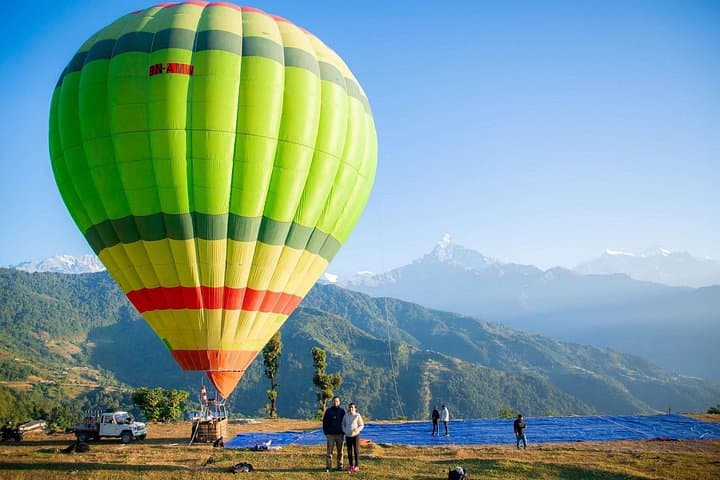


The basket rocks gently as you rise above Pokhara’s lakeside, the city shrinking into a patchwork of rice terraces and palm groves while the Annapurna massif sharpens on the horizon. Early light slices between peaks—Dhaulagiri and Annapurna I loom like mapped edges—and the balloon drifts over Laurik Hill toward Dhampus, where launch crews prepare with practiced calm.
The basket rocks gently as you rise above Pokhara’s lakeside, the city shrinking into a patchwork of rice terraces and palm groves while the Annapurna massif sharpens on the horizon. Early light slices between peaks—Dhaulagiri and Annapurna I loom like mapped edges—and the balloon drifts over Laurik Hill toward Dhampus, where launch crews prepare with practiced calm.
Pokhara began as a trade crossroads between India and Tibet and evolved into the gateway for Annapurna treks; today its calm lake and mountain panorama make it one of Nepal’s most photographed towns. Geologically, the region sits at the collision zone of the Indian and Eurasian plates, which pushed the Himalaya skyward and carved the deep eastern valleys you’ll glimpse from the air. Local culture remains visible on the shore: fishermen tending nets, temple roofs peeking through trees, and small tea houses on hill trails.
Practically, expect a dawn pickup from Lakeside, a short transfer to the launch field, a flight of about 30 minutes, then return to the hotel by mid-morning. Weather drives the schedule—calm mornings are best for ballooning—and flights operate with small groups for a more personal view. Bring layered clothing for chilly altitude, a camera with a secure strap, and a light daypack for your phone, water, and permits.
This experience is low-impact but weather-dependent; choose operators who follow local safety rules and respect landing sites. For an effortless way to see the Annapurnas from above, the balloon ride delivers sweeping mountain theatre and a different kind of Himalayan quiet—slow, wind-guided, and unmistakably high-altitude.