THE ADVENTURE COLLECTIVE® · Independent discovery and booking for outdoor travel

Paddle at sunrise into Tamarin Bay with a licensed guide for a respectful 2-hour kayak encounter with spinner and bottlenose dolphins. Early departures favor calm seas and the best chance to see dolphins in their natural refuge.
Paddle at sunrise into Tamarin Bay with a licensed guide for a respectful 2-hour kayak encounter with spinner and bottlenose dolphins. Early departures favor calm seas and the best chance to see dolphins in their natural refuge.
Morning on Tamarin Bay arrives slow and low: the sea flattens into a sheet of pewter and gold, and the guide slips the tandem kayaks into water that smells faintly of salt and mangrove. Paddles cut the surface; the rhythm of strokes sets a pace. Soon, silhouettes break the glass — spinner dolphins arc and slice through the light, curious and fast.
Verified experiences and guided adventures in the surrounding area.
Operated by Nature Discoveries · Tamarin, Rivière Noire
Morning on Tamarin Bay arrives slow and low: the sea flattens into a sheet of pewter and gold, and the guide slips the tandem kayaks into water that smells faintly of salt and mangrove. Paddles cut the surface; the rhythm of strokes sets a pace. Soon, silhouettes break the glass — spinner dolphins arc and slice through the light, curious and fast.
Tamarin Bay on Mauritius’s west coast has long been a nocturnal refuge for spinner and bottlenose dolphins that feed offshore and shelter inshore. The shoreline bears traces of Dutch and French colonial eras — salt pans and old coastal roads — while the bay’s geology is volcanic limestone rimmed by reefs that shape quiet paddling channels. Local fishing villages and creole culture thread the coast; early mornings still carry the low calls of market boats and fishermen preparing nets.
Practically, this is a guided, respectful wildlife encounter rather than a guarantee: guides follow strict approaches, keep distance, and prioritize the animals’ behavior. If dolphins aren’t accessible by kayak, the route shifts to the Tamarind River estuary where mangroves and birdlife replace the marine spectacle. Expect 2 hours on the water, basic paddling instruction, life vests, and an English- or French-speaking licensed guide. Be able to swim, weigh under 100 kg, and be at least 12 years old.
Plan for calm, early-morning departures, sun protection, and secure shoes. Move slowly, listen to the guide, and let the bay decide whether it will share its dolphins today.
No—dolphins are wild and sometimes out of reach; operators offer an alternative route to the Tamarind River if dolphins are absent.
Participants must have basic paddling skills; inexperienced kayakers may be declined for safety reasons and the operator requires swimming ability.
Minimum age is 12 years and maximum individual weight is 100 kg (220 lbs).
Licensed guides operate in English and French; check at booking for any other language needs.
Nature Discoveries operates guided outdoor trips and adventures with an emphasis on safety, stewardship, and memorable experiences.
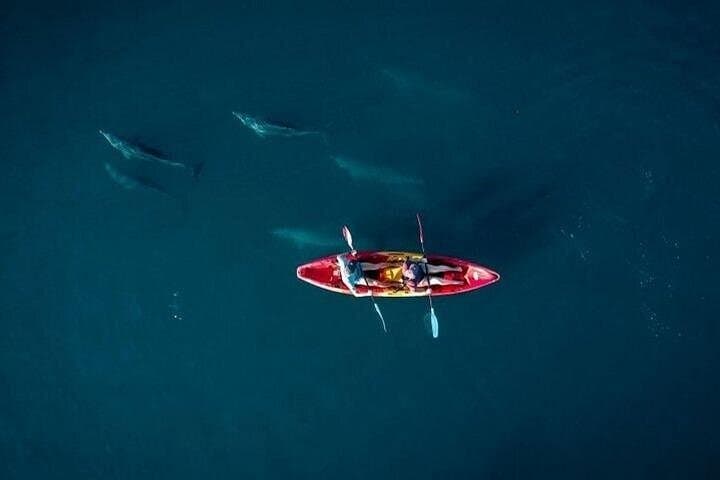
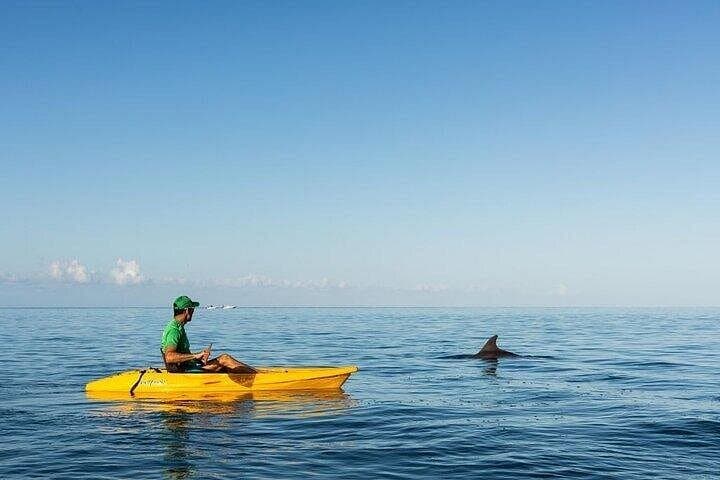
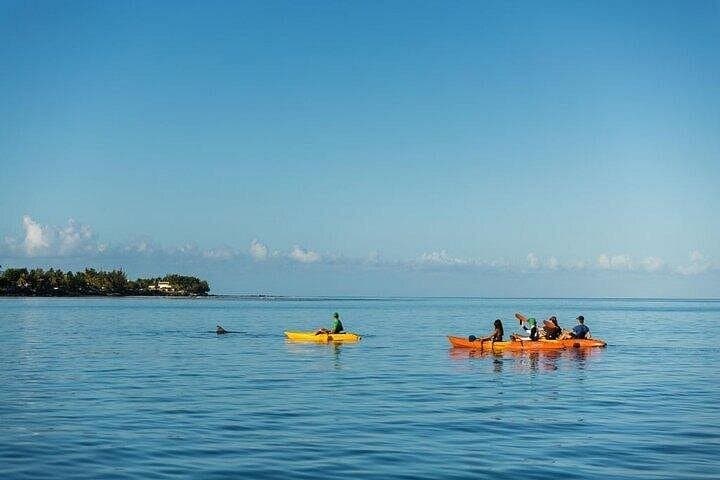
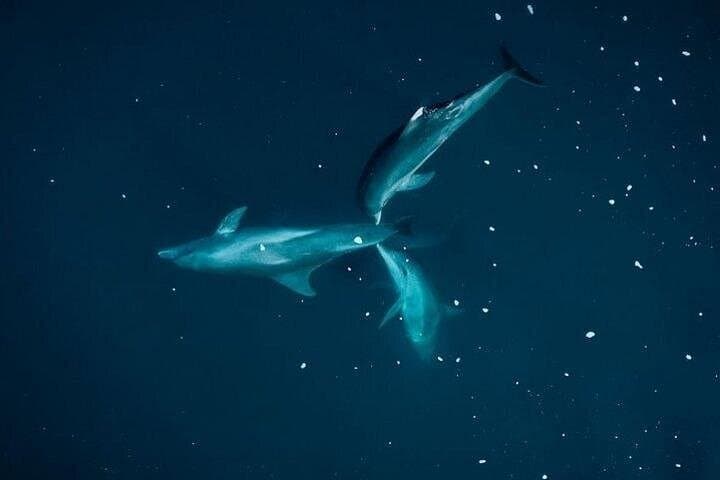
Morning on Tamarin Bay arrives slow and low: the sea flattens into a sheet of pewter and gold, and the guide slips the tandem kayaks into water that smells faintly of salt and mangrove. Paddles cut the surface; the rhythm of strokes sets a pace. Soon, silhouettes break the glass — spinner dolphins arc and slice through the light, curious and fast.
Morning on Tamarin Bay arrives slow and low: the sea flattens into a sheet of pewter and gold, and the guide slips the tandem kayaks into water that smells faintly of salt and mangrove. Paddles cut the surface; the rhythm of strokes sets a pace. Soon, silhouettes break the glass — spinner dolphins arc and slice through the light, curious and fast.
Tamarin Bay on Mauritius’s west coast has long been a nocturnal refuge for spinner and bottlenose dolphins that feed offshore and shelter inshore. The shoreline bears traces of Dutch and French colonial eras — salt pans and old coastal roads — while the bay’s geology is volcanic limestone rimmed by reefs that shape quiet paddling channels. Local fishing villages and creole culture thread the coast; early mornings still carry the low calls of market boats and fishermen preparing nets.
Practically, this is a guided, respectful wildlife encounter rather than a guarantee: guides follow strict approaches, keep distance, and prioritize the animals’ behavior. If dolphins aren’t accessible by kayak, the route shifts to the Tamarind River estuary where mangroves and birdlife replace the marine spectacle. Expect 2 hours on the water, basic paddling instruction, life vests, and an English- or French-speaking licensed guide. Be able to swim, weigh under 100 kg, and be at least 12 years old.
Plan for calm, early-morning departures, sun protection, and secure shoes. Move slowly, listen to the guide, and let the bay decide whether it will share its dolphins today.