THE ADVENTURE COLLECTIVE® · Independent discovery and booking for outdoor travel

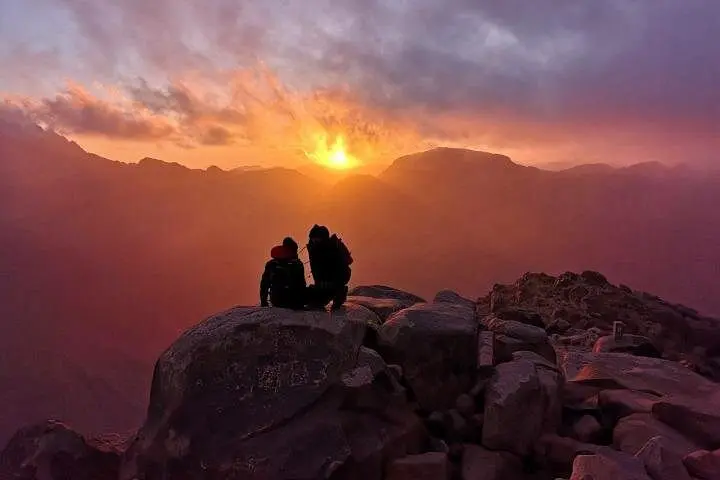
Leave Sharm el Sheikh at night and climb Mount Sinai to watch sunrise from the summit, then visit the 6th‑century St. Catherine Monastery. This guided overnight excursion pairs a demanding pre-dawn hike with UNESCO-listed history and stark desert panoramas.
Leave Sharm el Sheikh at night and climb Mount Sinai to watch sunrise from the summit, then visit the 6th‑century St. Catherine Monastery. This guided overnight excursion pairs a demanding pre-dawn hike with UNESCO-listed history and stark desert panoramas.
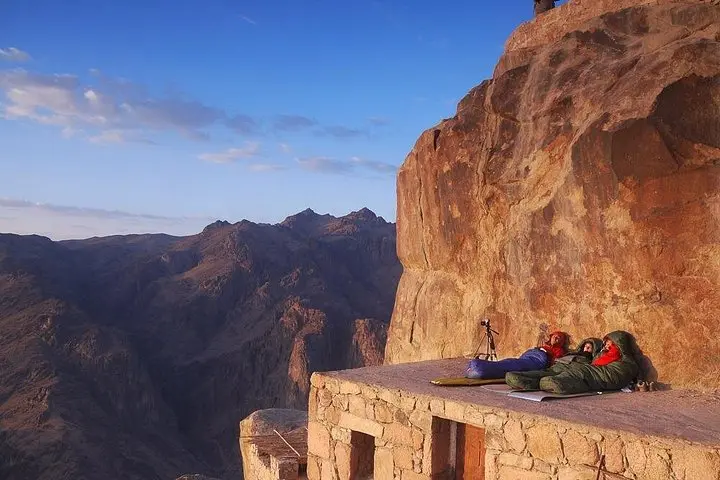
A desert night widens as the minivan leaves Sharm el Sheikh; headlights cut lanes of shadow through Sinai scrub and basalt. By 1:00 a.m. the group disembarks to a moonlit trail and begins the climb—stone steps and worn goat paths that angle up into cold, oxygen-thin air. The summit sits at roughly 2,285 meters; expect a steady 600–800 m of ascent depending on your starting point. Climbers pause along the route to look up: a cathedral of stars and a horizon that will peel away into copper at sunrise.
Verified experiences and guided adventures in the surrounding area.
Operated by Dahab Safari Day Tours · St. Catherine, South Sinai Governorate
A desert night widens as the minivan leaves Sharm el Sheikh; headlights cut lanes of shadow through Sinai scrub and basalt. By 1:00 a.m. the group disembarks to a moonlit trail and begins the climb—stone steps and worn goat paths that angle up into cold, oxygen-thin air. The summit sits at roughly 2,285 meters; expect a steady 600–800 m of ascent depending on your starting point. Climbers pause along the route to look up: a cathedral of stars and a horizon that will peel away into copper at sunrise.
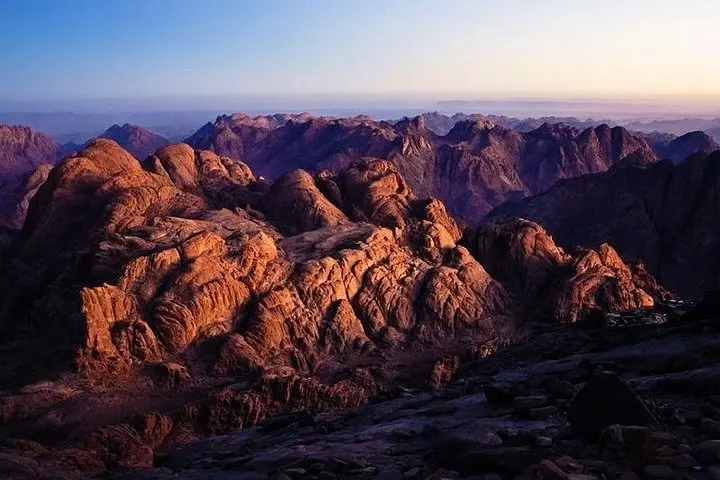
This route threads together natural and human history. Jabal Musa (Mount Sinai) is an eroded granite massif of the Sinai range; winds and thermal fracture sculpt the ridgelines. Below the ridge lies the Monastery of Saint Catherine, founded in the sixth century under Emperor Justinian and preserved inside ancient walls that shelter icons, manuscripts and the site traditionally associated with the Burning Bush. Bedouin guides still lead many climbs, and local culture mixes Christian monastic life with desert pastoral traditions.
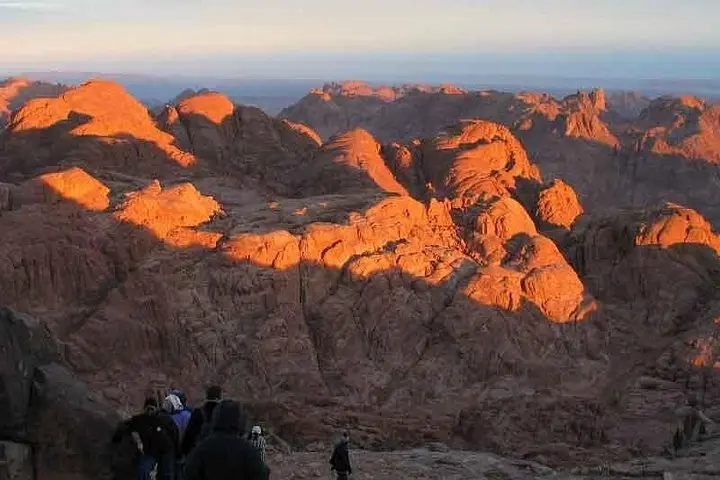
Practically: the ascent uses paved and stone step sections alternating with loose scree—headlamp, steady gait and trekking poles help. Climbs begin very early (around 01:00–02:00) to reach sunrise; dress in warm layers for summit winds and bring at least 1–2 liters of water. Respect monastery rules—modest dress and quiet inside sacred spaces—and stay on maintained paths to protect fragile desert soils. The reward is simple: a sweeping, unambiguous view of Sinai’s ridges as light moves across a landscape that still demands attention and respect.
Expect 600–800 m of ascent over 2–4 km depending on route; it’s a steady climb on stone steps and uneven trail, rated moderate with a mix of paved steps and scree.
Tours typically depart Sharm el Sheikh in the evening and start the climb around 01:00–02:00; a local Bedouin or professional guide leads the ascent and is included in most packages.
Modest clothing is required inside the monastery—shoulders and knees covered; remove hats and speak quietly in preserved spaces.
With a guide and proper lighting it’s generally safe; risks are uneven steps, loose rocks and cold at the summit, so prepare accordingly.
Dahab Safari Day Tours operates guided outdoor trips and adventures with an emphasis on safety, stewardship, and memorable experiences.
A desert night widens as the minivan leaves Sharm el Sheikh; headlights cut lanes of shadow through Sinai scrub and basalt. By 1:00 a.m. the group disembarks to a moonlit trail and begins the climb—stone steps and worn goat paths that angle up into cold, oxygen-thin air. The summit sits at roughly 2,285 meters; expect a steady 600–800 m of ascent depending on your starting point. Climbers pause along the route to look up: a cathedral of stars and a horizon that will peel away into copper at sunrise.
A desert night widens as the minivan leaves Sharm el Sheikh; headlights cut lanes of shadow through Sinai scrub and basalt. By 1:00 a.m. the group disembarks to a moonlit trail and begins the climb—stone steps and worn goat paths that angle up into cold, oxygen-thin air. The summit sits at roughly 2,285 meters; expect a steady 600–800 m of ascent depending on your starting point. Climbers pause along the route to look up: a cathedral of stars and a horizon that will peel away into copper at sunrise.
This route threads together natural and human history. Jabal Musa (Mount Sinai) is an eroded granite massif of the Sinai range; winds and thermal fracture sculpt the ridgelines. Below the ridge lies the Monastery of Saint Catherine, founded in the sixth century under Emperor Justinian and preserved inside ancient walls that shelter icons, manuscripts and the site traditionally associated with the Burning Bush. Bedouin guides still lead many climbs, and local culture mixes Christian monastic life with desert pastoral traditions.
Practically: the ascent uses paved and stone step sections alternating with loose scree—headlamp, steady gait and trekking poles help. Climbs begin very early (around 01:00–02:00) to reach sunrise; dress in warm layers for summit winds and bring at least 1–2 liters of water. Respect monastery rules—modest dress and quiet inside sacred spaces—and stay on maintained paths to protect fragile desert soils. The reward is simple: a sweeping, unambiguous view of Sinai’s ridges as light moves across a landscape that still demands attention and respect.