THE ADVENTURE COLLECTIVE® · Independent discovery and booking for outdoor travel

Catch the first light over Angkor Wat, explore Bayon’s stone faces and Ta Prohm’s root-wrapped ruins, then finish at Phnom Kulen’s sacred river and waterfall. This private two-day loop pairs high-value photo stops with cultural context and a mountain escape.
Catch the first light over Angkor Wat, explore Bayon’s stone faces and Ta Prohm’s root-wrapped ruins, then finish at Phnom Kulen’s sacred river and waterfall. This private two-day loop pairs high-value photo stops with cultural context and a mountain escape.
You stand at the rim of a shallow reflection pool while a pale ribbon of light slices the Angkor skyline: spires, bas-relief silhouettes and the first tourists holding still for a perfect frame.
Verified experiences and guided adventures in the surrounding area.
Operated by Siem Reap Guide · Siem Reap, Siem Reap Province
You stand at the rim of a shallow reflection pool while a pale ribbon of light slices the Angkor skyline: spires, bas-relief silhouettes and the first tourists holding still for a perfect frame.
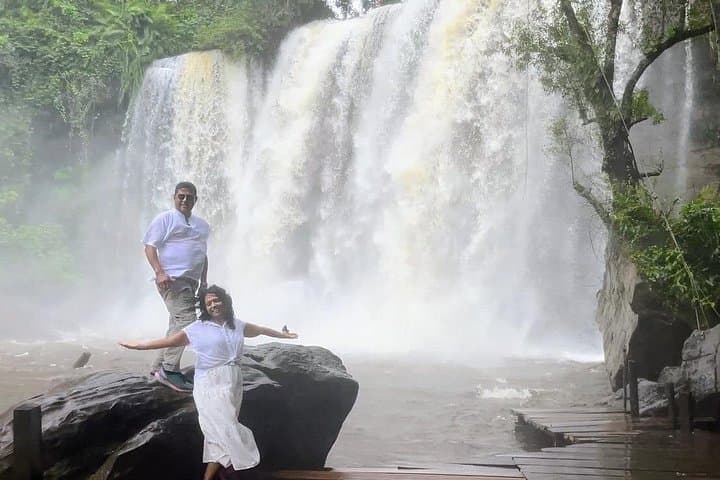
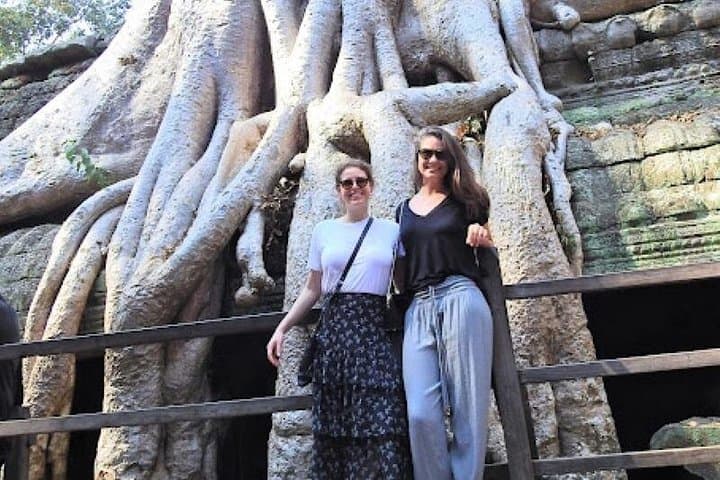
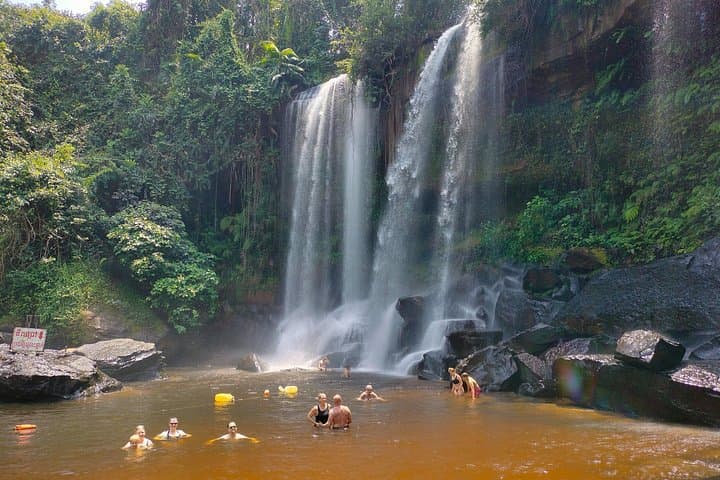
Over two days this private tour moves from the classical grandeur of Angkor Wat to the overgrown corridors of Ta Prohm, the thousand faces of Bayon and the delicate pink sandstone carvings of Banteay Srei. Geologically, you’ll notice contrasts—hard laterite foundations, imported sandstone blocks, and the softer pink sandstone at Banteay Srei that preserves finer detail. Phnom Kulen, about 58 km northeast of Siem Reap, sits on a sandstone plateau rising roughly 400–500 m and hosts the sacred River of 1000 Lingas—shallow, carved channels in the rock—and a cascading holy waterfall favored by local pilgrims.
Culturally, expect encounters with monks, small market stalls selling palm sugar and sticky rice, and guides who translate 9th–13th century Khmer stories into modern context: kings, gods, and hydraulic engineers who shaped an empire.
Practically, the day begins before dawn (hotel pickup around 5:00). Bring modest temple clothing that covers shoulders and knees, a reliable water bottle, sun protection and sturdy shoes for uneven stone and slippery waterfall approaches. The Phnom Kulen drive is scenic but can take 1–1.5 hours each way; allow time for walking and photography. Buy your Angkor pass at the ticket center (cash/card), follow your guide’s route for best light and smaller crowds, and respect conservation rules—don’t touch carvings or stray off marked paths. With moderate fitness and a respectful attitude, this two-day loop delivers some of Cambodia’s strongest temple photography and a refreshing mountain waterfall finale.
Yes—Angkor passes are required and usually purchased at the Angkor ticket center; guides can direct you to the booth early in the morning.
No—sunrise views depend on weather. Even on overcast mornings the low light can produce excellent silhouettes and fewer crowds.
Phnom Kulen is approximately 58 km from Siem Reap; expect about 1–1.5 hours each way depending on traffic and road conditions.
Some major sites like Angkor Wat and parts of the Angkor Archaeological Park have accessible paths, but many ruins (Ta Prohm, steep steps at Bayon) remain uneven and require mobility accommodations.
Siem Reap Guide operates guided outdoor trips and adventures with an emphasis on safety, stewardship, and memorable experiences.
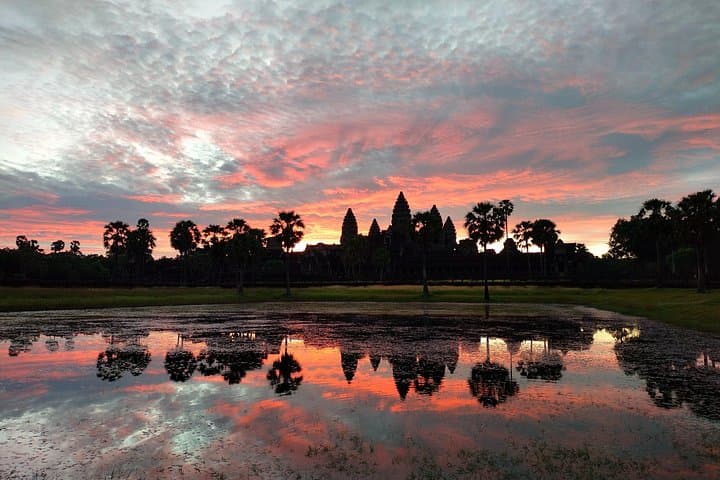
You stand at the rim of a shallow reflection pool while a pale ribbon of light slices the Angkor skyline: spires, bas-relief silhouettes and the first tourists holding still for a perfect frame.
You stand at the rim of a shallow reflection pool while a pale ribbon of light slices the Angkor skyline: spires, bas-relief silhouettes and the first tourists holding still for a perfect frame.
Over two days this private tour moves from the classical grandeur of Angkor Wat to the overgrown corridors of Ta Prohm, the thousand faces of Bayon and the delicate pink sandstone carvings of Banteay Srei. Geologically, you’ll notice contrasts—hard laterite foundations, imported sandstone blocks, and the softer pink sandstone at Banteay Srei that preserves finer detail. Phnom Kulen, about 58 km northeast of Siem Reap, sits on a sandstone plateau rising roughly 400–500 m and hosts the sacred River of 1000 Lingas—shallow, carved channels in the rock—and a cascading holy waterfall favored by local pilgrims.
Culturally, expect encounters with monks, small market stalls selling palm sugar and sticky rice, and guides who translate 9th–13th century Khmer stories into modern context: kings, gods, and hydraulic engineers who shaped an empire.
Practically, the day begins before dawn (hotel pickup around 5:00). Bring modest temple clothing that covers shoulders and knees, a reliable water bottle, sun protection and sturdy shoes for uneven stone and slippery waterfall approaches. The Phnom Kulen drive is scenic but can take 1–1.5 hours each way; allow time for walking and photography. Buy your Angkor pass at the ticket center (cash/card), follow your guide’s route for best light and smaller crowds, and respect conservation rules—don’t touch carvings or stray off marked paths. With moderate fitness and a respectful attitude, this two-day loop delivers some of Cambodia’s strongest temple photography and a refreshing mountain waterfall finale.