THE ADVENTURE COLLECTIVE® · Independent discovery and booking for outdoor travel

Float at sunrise above Pamukkale’s white travertine terraces and the ruins of Hierapolis on a full-day trip from Antalya. This early-morning balloon flight pairs bird’s-eye geology with Roman history and practical advice for timing, gear, and conservation.
Float at sunrise above Pamukkale’s white travertine terraces and the ruins of Hierapolis on a full-day trip from Antalya. This early-morning balloon flight pairs bird’s-eye geology with Roman history and practical advice for timing, gear, and conservation.
You step into pre-dawn coolness while the van hums toward Pamukkale, the limestone terraces fading from inked black to deep indigo as the horizon softens. By the time the burner hisses, steam and color meet—baskets lift and the terraces open beneath you like a white river frozen mid-flow. The sun pries itself free and the travertines catch light; currents of air steer you over ancient pools and the muted ruins of Hierapolis.
Verified experiences and guided adventures in the surrounding area.
Operated by Köprülü Turistik Işl.Eml.Inş.Tarım taş.Pet.Turz ve Tic Ltd.Şti. · Pamukkale, Denizli
You step into pre-dawn coolness while the van hums toward Pamukkale, the limestone terraces fading from inked black to deep indigo as the horizon softens. By the time the burner hisses, steam and color meet—baskets lift and the terraces open beneath you like a white river frozen mid-flow. The sun pries itself free and the travertines catch light; currents of air steer you over ancient pools and the muted ruins of Hierapolis.
Hierapolis was a Roman spa city built atop mineral-rich springs; the soft white travertine is the result of millennia of calcium carbonate depositing from hot water. The terraces and the theater below speak of Roman leisure and Anatolian trade routes; modern villagers still draw from the same thermal veins that drew emperors and pilgrims.
From the balloon, geology and history read as a patchwork—the white cascades, steaming outlets, red-tinged Karahayit springs, and the grid of ruins—all set against agricultural plains. Locals mix hospitality with a slow, practical pace: expect helpful guides, early pickups from Antalya, and queues at the site as tours converge.
Practically, plan for a very early start, layered clothing, and camera-ready batteries; flights are weather-dependent and often confirmed the night before. The ride is brief but intense—about 45–60 minutes aloft—embedded in a full-day itinerary that includes ground time at Pamukkale and Hierapolis. Respect boardwalks and conservation rules: the travertines are fragile and access is regulated. Hydrate, wear closed shoes for the site's uneven pathways, and keep your schedule flexible—here, the river of air decides your exact route.
Typical flights last about 45–60 minutes, though the full tour day from Antalya runs roughly 12–13 hours including transfers and ground visits.
Pregnancy is generally not recommended for hot air balloon flights; check with the operator and your healthcare provider before booking.
Flights are canceled for unsafe wind or poor visibility; operators usually refund or reschedule if canceled due to weather.
Yes—most tours include early morning pickup from Antalya and nearby towns; confirm your pickup point when booking.
Köprülü Turistik Işl.Eml.Inş.Tarım taş.Pet.Turz ve Tic Ltd.Şti. operates guided outdoor trips and adventures with an emphasis on safety, stewardship, and memorable experiences.
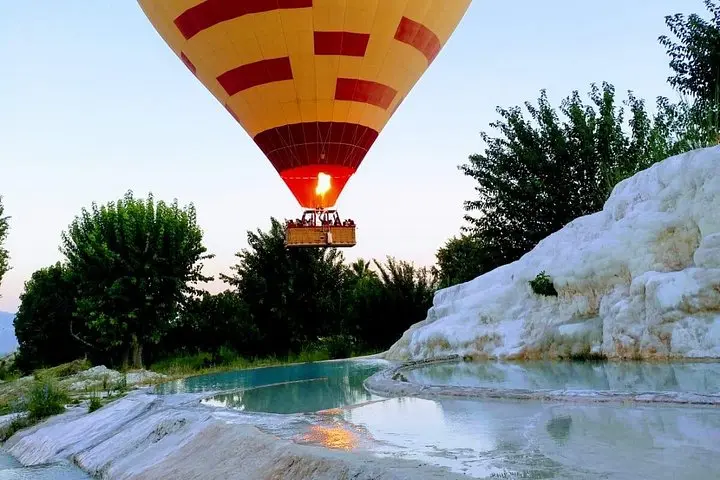
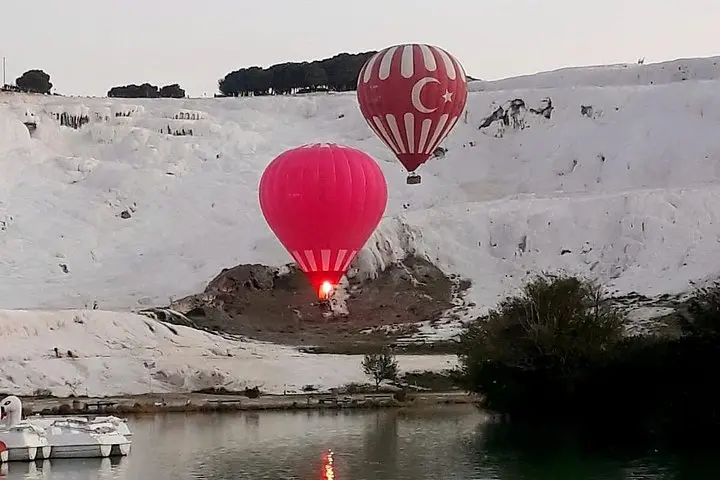
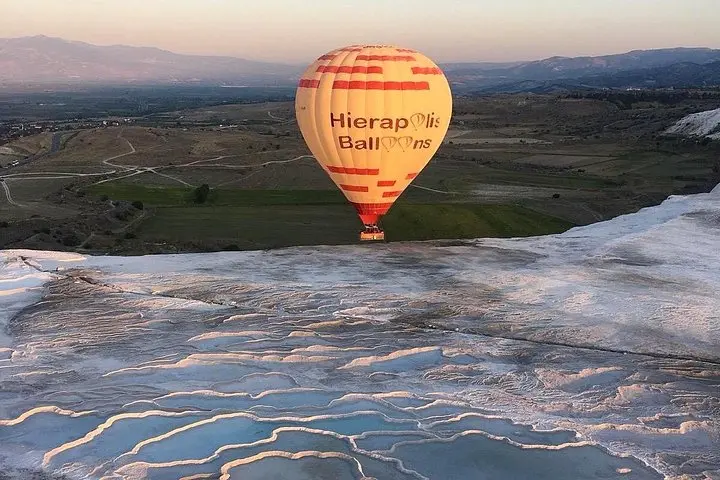
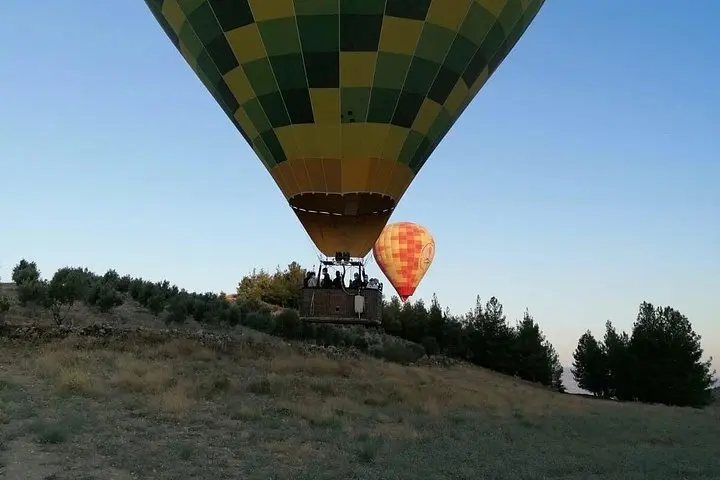
You step into pre-dawn coolness while the van hums toward Pamukkale, the limestone terraces fading from inked black to deep indigo as the horizon softens. By the time the burner hisses, steam and color meet—baskets lift and the terraces open beneath you like a white river frozen mid-flow. The sun pries itself free and the travertines catch light; currents of air steer you over ancient pools and the muted ruins of Hierapolis.
You step into pre-dawn coolness while the van hums toward Pamukkale, the limestone terraces fading from inked black to deep indigo as the horizon softens. By the time the burner hisses, steam and color meet—baskets lift and the terraces open beneath you like a white river frozen mid-flow. The sun pries itself free and the travertines catch light; currents of air steer you over ancient pools and the muted ruins of Hierapolis.
Hierapolis was a Roman spa city built atop mineral-rich springs; the soft white travertine is the result of millennia of calcium carbonate depositing from hot water. The terraces and the theater below speak of Roman leisure and Anatolian trade routes; modern villagers still draw from the same thermal veins that drew emperors and pilgrims.
From the balloon, geology and history read as a patchwork—the white cascades, steaming outlets, red-tinged Karahayit springs, and the grid of ruins—all set against agricultural plains. Locals mix hospitality with a slow, practical pace: expect helpful guides, early pickups from Antalya, and queues at the site as tours converge.
Practically, plan for a very early start, layered clothing, and camera-ready batteries; flights are weather-dependent and often confirmed the night before. The ride is brief but intense—about 45–60 minutes aloft—embedded in a full-day itinerary that includes ground time at Pamukkale and Hierapolis. Respect boardwalks and conservation rules: the travertines are fragile and access is regulated. Hydrate, wear closed shoes for the site's uneven pathways, and keep your schedule flexible—here, the river of air decides your exact route.