THE ADVENTURE COLLECTIVE® · Independent discovery and booking for outdoor travel

Lift off at first light and see Luxor’s West Bank — the Valley of the Kings, Hatshepsut’s temple and the Colossi of Memnon — from a balloon and on a guided luxury tour. Practical tips for timing, tickets and what to wear.
Lift off at first light and see Luxor’s West Bank — the Valley of the Kings, Hatshepsut’s temple and the Colossi of Memnon — from a balloon and on a guided luxury tour. Practical tips for timing, tickets and what to wear.
The basket lifts before dawn and Luxor unfolds beneath you: the Nile a dark ribbon, limestone cliffs of the West Bank catching first light, and the scattered colossi and temple roofs like punctuation marks across the plain.
Verified experiences and guided adventures in the surrounding area.
Operated by Egypt VIP Tours · Luxor, Luxor Governorate
The basket lifts before dawn and Luxor unfolds beneath you: the Nile a dark ribbon, limestone cliffs of the West Bank catching first light, and the scattered colossi and temple roofs like punctuation marks across the plain.
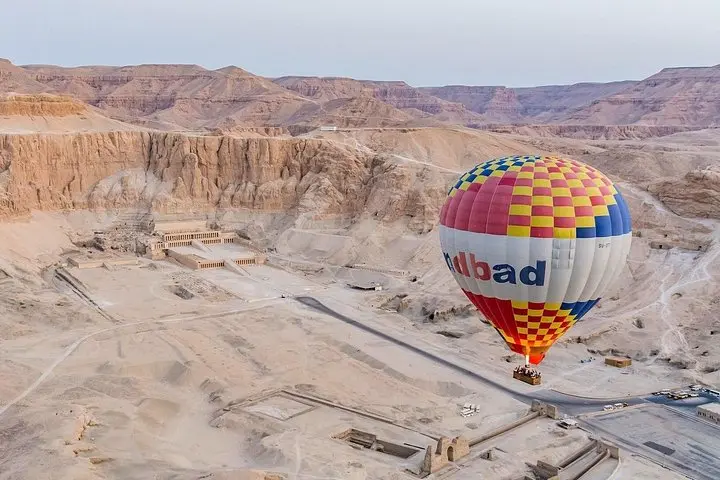
This combined experience pairs a luxury hot-air balloon flight with a curated walk through the West Bank’s great sites — the Valley of the Kings, Queen Hatshepsut’s Deir el-Bahari, and the Colossi of Memnon. The valley’s tombs, carved into Triassic limestone and sealed with funerary shafts, date predominantly from the New Kingdom (16th–11th centuries BCE) and hold painted chambers that record ancient rituals and afterlife beliefs. Hatshepsut’s temple, set into a cliff face, reflects Egypt’s architectural shift toward monumental stone terraces.
Local life brushes the edges of these monuments: farmers irrigating plots by the Nile, small vendors near temple exits, and guides whose family histories tie them to these sites. Conservation concerns are real here — humidity, tourism wear and past repairs shape what you see; caretakers limit access to preserve wall paintings and fragile chambers.
Practically, expect a pre-dawn pickup, a 30–60 minute balloon flight depending on conditions, and a roughly five-hour combined tour by air-conditioned vehicle. Tomb interiors are cool but low-lit; wear sturdy shoes for uneven stone and steps, bring sun protection for the open West Bank, and carry small local currency for tips or refreshments. Confirm which tombs are included and whether additional entrance fees apply. Timing, respectful behavior inside tombs, and a patient pace maximize both comfort and access to the most memorable viewpoints.
Policies vary by operator; many tours include standard entry but special-access tombs (like Tutankhamun) may require additional tickets—confirm before booking.
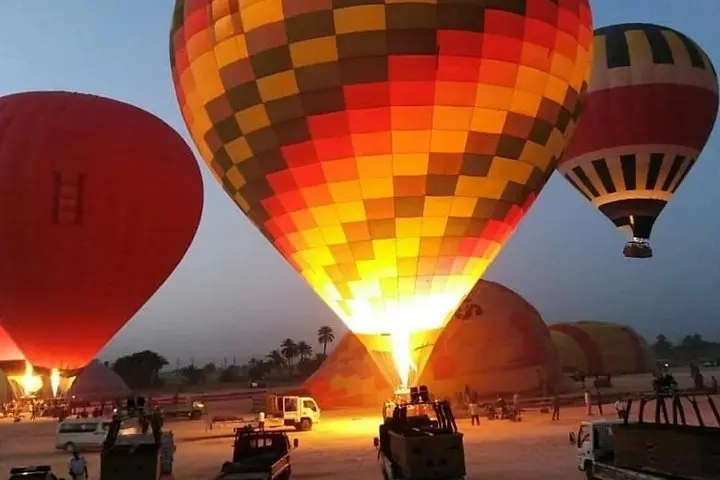
Pickup is typically before sunrise (around 4:00–5:00 AM) so the balloon can launch with calm atmospheric conditions at first light.
Ballooning over Luxor is a widely offered activity with experienced crews; operators follow safety checks and briefings, but weather can cancel flights for safety reasons.
Tours generally accept families; infants often must sit on laps for the balloon, and operators may have age or weight restrictions—verify specific policies when booking.
Egypt VIP Tours operates guided outdoor trips and adventures with an emphasis on safety, stewardship, and memorable experiences.
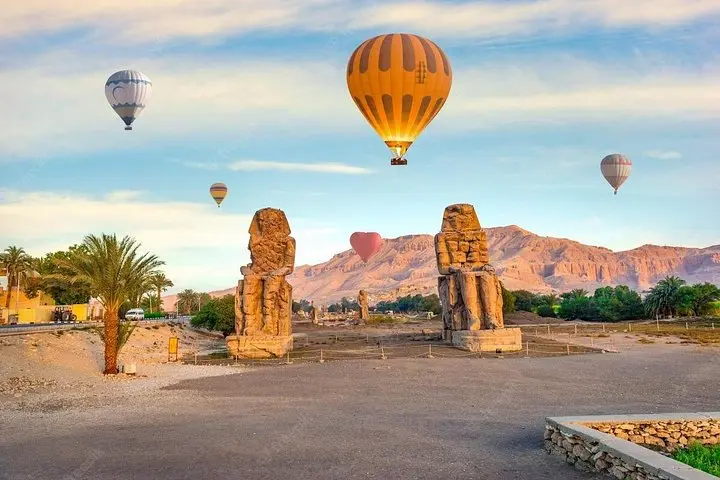
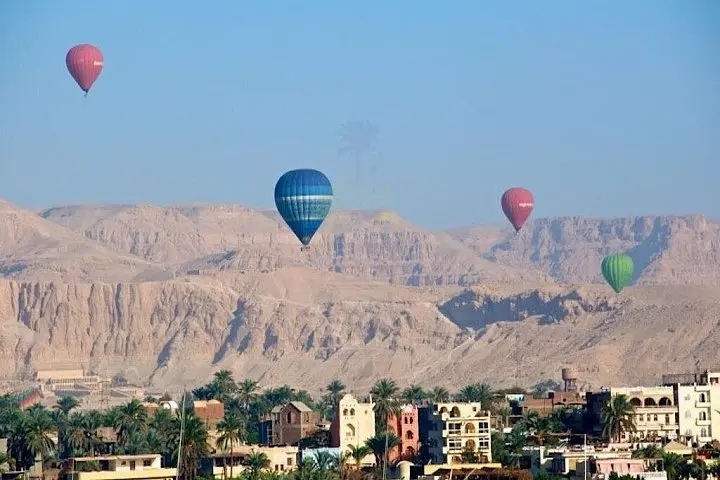
The basket lifts before dawn and Luxor unfolds beneath you: the Nile a dark ribbon, limestone cliffs of the West Bank catching first light, and the scattered colossi and temple roofs like punctuation marks across the plain.
The basket lifts before dawn and Luxor unfolds beneath you: the Nile a dark ribbon, limestone cliffs of the West Bank catching first light, and the scattered colossi and temple roofs like punctuation marks across the plain.
This combined experience pairs a luxury hot-air balloon flight with a curated walk through the West Bank’s great sites — the Valley of the Kings, Queen Hatshepsut’s Deir el-Bahari, and the Colossi of Memnon. The valley’s tombs, carved into Triassic limestone and sealed with funerary shafts, date predominantly from the New Kingdom (16th–11th centuries BCE) and hold painted chambers that record ancient rituals and afterlife beliefs. Hatshepsut’s temple, set into a cliff face, reflects Egypt’s architectural shift toward monumental stone terraces.
Local life brushes the edges of these monuments: farmers irrigating plots by the Nile, small vendors near temple exits, and guides whose family histories tie them to these sites. Conservation concerns are real here — humidity, tourism wear and past repairs shape what you see; caretakers limit access to preserve wall paintings and fragile chambers.
Practically, expect a pre-dawn pickup, a 30–60 minute balloon flight depending on conditions, and a roughly five-hour combined tour by air-conditioned vehicle. Tomb interiors are cool but low-lit; wear sturdy shoes for uneven stone and steps, bring sun protection for the open West Bank, and carry small local currency for tips or refreshments. Confirm which tombs are included and whether additional entrance fees apply. Timing, respectful behavior inside tombs, and a patient pace maximize both comfort and access to the most memorable viewpoints.