
Sunrise to Stone: Full-Day Temple Photography Tour in Siem Reap
Witness Angkor Wat at sunrise and spend a full day photographing Bayon’s carved faces and Ta Prohm’s root-entangled ruins with a photographer guide. This practical guide covers timing, gear, walking distances, and cultural tips to help you capture the temples at their best.
An Adventure In Siem Reap.
Witness Angkor Wat at sunrise and spend a full day photographing Bayon’s carved faces and Ta Prohm’s root-entangled ruins with a photographer guide. This practical guide covers timing, gear, walking distances, and cultural tips to help you capture the temples at their best.
Read the full experience
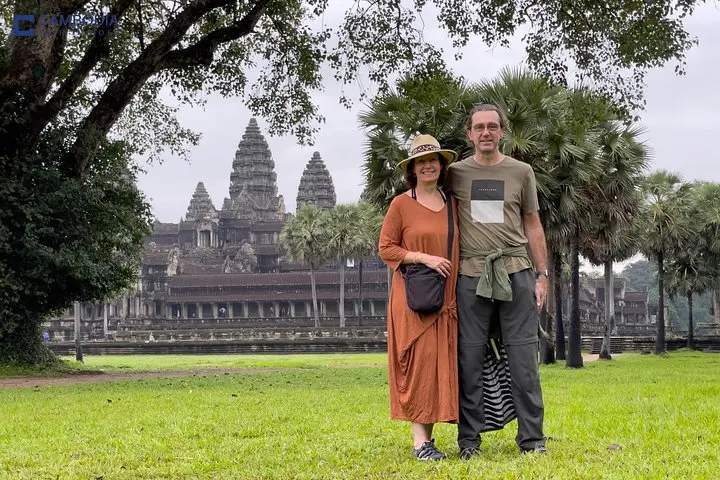
A flat glow settles over the moat as the first light slices the silhouette of Angkor Wat — the reason most photographers come to Siem Reap. You begin before dawn, camera in hand, trading sleep for the slow reveal of carved galleries, reflection pools, and the long shadows that make Khmer bas-reliefs read like chapters.
A flat glow settles over the moat as the first light slices the silhouette of Angkor Wat — the reason most photographers come to Siem Reap. You begin before dawn, camera in hand, trading sleep for the slow reveal of carved galleries, reflection pools, and the long shadows that make Khmer bas-reliefs read like chapters.
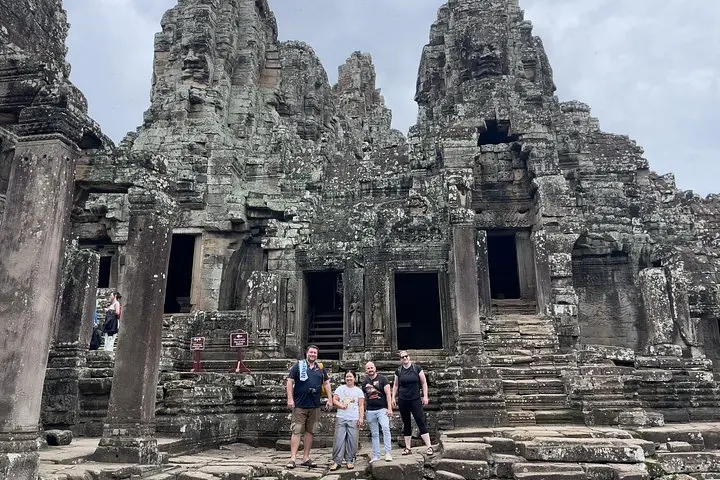
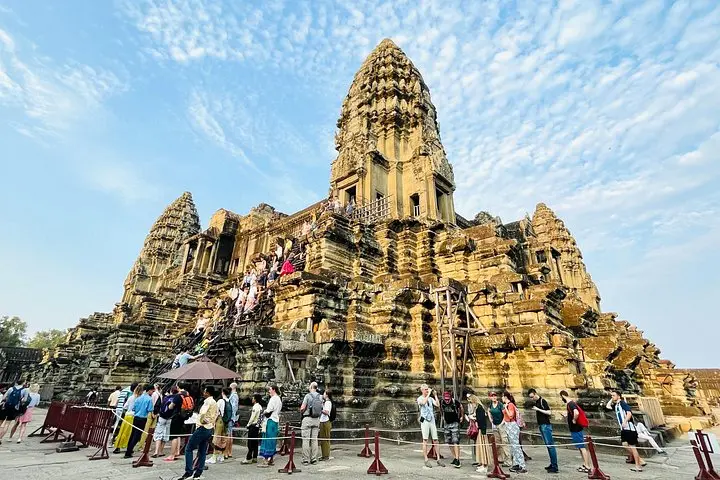
This full-day photography tour moves through Angkor Wat’s grand causeways, the stone faces of Bayon in Angkor Thom, the tree-wrapped corridors of Ta Prohm, and quieter annexes favored by seasoned shooters. Built between the 9th and 13th centuries by the Khmer Empire, these sites sit on sedimentary sandstone laid down millions of years ago and sculpted into ornate bas-reliefs and towers that rise only modestly above the plain — expect minimal elevation gain but many stairs and uneven stone underfoot.
Culturally, the temples shift from Hindu to Buddhist iconography across centuries; the guide’s framing tips help you see those transitions in composition as much as in subject. The tour includes an air-conditioned vehicle, bottled water, a breakfast box, and a photographer guide who times light and locations to avoid the biggest crowds.
Practicalities: plan for 7–8 hours of mixed walking and vehicle transfers, 2–6 km of on-foot exploration across multiple temple compounds, and early starts for sunrise. Bring a compact tripod and a range of lenses (wide and short tele), plenty of water and sun protection, and soft-soled shoes for traction on worn stone. Respect conservation signage, avoid climbing on fragile carvings, and budget time for slower meditative frames — the temples reward patience.
Frequently asked questions
The itinerary starts before sunrise (around 4:30 AM) and runs roughly 7–8 hours, covering multiple temple complexes with an air-conditioned vehicle between sites.
Entrance to Angkor Archaeological Park is typically required; this tour lists admission included for some stops—confirm at booking and bring your Angkor Pass if needed.
Yes — the route is a general temple tour paced for photographers but accessible to anyone comfortable with moderate walking and early starts.
Sunrise at Angkor Wat is busiest; the guide times visits to reduce crowds at key viewpoints, but expect other tourists during peak season.
About This Experience
Cambodia Trip Insider operates guided outdoor trips and adventures with an emphasis on safety, stewardship, and memorable experiences.
Adventure tips
Recommended gear
- Mirrorless or DSLR camera with two lenses (wide + short tele): Covers sweeping temple architecture and mid-distance details without constant lens changes.
- Compact tripod: Enables long exposures at sunrise and crisp shots in low light interiors.
- Sun protection (hat, sunscreen): Protects against tropical sun during midday transfers between sites.
- Comfortable walking shoes with good traction: Provides stability on uneven, weathered stone and staircases.
Photos of the experience
Related adventures & guides
Read the full experience
A flat glow settles over the moat as the first light slices the silhouette of Angkor Wat — the reason most photographers come to Siem Reap. You begin before dawn, camera in hand, trading sleep for the slow reveal of carved galleries, reflection pools, and the long shadows that make Khmer bas-reliefs read like chapters.
A flat glow settles over the moat as the first light slices the silhouette of Angkor Wat — the reason most photographers come to Siem Reap. You begin before dawn, camera in hand, trading sleep for the slow reveal of carved galleries, reflection pools, and the long shadows that make Khmer bas-reliefs read like chapters.
This full-day photography tour moves through Angkor Wat’s grand causeways, the stone faces of Bayon in Angkor Thom, the tree-wrapped corridors of Ta Prohm, and quieter annexes favored by seasoned shooters. Built between the 9th and 13th centuries by the Khmer Empire, these sites sit on sedimentary sandstone laid down millions of years ago and sculpted into ornate bas-reliefs and towers that rise only modestly above the plain — expect minimal elevation gain but many stairs and uneven stone underfoot.
Culturally, the temples shift from Hindu to Buddhist iconography across centuries; the guide’s framing tips help you see those transitions in composition as much as in subject. The tour includes an air-conditioned vehicle, bottled water, a breakfast box, and a photographer guide who times light and locations to avoid the biggest crowds.
Practicalities: plan for 7–8 hours of mixed walking and vehicle transfers, 2–6 km of on-foot exploration across multiple temple compounds, and early starts for sunrise. Bring a compact tripod and a range of lenses (wide and short tele), plenty of water and sun protection, and soft-soled shoes for traction on worn stone. Respect conservation signage, avoid climbing on fragile carvings, and budget time for slower meditative frames — the temples reward patience.
Make a day of it nearby.
Verified experiences and guided adventures in the surrounding area.