THE ADVENTURE COLLECTIVE® · Independent discovery and booking for outdoor travel

Practice yoga with the Taj Mahal as your backdrop in a small, guided class that prioritizes quiet and presence. Ideal for early-morning visitors, the session combines breathwork, asanas, and local context with minimal crowd interference.
Practice yoga with the Taj Mahal as your backdrop in a small, guided class that prioritizes quiet and presence. Ideal for early-morning visitors, the session combines breathwork, asanas, and local context with minimal crowd interference.
You unroll a mat as the Taj Mahal materializes through a thin morning haze, white marble warming to the sun. A soft river breeze pushes scent and birdcalls across the grass; the instructor’s voice guides inhale and exhale while the monument watches silently. The class is intimate and deliberately paced—breath, alignment, short chanting—framed by one of the world’s most recognizable silhouettes rather than a crowded sightseeing route.
Verified experiences and guided adventures in the surrounding area.
Operated by Travel Bureau · Agra, Uttar Pradesh
You unroll a mat as the Taj Mahal materializes through a thin morning haze, white marble warming to the sun. A soft river breeze pushes scent and birdcalls across the grass; the instructor’s voice guides inhale and exhale while the monument watches silently. The class is intimate and deliberately paced—breath, alignment, short chanting—framed by one of the world’s most recognizable silhouettes rather than a crowded sightseeing route.
The Taj Mahal, completed in the mid-17th century by Shah Jahan, sits on the Yamuna’s right bank and has long drawn pilgrims, poets, and travelers. The river carved the plain that allowed the gardens and platform to be laid out, and the view from the opposite bank or nearby terraces gives a rare, unobstructed perspective of its symmetry. Yoga itself traces back millennia in South Asia; practicing here connects a living discipline with the region’s layered cultural history.
Practicalities are straightforward: sessions are short and tailored to ability, typically an hour of guided practice within a two-hour booking window to allow time for arrival and return. Expect uneven ground if the location is a garden or riverside terrace, and bring modest clothing respectful of local customs. Bottled water and mats are usually provided, but sunscreen and a light jacket for early mornings are wise. Respect site rules: keep noise low, follow instructor direction, and avoid interfering with historical structures. This is a meditative, low-impact way to experience the Taj—physically gentle but emotionally resonant if you choose the quiet hours.
No—classes are customized to ability and are suitable for beginners through experienced practitioners.
Yes—the class offers an unobstructed view, typically from a riverside garden or terrace a short walk from the monument, but exact vantage points vary by operator.
Mats and bottled water are commonly provided, but check booking details if you prefer your own gear or a refillable bottle.
Discreet photography before and after poses is usually fine, but respect the instructor and others during meditation and chanting by keeping cameras silent and unobtrusive.
Travel Bureau operates guided outdoor trips and adventures with an emphasis on safety, stewardship, and memorable experiences.
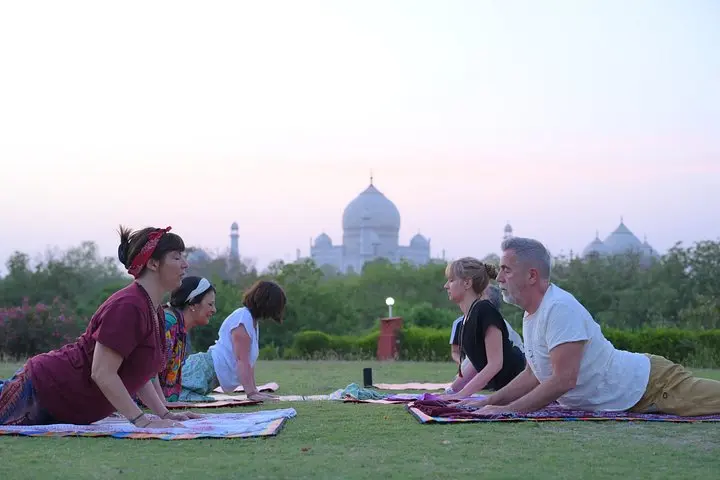
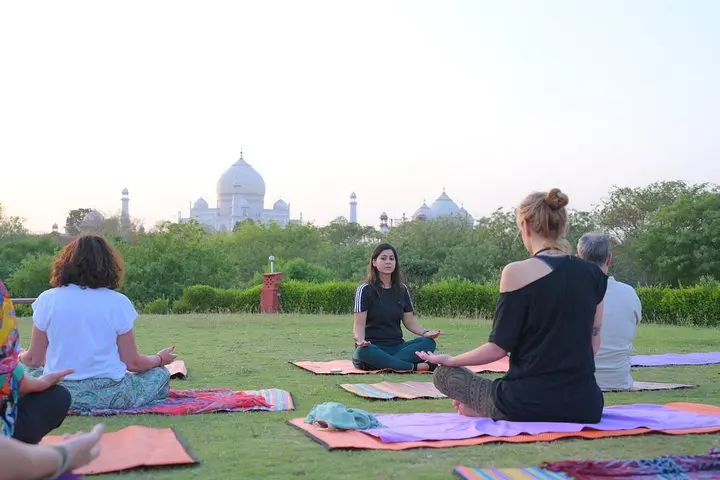
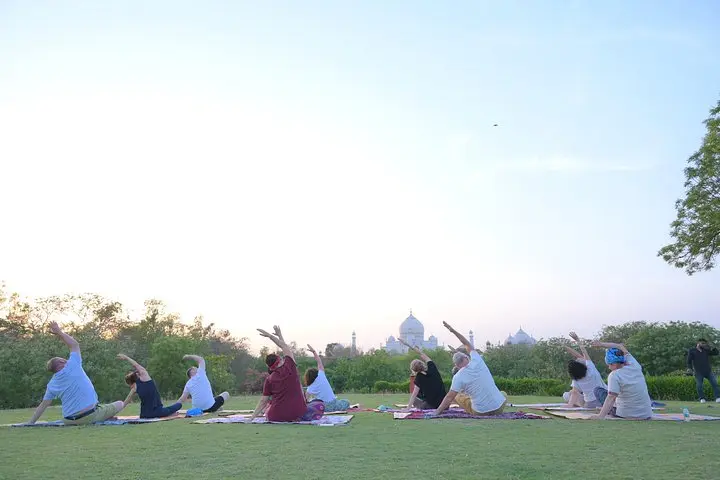
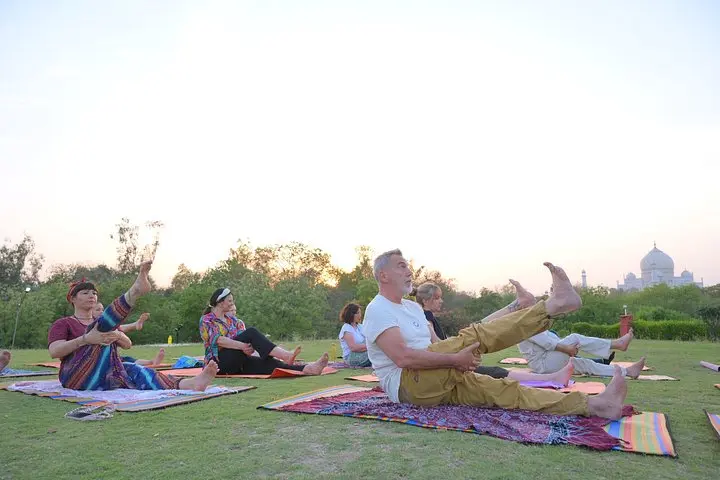
You unroll a mat as the Taj Mahal materializes through a thin morning haze, white marble warming to the sun. A soft river breeze pushes scent and birdcalls across the grass; the instructor’s voice guides inhale and exhale while the monument watches silently. The class is intimate and deliberately paced—breath, alignment, short chanting—framed by one of the world’s most recognizable silhouettes rather than a crowded sightseeing route.
You unroll a mat as the Taj Mahal materializes through a thin morning haze, white marble warming to the sun. A soft river breeze pushes scent and birdcalls across the grass; the instructor’s voice guides inhale and exhale while the monument watches silently. The class is intimate and deliberately paced—breath, alignment, short chanting—framed by one of the world’s most recognizable silhouettes rather than a crowded sightseeing route.
The Taj Mahal, completed in the mid-17th century by Shah Jahan, sits on the Yamuna’s right bank and has long drawn pilgrims, poets, and travelers. The river carved the plain that allowed the gardens and platform to be laid out, and the view from the opposite bank or nearby terraces gives a rare, unobstructed perspective of its symmetry. Yoga itself traces back millennia in South Asia; practicing here connects a living discipline with the region’s layered cultural history.
Practicalities are straightforward: sessions are short and tailored to ability, typically an hour of guided practice within a two-hour booking window to allow time for arrival and return. Expect uneven ground if the location is a garden or riverside terrace, and bring modest clothing respectful of local customs. Bottled water and mats are usually provided, but sunscreen and a light jacket for early mornings are wise. Respect site rules: keep noise low, follow instructor direction, and avoid interfering with historical structures. This is a meditative, low-impact way to experience the Taj—physically gentle but emotionally resonant if you choose the quiet hours.