THE ADVENTURE COLLECTIVE® · Independent discovery and booking for outdoor travel

Watch Angkor’s stones ignite under a golden sky on a private, photography-led tour that moves through Bayon, Ta Prohm and up Phnom Bakheng for sunset. Practical guidance and cultural context help you capture powerful images while respecting sacred sites.
Watch Angkor’s stones ignite under a golden sky on a private, photography-led tour that moves through Bayon, Ta Prohm and up Phnom Bakheng for sunset. Practical guidance and cultural context help you capture powerful images while respecting sacred sites.
The light softens over cracked laterite and sandstone as a private van threads through palm-lined roads toward Angkor’s western edge. By the time participants step from the vehicle, the complex exhales history—monumental galleries, carved faces, and strangling fig roots that pull at temple walls like an insistent tide.
Verified experiences and guided adventures in the surrounding area.
Operated by Marvel Angkor Tours · Siem Reap, Siem Reap Province
The light softens over cracked laterite and sandstone as a private van threads through palm-lined roads toward Angkor’s western edge. By the time participants step from the vehicle, the complex exhales history—monumental galleries, carved faces, and strangling fig roots that pull at temple walls like an insistent tide.
This guided, photography-focused tour covers core Angkor monuments: the gate-lined approach to Angkor Thom, the enigmatic Bayon faces, Ta Prohm’s root-woven galleries, the quieter corridors of Banteay Kdei, and the climb up Phnom Bakheng for sunset. The Angkor complex dates to the 9th–15th centuries, built by Khmer kings who fused Hindu and later Buddhist symbolism into carved stone. Geologically, the temples sit on a sedimentary plain; quarry stone and laterite were quarried nearby and transported by human and water networks that once fed the Angkor hydraulic system.
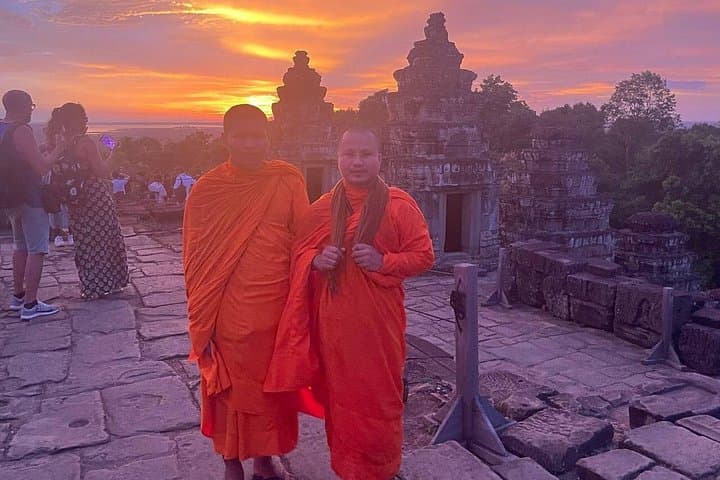
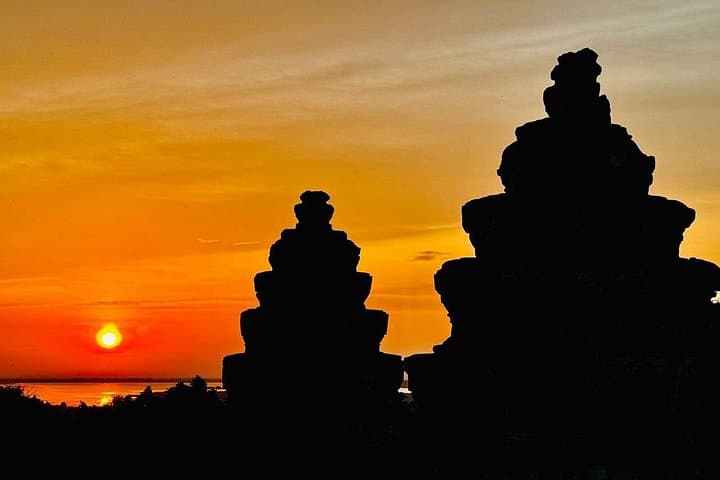
Expect cultural interplay: local guides offer Khmer context, monks in orange robes pass through temple courtyards, and market vendors cluster near park entrances. A professional photographer on the tour helps position shots, manage light, and suggest compositions for golden-hour silhouettes against Angkor’s towers.
Practical notes: wear sturdy, broken-in walking shoes and lightweight, modest clothing for temple etiquette; bring water and insect protection. Phnom Bakheng fills quickly at sunset—arrive early to secure a viewpoint and be prepared for uneven steps and packed crowds. Photography at dusk yields long shadows and warm stone tones; a small tripod and charged batteries make the most of the fleeting light.
This is a cultural walk that combines accessible terrain with opportunity for thoughtful, low-impact exploration and memorable images.
Entrance fees are typically not included in private tour prices; visitors purchase a pass at gate kiosks (options for 1-, 3-, and 7-day passes).
Yes—this private tour includes luxury car/van transfers between Siem Reap and the park sites as noted in inclusions.
Some areas have limited accessibility; primary paths and the vehicle access points can accommodate wheelchairs, but many temple interiors have steps and uneven ground.
Tripods are commonly used, but space at Phnom Bakheng is limited—arrive early and be prepared to share the viewing area with other photographers.
Marvel Angkor Tours operates guided outdoor trips and adventures with an emphasis on safety, stewardship, and memorable experiences.


The light softens over cracked laterite and sandstone as a private van threads through palm-lined roads toward Angkor’s western edge. By the time participants step from the vehicle, the complex exhales history—monumental galleries, carved faces, and strangling fig roots that pull at temple walls like an insistent tide.
The light softens over cracked laterite and sandstone as a private van threads through palm-lined roads toward Angkor’s western edge. By the time participants step from the vehicle, the complex exhales history—monumental galleries, carved faces, and strangling fig roots that pull at temple walls like an insistent tide.
This guided, photography-focused tour covers core Angkor monuments: the gate-lined approach to Angkor Thom, the enigmatic Bayon faces, Ta Prohm’s root-woven galleries, the quieter corridors of Banteay Kdei, and the climb up Phnom Bakheng for sunset. The Angkor complex dates to the 9th–15th centuries, built by Khmer kings who fused Hindu and later Buddhist symbolism into carved stone. Geologically, the temples sit on a sedimentary plain; quarry stone and laterite were quarried nearby and transported by human and water networks that once fed the Angkor hydraulic system.
Expect cultural interplay: local guides offer Khmer context, monks in orange robes pass through temple courtyards, and market vendors cluster near park entrances. A professional photographer on the tour helps position shots, manage light, and suggest compositions for golden-hour silhouettes against Angkor’s towers.
Practical notes: wear sturdy, broken-in walking shoes and lightweight, modest clothing for temple etiquette; bring water and insect protection. Phnom Bakheng fills quickly at sunset—arrive early to secure a viewpoint and be prepared for uneven steps and packed crowds. Photography at dusk yields long shadows and warm stone tones; a small tripod and charged batteries make the most of the fleeting light.
This is a cultural walk that combines accessible terrain with opportunity for thoughtful, low-impact exploration and memorable images.