THE ADVENTURE COLLECTIVE® · Independent discovery and booking for outdoor travel

Drive the coastal road from Athens to a cliff-top temple where marble columns stare down at the Aegean. This half-day private tour combines myth, geology and a perfect sunset vantage point.
Drive the coastal road from Athens to a cliff-top temple where marble columns stare down at the Aegean. This half-day private tour combines myth, geology and a perfect sunset vantage point.
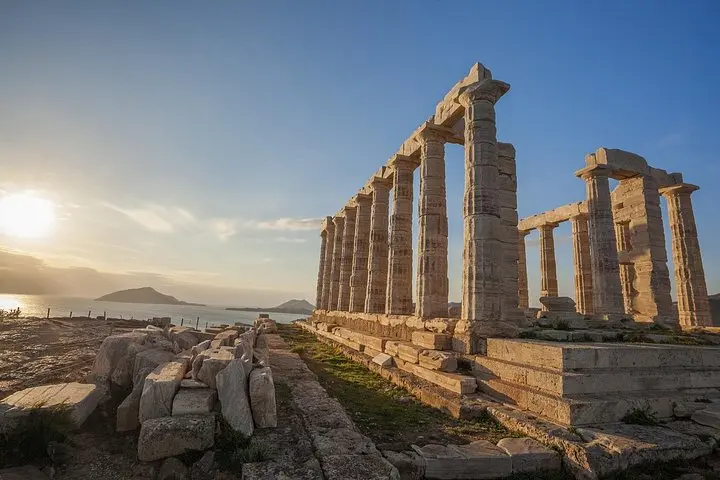
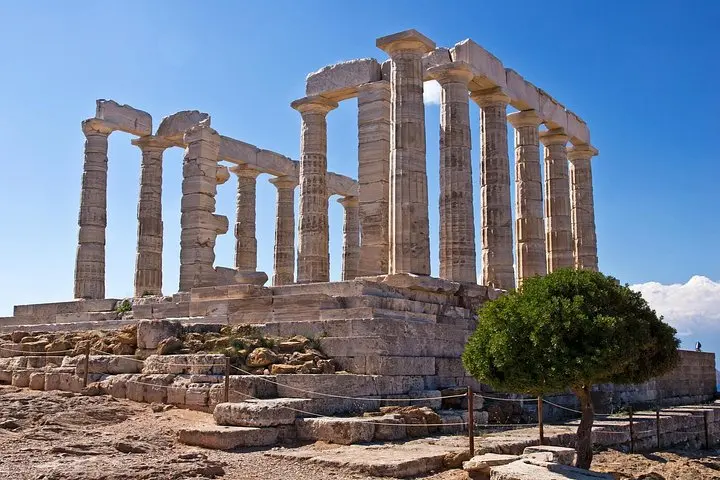
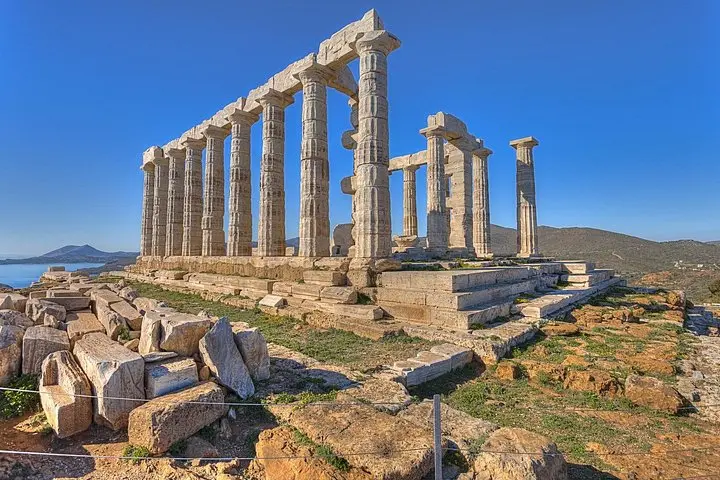
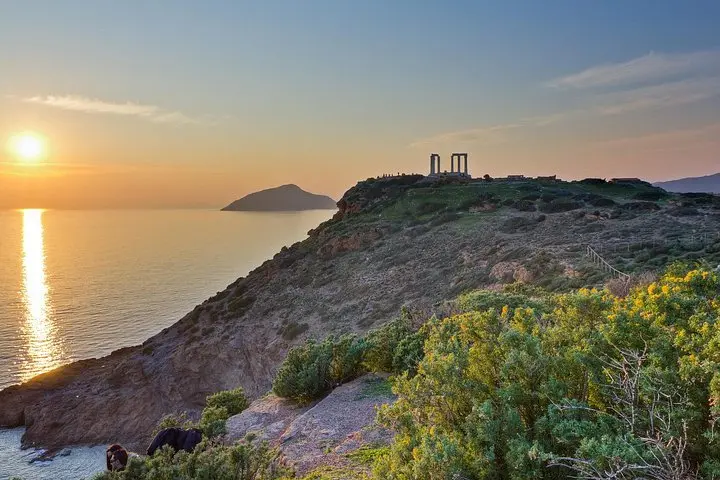
A salt-washed wind meets the road as you drive southeast from Athens, the Aegean spread to your right and low headlands receding like punctuation marks. In under 90 minutes the modern highway gives way to coastal ribbon; whitewashed houses and scrubby pines thin out and the Temple of Poseidon appears, cut in white marble and set roughly 60 meters above the sea. The columns look out over a blue that pushes back at the cliff — a place that asks you to pause.
Verified experiences and guided adventures in the surrounding area.
Operated by CATTAXI · Sounio, Attica
A salt-washed wind meets the road as you drive southeast from Athens, the Aegean spread to your right and low headlands receding like punctuation marks. In under 90 minutes the modern highway gives way to coastal ribbon; whitewashed houses and scrubby pines thin out and the Temple of Poseidon appears, cut in white marble and set roughly 60 meters above the sea. The columns look out over a blue that pushes back at the cliff — a place that asks you to pause.
Cape Sounion has been a maritime landmark since antiquity. The late 5th‑century BCE temple was built during Athens’ golden age to honor Poseidon and to signal Athenian presence along trade routes. Myth overlays the geology here: volcanic schist and limestone create terraces that slope to the shore, and nearby Lake Vouliagmeni, a thermal sink, offers an unexpected contrast of warm freshwater against the brine.
Culturally, the site is part of a trio of Attica monuments — Acropolis and Aphaea on Aegina — aligned across the Aegean on clear days. Local tavernas below the cliff specialize in fresh fish; timing a visit for late afternoon shifts the light and cools the wind, turning the marble a soft, burnished gold.
Practicalities: expect a 4–6 hour private excursion with hotel or port pickup, unpaved paths at the site, and no admission included in base pricing. Wear sturdy shoes for uneven terrain, bring sun protection and water, and allow time to explore Lake Vouliagmeni if the itinerary includes it. Drivers often provide context but professional guides at the ruins are optional for an extra fee.
Typical drive time is about 60–90 minutes each way depending on traffic; the full excursion lasts 4–6 hours including stops.
No—admission fees are not included in the base tour price; you can purchase tickets on site.
Drivers provide local commentary and can drop you at the site, but a professional archaeological guide is usually not included and can be hired on site for an extra fee.
Many itineraries include a short stop at Lake Vouliagmeni; swimming is possible but depends on the schedule and season, as it’s a managed thermal lake with its own entrance fees and hours.
CATTAXI operates guided outdoor trips and adventures with an emphasis on safety, stewardship, and memorable experiences.
A salt-washed wind meets the road as you drive southeast from Athens, the Aegean spread to your right and low headlands receding like punctuation marks. In under 90 minutes the modern highway gives way to coastal ribbon; whitewashed houses and scrubby pines thin out and the Temple of Poseidon appears, cut in white marble and set roughly 60 meters above the sea. The columns look out over a blue that pushes back at the cliff — a place that asks you to pause.
A salt-washed wind meets the road as you drive southeast from Athens, the Aegean spread to your right and low headlands receding like punctuation marks. In under 90 minutes the modern highway gives way to coastal ribbon; whitewashed houses and scrubby pines thin out and the Temple of Poseidon appears, cut in white marble and set roughly 60 meters above the sea. The columns look out over a blue that pushes back at the cliff — a place that asks you to pause.
Cape Sounion has been a maritime landmark since antiquity. The late 5th‑century BCE temple was built during Athens’ golden age to honor Poseidon and to signal Athenian presence along trade routes. Myth overlays the geology here: volcanic schist and limestone create terraces that slope to the shore, and nearby Lake Vouliagmeni, a thermal sink, offers an unexpected contrast of warm freshwater against the brine.
Culturally, the site is part of a trio of Attica monuments — Acropolis and Aphaea on Aegina — aligned across the Aegean on clear days. Local tavernas below the cliff specialize in fresh fish; timing a visit for late afternoon shifts the light and cools the wind, turning the marble a soft, burnished gold.
Practicalities: expect a 4–6 hour private excursion with hotel or port pickup, unpaved paths at the site, and no admission included in base pricing. Wear sturdy shoes for uneven terrain, bring sun protection and water, and allow time to explore Lake Vouliagmeni if the itinerary includes it. Drivers often provide context but professional guides at the ruins are optional for an extra fee.