THE ADVENTURE COLLECTIVE® · Independent discovery and booking for outdoor travel

Drive the Athenian Riviera to Cape Sounion for a half-day private tour that pairs the warm mineral waters of Vouliagmeni Lake with the fifth-century columns of the Temple of Poseidon. Time your visit for sunset to see the Aegean light transform the temple’s marble.
Drive the Athenian Riviera to Cape Sounion for a half-day private tour that pairs the warm mineral waters of Vouliagmeni Lake with the fifth-century columns of the Temple of Poseidon. Time your visit for sunset to see the Aegean light transform the temple’s marble.
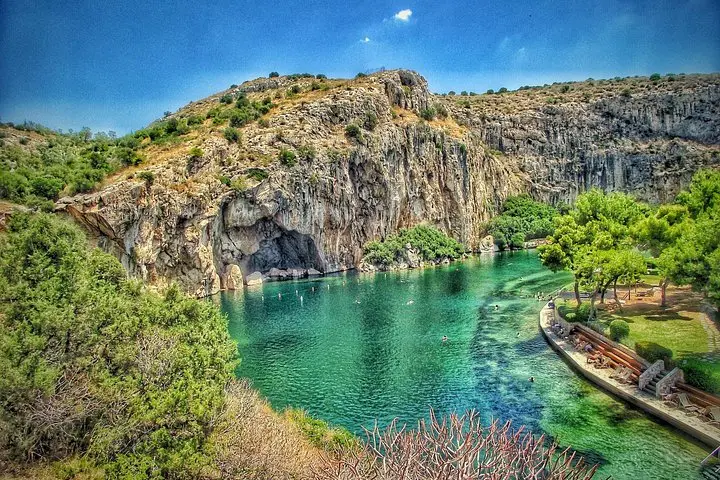
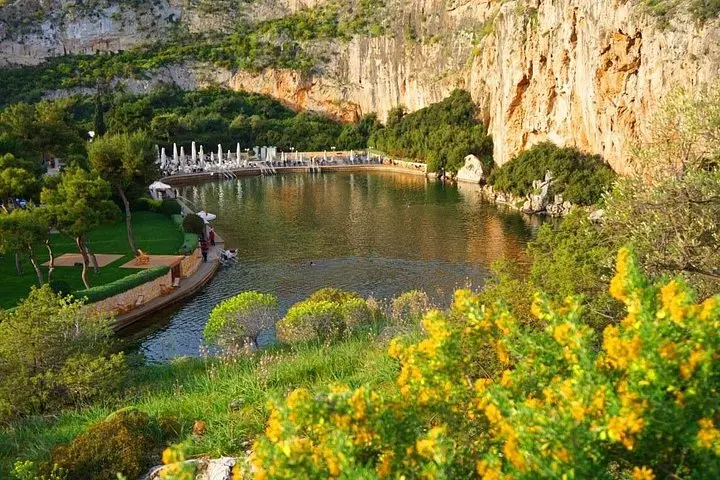
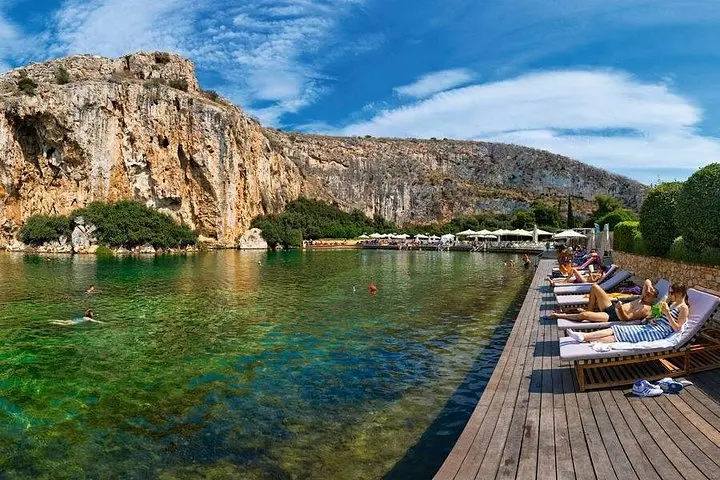
The road out of Athens slides along the Athenian Riviera, palm-lined roundabouts giving way to open sea. In the back of a comfortable car you watch the Aegean broaden, silvering as the sun shifts. The first pause is Vouliagmeni Lake: a bowl of warm mineral water cupped by limestone cliffs and tamarisk—an uncommon geothermal pocket where swimmers and spa-goers trade the city heat for clear, buoyant water.
Verified experiences and guided adventures in the surrounding area.
Operated by 4 Seasons Greece Tours · Sounion, Attica
The road out of Athens slides along the Athenian Riviera, palm-lined roundabouts giving way to open sea. In the back of a comfortable car you watch the Aegean broaden, silvering as the sun shifts. The first pause is Vouliagmeni Lake: a bowl of warm mineral water cupped by limestone cliffs and tamarisk—an uncommon geothermal pocket where swimmers and spa-goers trade the city heat for clear, buoyant water.
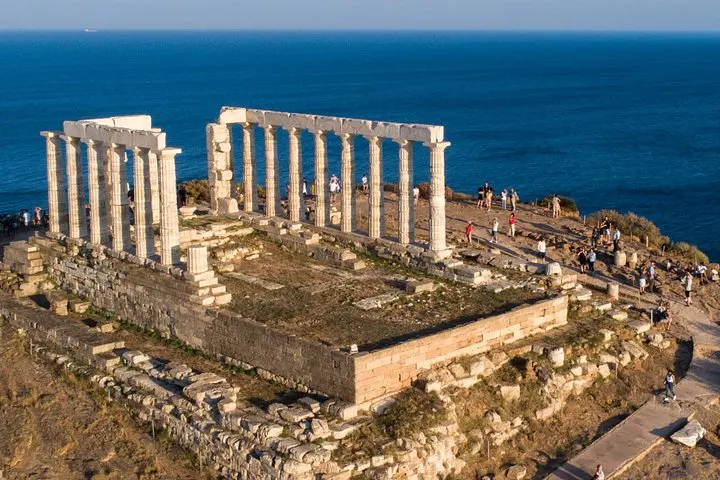
Beyond Vouliagmeni the coastline becomes a chain of fishing villages and high scrub. Cape Sounion appears last, a low headland crowned by the ruined columns of the Temple of Poseidon. Built in the mid-5th century BCE during Pericles’ building programs, the temple marked a strategic maritime outpost for the Athenians. The local geology—Limestone bedrock cut by sea and wind—gives the cape its raw angles and underwater caves once used by ancient sailors.
Culturally, the cape is both archaeological site and modern ritual: couples and photographers time arrivals for one of Greece’s famous sunsets, while tavernas down the road keep the island’s seafood traditions alive.
Practical guidance: allow roughly five hours for pickup, stops at Vouliagmeni, coastal photo pulls, and a 40–180 minute visit at Sounion. Wear grippy shoes for uneven marble and bring sun protection—the cape is exposed. If you want the classic image, plan the visit in late afternoon to catch sunset light; otherwise mornings are quieter. There’s no mandatory hiking, but steps and rocky terraces require steady footing. Bring cash for tavernas and expect limited shade on the promontory.
The tour provides transport and stops but entrance fees to the archaeological site are typically paid on-site by visitors.
Yes—private transfer includes free pickup and drop-off at your residence, hotel, port or airport within Athens.
Yes; the lake is a thermal swimming spot with facilities—bring swimwear and allow extra time for bathing.
The transfer vehicles are accessible and coastal driving is suitable, but archaeological terraces at Sounion have uneven surfaces that limit full wheelchair access.
4 Seasons Greece Tours operates guided outdoor trips and adventures with an emphasis on safety, stewardship, and memorable experiences.
The road out of Athens slides along the Athenian Riviera, palm-lined roundabouts giving way to open sea. In the back of a comfortable car you watch the Aegean broaden, silvering as the sun shifts. The first pause is Vouliagmeni Lake: a bowl of warm mineral water cupped by limestone cliffs and tamarisk—an uncommon geothermal pocket where swimmers and spa-goers trade the city heat for clear, buoyant water.
The road out of Athens slides along the Athenian Riviera, palm-lined roundabouts giving way to open sea. In the back of a comfortable car you watch the Aegean broaden, silvering as the sun shifts. The first pause is Vouliagmeni Lake: a bowl of warm mineral water cupped by limestone cliffs and tamarisk—an uncommon geothermal pocket where swimmers and spa-goers trade the city heat for clear, buoyant water.
Beyond Vouliagmeni the coastline becomes a chain of fishing villages and high scrub. Cape Sounion appears last, a low headland crowned by the ruined columns of the Temple of Poseidon. Built in the mid-5th century BCE during Pericles’ building programs, the temple marked a strategic maritime outpost for the Athenians. The local geology—Limestone bedrock cut by sea and wind—gives the cape its raw angles and underwater caves once used by ancient sailors.
Culturally, the cape is both archaeological site and modern ritual: couples and photographers time arrivals for one of Greece’s famous sunsets, while tavernas down the road keep the island’s seafood traditions alive.
Practical guidance: allow roughly five hours for pickup, stops at Vouliagmeni, coastal photo pulls, and a 40–180 minute visit at Sounion. Wear grippy shoes for uneven marble and bring sun protection—the cape is exposed. If you want the classic image, plan the visit in late afternoon to catch sunset light; otherwise mornings are quieter. There’s no mandatory hiking, but steps and rocky terraces require steady footing. Bring cash for tavernas and expect limited shade on the promontory.