THE ADVENTURE COLLECTIVE® · Independent discovery and booking for outdoor travel

Drive the Athenian Riviera to Cape Sounion and watch the Temple of Poseidon crown the headland as the sun drops into the Saronic Gulf. This private 4–5 hour tour pairs an easy coastal drive with a short, evocative visit to one of classical Greece’s most dramatic ruins.
Drive the Athenian Riviera to Cape Sounion and watch the Temple of Poseidon crown the headland as the sun drops into the Saronic Gulf. This private 4–5 hour tour pairs an easy coastal drive with a short, evocative visit to one of classical Greece’s most dramatic ruins.
A road of sea and light carries the traveller south from Athens along the Athenian Riviera, the car hugging coastal cliffs with the Saronic Gulf at its side. Olive-dotted slopes fall toward small beaches; the Mediterranean air pushes forward like a tide as the Temple of Poseidon appears, perched 60 meters above the waves. At dusk the columns take on the color of the sea and the sky, and the headland holds your gaze.
Verified experiences and guided adventures in the surrounding area.
Operated by My Athens Transfers · Lavrio, Attica
A road of sea and light carries the traveller south from Athens along the Athenian Riviera, the car hugging coastal cliffs with the Saronic Gulf at its side. Olive-dotted slopes fall toward small beaches; the Mediterranean air pushes forward like a tide as the Temple of Poseidon appears, perched 60 meters above the waves. At dusk the columns take on the color of the sea and the sky, and the headland holds your gaze.
Cape Sounion’s Doric temple dates to the mid-5th century BC, raised in Athens’ golden age as a maritime marker and place of votive ritual. Geologically the headland is limestone and schist scoured by wind and salt, the cliffs showing fracture lines where sea and time have worked. Local culture remembers Sounion as a spot of ancient navigation and modern escape — Athenians have driven here for generations to watch the sun sink into the gulf.
Practical guidance follows the drama: the private tour typically runs 4–5 hours from Athens with hotel or port pickup and air-conditioned transport. The site is compact; expect a 30–45 minute walking visit around the temple platform with uneven stone underfoot and short flights of steps. The temple closes roughly 30 minutes before sunset in winter months, so verify seasonal times. Bring sturdy shoes, sun protection, and water; evening breeze can be cool.
Photography is rewarding from multiple angles — the headland frame, the shoreline below, and the coastal road on return. Respect site rules: don’t climb the ruins, carry out trash, and leave space for other visitors to enjoy the view.
Admission fees are not always included in private transfer-only tours; confirm with the operator and have local currency or card ready.
Drivers are knowledgeable about local history and provide commentary but typically do not enter archaeological sites as licensed guides.
Expect 30–45 minutes of on-site walking to view the temple and cliff edges; longer if you explore nearby shoreline paths.
Access is limited by steps and uneven ground; some paths near the parking area are accessible but the temple platform itself is not fully wheelchair-friendly.
My Athens Transfers operates guided outdoor trips and adventures with an emphasis on safety, stewardship, and memorable experiences.
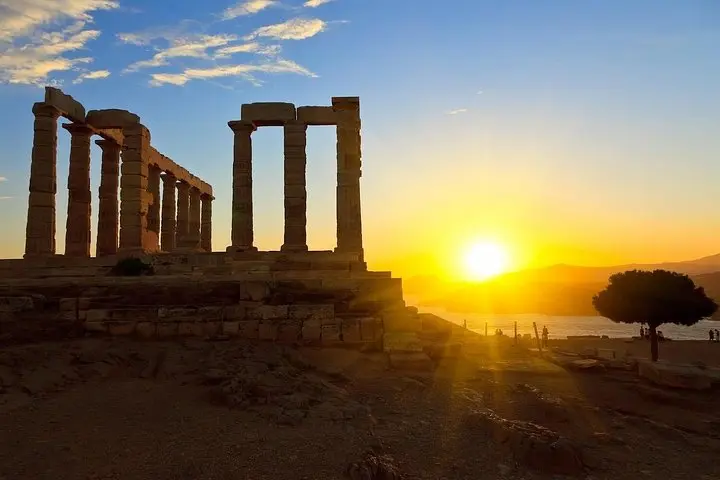
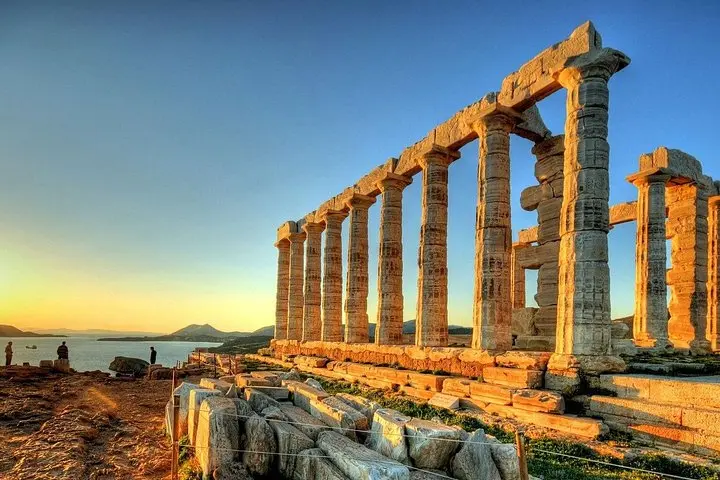
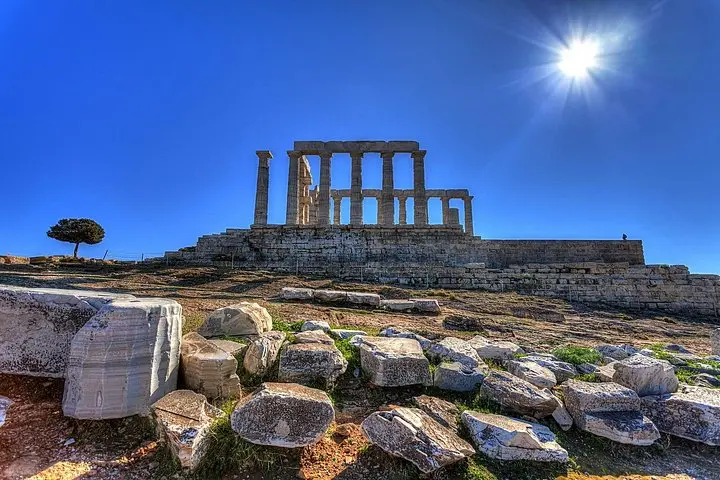
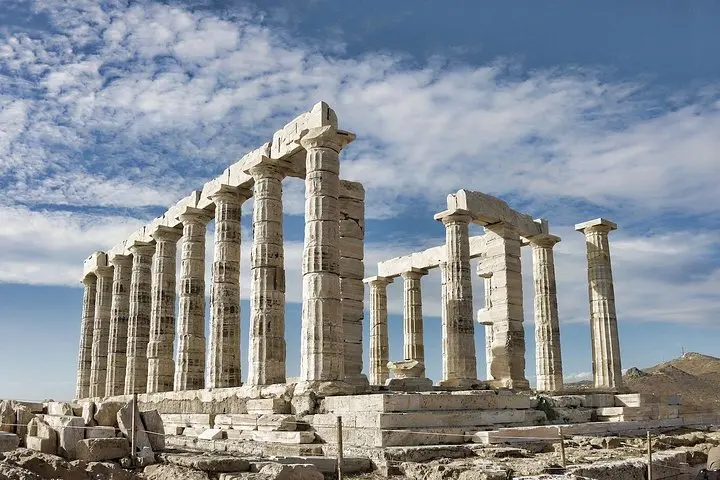
A road of sea and light carries the traveller south from Athens along the Athenian Riviera, the car hugging coastal cliffs with the Saronic Gulf at its side. Olive-dotted slopes fall toward small beaches; the Mediterranean air pushes forward like a tide as the Temple of Poseidon appears, perched 60 meters above the waves. At dusk the columns take on the color of the sea and the sky, and the headland holds your gaze.
A road of sea and light carries the traveller south from Athens along the Athenian Riviera, the car hugging coastal cliffs with the Saronic Gulf at its side. Olive-dotted slopes fall toward small beaches; the Mediterranean air pushes forward like a tide as the Temple of Poseidon appears, perched 60 meters above the waves. At dusk the columns take on the color of the sea and the sky, and the headland holds your gaze.
Cape Sounion’s Doric temple dates to the mid-5th century BC, raised in Athens’ golden age as a maritime marker and place of votive ritual. Geologically the headland is limestone and schist scoured by wind and salt, the cliffs showing fracture lines where sea and time have worked. Local culture remembers Sounion as a spot of ancient navigation and modern escape — Athenians have driven here for generations to watch the sun sink into the gulf.
Practical guidance follows the drama: the private tour typically runs 4–5 hours from Athens with hotel or port pickup and air-conditioned transport. The site is compact; expect a 30–45 minute walking visit around the temple platform with uneven stone underfoot and short flights of steps. The temple closes roughly 30 minutes before sunset in winter months, so verify seasonal times. Bring sturdy shoes, sun protection, and water; evening breeze can be cool.
Photography is rewarding from multiple angles — the headland frame, the shoreline below, and the coastal road on return. Respect site rules: don’t climb the ruins, carry out trash, and leave space for other visitors to enjoy the view.