THE ADVENTURE COLLECTIVE® · Independent discovery and booking for outdoor travel

Watch the Atacama’s Moon Valley flip from bright midday glare to molten sunset on this half-day tour from San Pedro de Atacama. Visit salt caves, dune viewpoints and Mirador de Kari while learning the valley’s geological and cultural story.
Watch the Atacama’s Moon Valley flip from bright midday glare to molten sunset on this half-day tour from San Pedro de Atacama. Visit salt caves, dune viewpoints and Mirador de Kari while learning the valley’s geological and cultural story.
The afternoon light in Moon Valley strips color down to raw shapes: wind-sculpted dunes lean like unfinished sculptures, salt-crusted ravines catch the sun and throw it back in hard gold. You arrive from San Pedro de Atacama into a landscape that feels deliberately minimal — sharp ridgelines, a scatter of volcanic rock, and the Andes hovering on the horizon.
Verified experiences and guided adventures in the surrounding area.
Operated by ParaViajantes Tours · San Pedro de Atacama, Antofagasta
The afternoon light in Moon Valley strips color down to raw shapes: wind-sculpted dunes lean like unfinished sculptures, salt-crusted ravines catch the sun and throw it back in hard gold. You arrive from San Pedro de Atacama into a landscape that feels deliberately minimal — sharp ridgelines, a scatter of volcanic rock, and the Andes hovering on the horizon.
Geologically this is the Cordillera de la Sal, a fossilized seabed turned into folded salt and gypsum by tectonic pressure. The valley’s “lunar” look was cataloged by archaeologist Gustavo Le Paige, who linked the region’s human history to its dramatic terraces and ancient trails. Local Atacameño culture threads through small stone remains and place names, a reminder that these dry plains were part of trade and ritual routes for centuries.
On tour you’ll visit salt caves and abandoned salt mines, climb viewpoints such as Mirador de Kari for wide panoramas, and cross the Great Dune and Amphitheater before settling at a sunset outlook. Expect sharp temperature swings, persistent wind, and fine dust that finds gaps in clothing and camera gear.
Practical guidance: schedule the trip to arrive at the final viewpoint 30–45 minutes before sunset for best light; carry at least 1–2 liters of water, layers for a 15–20°C swing between sun and dusk, and sturdy shoes for sand and loose scree. Follow your guide, stay on designated paths, and pack out all waste — this fragile desert records every footprint.
This is a half-day tour of roughly 5 hours; pickups in San Pedro occur mid-afternoon so you reach the final viewpoint at sunset.
The tour is rated easy but high altitude can affect children and older adults; minors aged 5–8 may experience symptoms and vulnerable travelers should consult a doctor.
Yes — guides time the route to allow 20–45 minutes at key viewpoints like Mirador de Kari and the Great Dune, ideal for sunset photography.
No special permits are required for the public areas visited; entrance fees to protected sites are typically included by the operator but confirm at booking.
ParaViajantes Tours operates guided outdoor trips and adventures with an emphasis on safety, stewardship, and memorable experiences.
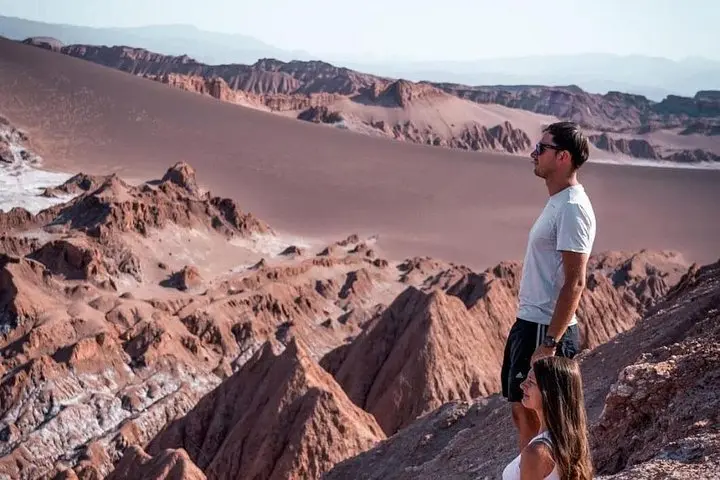

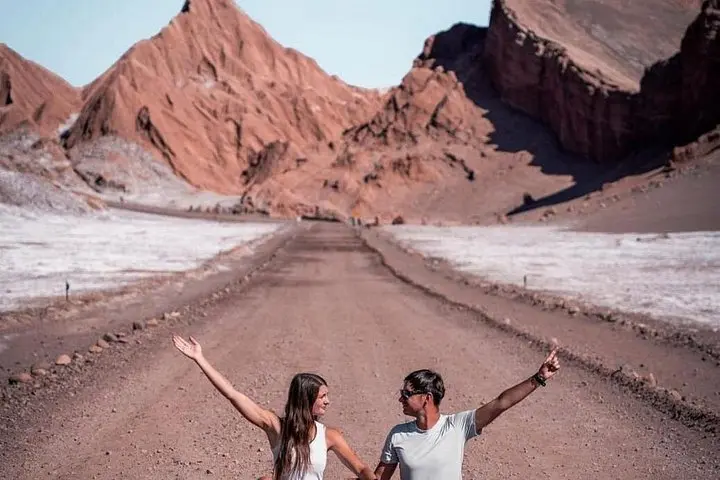
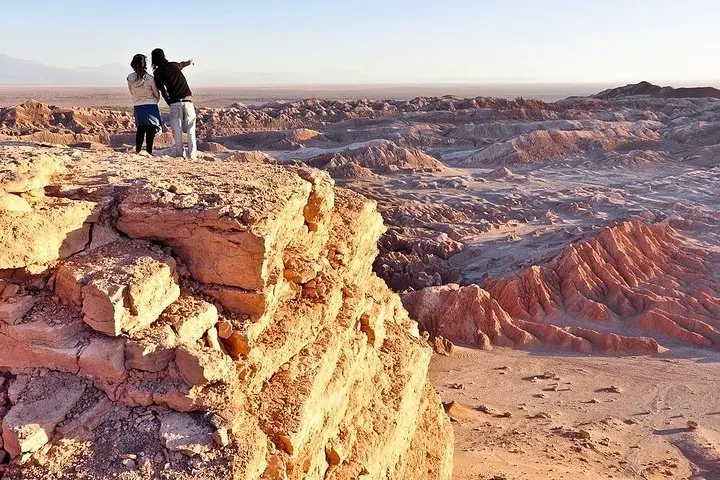
The afternoon light in Moon Valley strips color down to raw shapes: wind-sculpted dunes lean like unfinished sculptures, salt-crusted ravines catch the sun and throw it back in hard gold. You arrive from San Pedro de Atacama into a landscape that feels deliberately minimal — sharp ridgelines, a scatter of volcanic rock, and the Andes hovering on the horizon.
The afternoon light in Moon Valley strips color down to raw shapes: wind-sculpted dunes lean like unfinished sculptures, salt-crusted ravines catch the sun and throw it back in hard gold. You arrive from San Pedro de Atacama into a landscape that feels deliberately minimal — sharp ridgelines, a scatter of volcanic rock, and the Andes hovering on the horizon.
Geologically this is the Cordillera de la Sal, a fossilized seabed turned into folded salt and gypsum by tectonic pressure. The valley’s “lunar” look was cataloged by archaeologist Gustavo Le Paige, who linked the region’s human history to its dramatic terraces and ancient trails. Local Atacameño culture threads through small stone remains and place names, a reminder that these dry plains were part of trade and ritual routes for centuries.
On tour you’ll visit salt caves and abandoned salt mines, climb viewpoints such as Mirador de Kari for wide panoramas, and cross the Great Dune and Amphitheater before settling at a sunset outlook. Expect sharp temperature swings, persistent wind, and fine dust that finds gaps in clothing and camera gear.
Practical guidance: schedule the trip to arrive at the final viewpoint 30–45 minutes before sunset for best light; carry at least 1–2 liters of water, layers for a 15–20°C swing between sun and dusk, and sturdy shoes for sand and loose scree. Follow your guide, stay on designated paths, and pack out all waste — this fragile desert records every footprint.