
Sunset at Pokhara's World Peace Stupa: Hilltop Views Over Phewa Lake & Annapurna
Catch sunset from the World Peace Stupa above Phewa Lake for a compact evening tour with panoramic views of Pokhara and the Annapurna range. This private drive-and-walk experience pairs easy access with powerful vistas—ideal for photographers and travelers seeking a peaceful hilltop sunset.
An Adventure In Pokhara.
Catch sunset from the World Peace Stupa above Phewa Lake for a compact evening tour with panoramic views of Pokhara and the Annapurna range. This private drive-and-walk experience pairs easy access with powerful vistas—ideal for photographers and travelers seeking a peaceful hilltop sunset.
Read the full experience
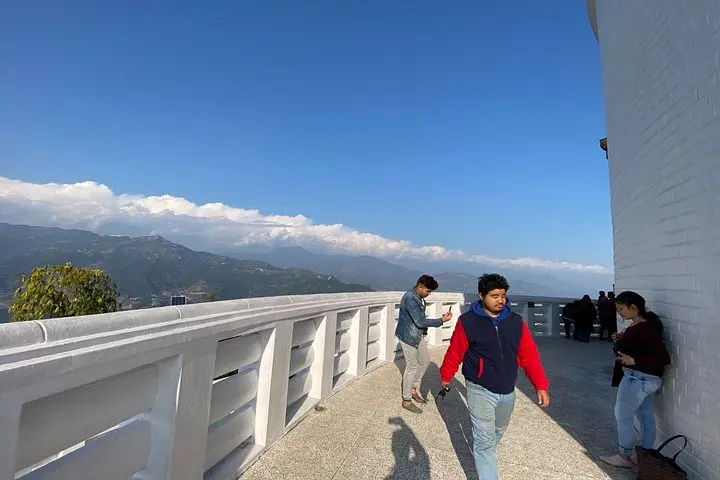
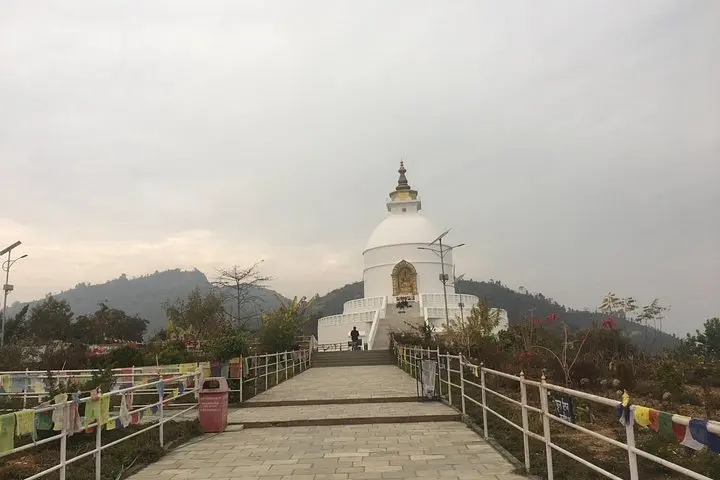
You arrive on the southern rim of Phewa Lake as the sun leans toward the western horizon, the city lights of Lakeside beginning to glow below. The road winds up through small villages; terraced fields and scattered pines give way to the stupa’s white dome, which presides over the valley like a calm watchman. Standing on the rim, the lake mirrors the sky while the jagged profile of Machapuchare (Fishtail) and the Annapurna massif take shape against the evening light.
You arrive on the southern rim of Phewa Lake as the sun leans toward the western horizon, the city lights of Lakeside beginning to glow below. The road winds up through small villages; terraced fields and scattered pines give way to the stupa’s white dome, which presides over the valley like a calm watchman. Standing on the rim, the lake mirrors the sky while the jagged profile of Machapuchare (Fishtail) and the Annapurna massif take shape against the evening light.
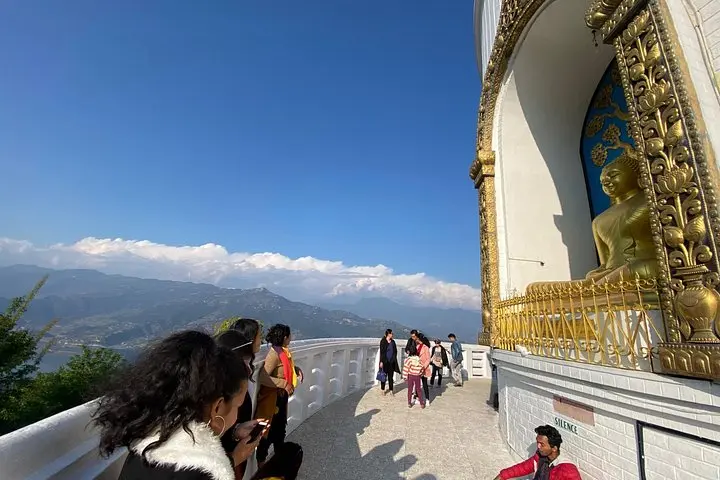
The World Peace Stupa (Shanti Stupa) was erected with international Buddhist support and has become both a spiritual site and a vantage point for Pokhara. Geologically, the viewpoint sits on a low ridge formed by Himalayan uplift and local erosion, offering clear sightlines across Phewa’s basin. Culturally, this is a quiet place of prayer and reflection—prayer flags and small shrines line the paths, and you’ll hear the soft clink of mani stones and the murmur of monks on occasion.
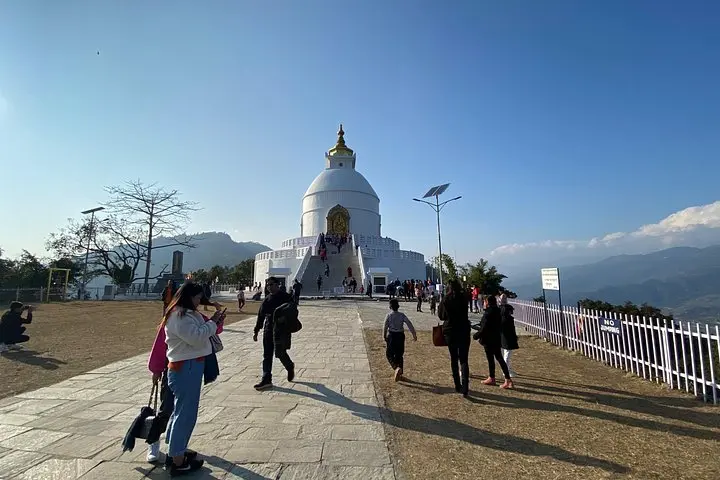
Practically, expect a short drive of roughly 6 km (about 20–30 minutes from Lakeside) and a brief walk up stairs and compact trails to the stupa plaza. The tour typically lasts 90–120 minutes, timed to catch the color change of sunset. Bring a warm layer for the ridge breeze, a headlamp if you’ll descend after dark, and a camera with a wide-angle to capture the lake-to-mountain sweep. Respect the sacred space—remove hats inside shrine areas, keep voices low, and allow others space for meditation. Whether you come for photography or quiet, the Stupa frames Pokhara in a way few other viewpoints do.
Frequently asked questions
Most tours and taxis drive about 6 km south of Lakeside; the transfer takes roughly 20–30 minutes followed by a short walk to the stupa plaza.
Yes—access involves short walks and steps. If mobility is limited, ask for a drop-off closer to the stupa or plan extra time for a gentle pace.
Visiting after sunset is common, but paths can be dark; bring a light and check local transport options back to Lakeside if you’re not in a tour vehicle.
There’s no formal fee to view the stupa, but it’s a religious site—dress modestly and be respectful of worshippers and ceremonies.
About This Experience
Fewa Trail Treks and Expedition Pvt Ltd operates guided outdoor trips and adventures with an emphasis on safety, stewardship, and memorable experiences.
Adventure tips
Recommended gear
- Light insulated jacket: Keeps you warm on the exposed hilltop as temperatures drop after sunset.
- Comfortable walking shoes: Provides grip on stone steps and uneven trails during the short ascent.
- Headlamp or flashlight: Useful for the descent after sunset when paths are poorly lit.
- Wide-angle camera or smartphone: Helps capture the expansive lake-to-mountain panorama at golden hour.
Photos of the experience
Related adventures & guides
Read the full experience
You arrive on the southern rim of Phewa Lake as the sun leans toward the western horizon, the city lights of Lakeside beginning to glow below. The road winds up through small villages; terraced fields and scattered pines give way to the stupa’s white dome, which presides over the valley like a calm watchman. Standing on the rim, the lake mirrors the sky while the jagged profile of Machapuchare (Fishtail) and the Annapurna massif take shape against the evening light.
You arrive on the southern rim of Phewa Lake as the sun leans toward the western horizon, the city lights of Lakeside beginning to glow below. The road winds up through small villages; terraced fields and scattered pines give way to the stupa’s white dome, which presides over the valley like a calm watchman. Standing on the rim, the lake mirrors the sky while the jagged profile of Machapuchare (Fishtail) and the Annapurna massif take shape against the evening light.
The World Peace Stupa (Shanti Stupa) was erected with international Buddhist support and has become both a spiritual site and a vantage point for Pokhara. Geologically, the viewpoint sits on a low ridge formed by Himalayan uplift and local erosion, offering clear sightlines across Phewa’s basin. Culturally, this is a quiet place of prayer and reflection—prayer flags and small shrines line the paths, and you’ll hear the soft clink of mani stones and the murmur of monks on occasion.
Practically, expect a short drive of roughly 6 km (about 20–30 minutes from Lakeside) and a brief walk up stairs and compact trails to the stupa plaza. The tour typically lasts 90–120 minutes, timed to catch the color change of sunset. Bring a warm layer for the ridge breeze, a headlamp if you’ll descend after dark, and a camera with a wide-angle to capture the lake-to-mountain sweep. Respect the sacred space—remove hats inside shrine areas, keep voices low, and allow others space for meditation. Whether you come for photography or quiet, the Stupa frames Pokhara in a way few other viewpoints do.
Make a day of it nearby.
Verified experiences and guided adventures in the surrounding area.