THE ADVENTURE COLLECTIVE® · Independent discovery and booking for outdoor travel

Watch the sun slide behind the Tararua Range at Stonehenge Aotearoa while guides explain celestial alignments, Māori starlore, and Polynesian navigation. This 90-minute sunset tour blends hands-on acoustics, audiovisual context, and sweeping Wairarapa views.
Watch the sun slide behind the Tararua Range at Stonehenge Aotearoa while guides explain celestial alignments, Māori starlore, and Polynesian navigation. This 90-minute sunset tour blends hands-on acoustics, audiovisual context, and sweeping Wairarapa views.
The late-afternoon light eases across the Wairarapa plains and the silhouetted Tararua Range sharpens against the horizon as a small group gathers around the circle of standing stones. Guides begin an hour before sunset, pointing out sightlines where the sun and stars cross carved markers; the stones hum with the low, surprising resonance you can test by clapping or speaking into the central ring.
Verified experiences and guided adventures in the surrounding area.
Operated by Stonehenge Aotearo · Carterton, Wellington Region
The late-afternoon light eases across the Wairarapa plains and the silhouetted Tararua Range sharpens against the horizon as a small group gathers around the circle of standing stones. Guides begin an hour before sunset, pointing out sightlines where the sun and stars cross carved markers; the stones hum with the low, surprising resonance you can test by clapping or speaking into the central ring.
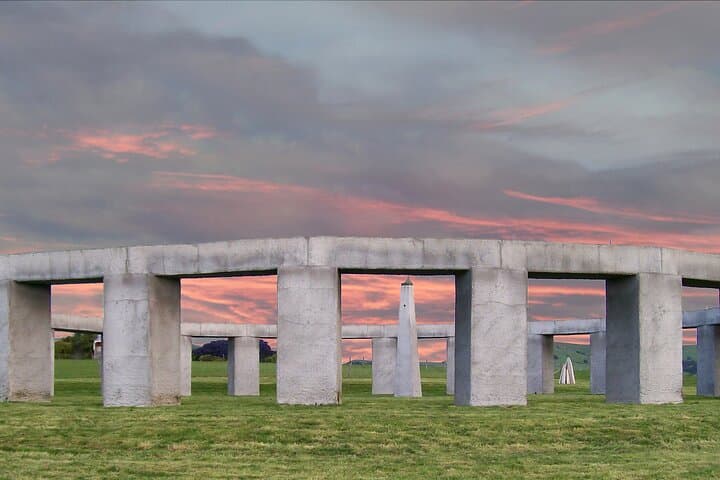
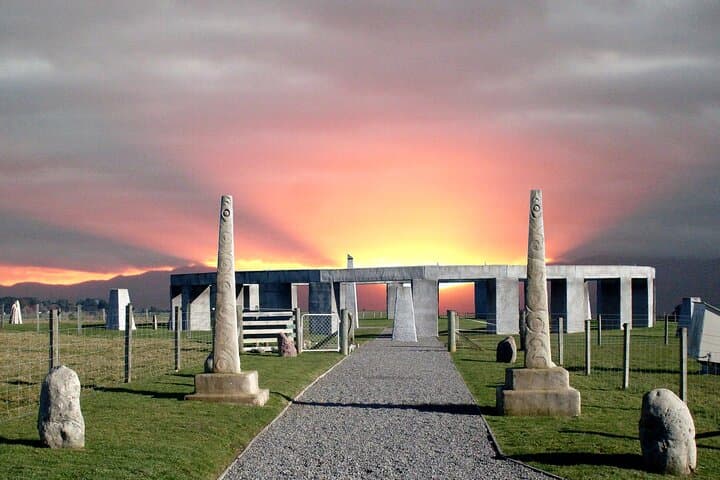
Stonehenge Aotearoa is a modern re-creation of ancient observatories, built in the 20th century to demonstrate how civilizations used stone alignments for timekeeping and navigation. Here the narrative extends beyond European megaliths: guides weave Māori starlore and Polynesian wayfinding into explanations of solar declination, lunar standstills, and the seasonal shift of constellations. The site sits on gently rolling farmland; the local schist and sedimentary soils shape the low ridgelines that form the backdrop.
Practical guidance is direct: tours run about 90 minutes with a short audiovisual introduction, are suitable for all fitness levels, and cap at roughly 50 people. Sunset timing matters—arrive early to get an orientation and experiment with the circle’s acoustics before the light fades. Dress in layers against sudden coastal chill, bring a torch for paths after dark, and a camera with a tripod if you want crisp low-light shots. The site is wheelchair accessible and family friendly, but respect the quiet once the group settles: the experience depends on clear sightlines and listening to celestial stories. For travelers based in Carterton or passing through the Wairarapa, this guided sunset combines hands-on archaeology, living cultural astronomy, and broad valley views in a compact, memorable evening.
The shared sunset tour runs about 90 minutes, including a 15-minute audiovisual introduction and guided time in the stone circle.
Yes — paths and viewing areas are accessible, and guides can accommodate visitors with mobility needs.
If skies are clear and light pollution is low, guides identify constellations after sunset; weather and cloud cover affect visibility.
Yes — the experience is family friendly; infants may be required to sit on laps and supervision is recommended around the stones.
Stonehenge Aotearo operates guided outdoor trips and adventures with an emphasis on safety, stewardship, and memorable experiences.
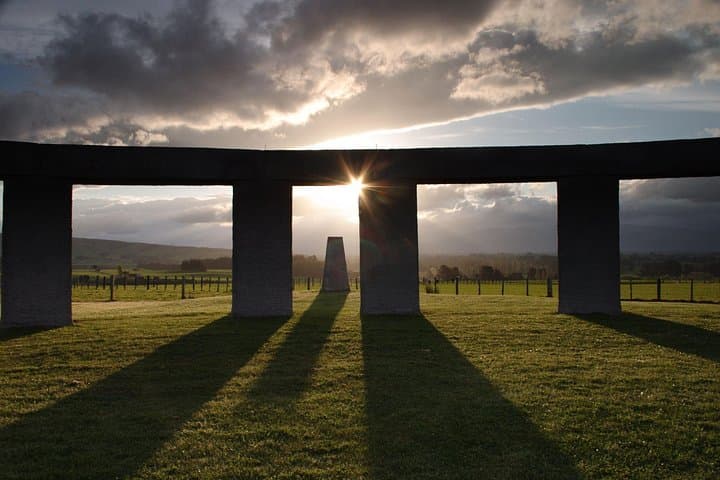
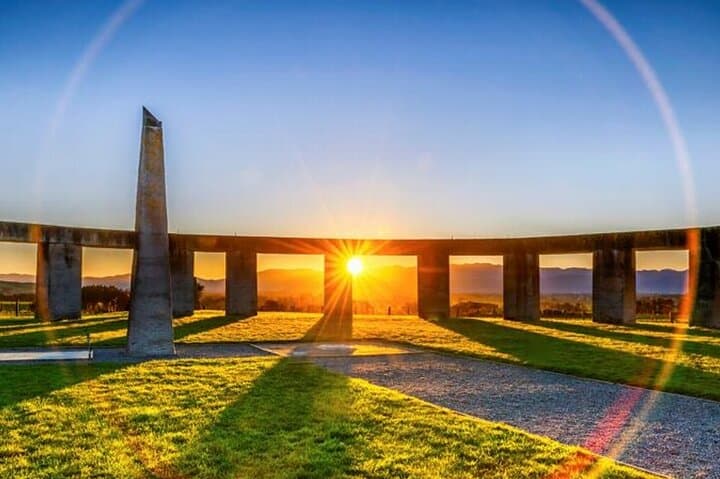
The late-afternoon light eases across the Wairarapa plains and the silhouetted Tararua Range sharpens against the horizon as a small group gathers around the circle of standing stones. Guides begin an hour before sunset, pointing out sightlines where the sun and stars cross carved markers; the stones hum with the low, surprising resonance you can test by clapping or speaking into the central ring.
The late-afternoon light eases across the Wairarapa plains and the silhouetted Tararua Range sharpens against the horizon as a small group gathers around the circle of standing stones. Guides begin an hour before sunset, pointing out sightlines where the sun and stars cross carved markers; the stones hum with the low, surprising resonance you can test by clapping or speaking into the central ring.
Stonehenge Aotearoa is a modern re-creation of ancient observatories, built in the 20th century to demonstrate how civilizations used stone alignments for timekeeping and navigation. Here the narrative extends beyond European megaliths: guides weave Māori starlore and Polynesian wayfinding into explanations of solar declination, lunar standstills, and the seasonal shift of constellations. The site sits on gently rolling farmland; the local schist and sedimentary soils shape the low ridgelines that form the backdrop.
Practical guidance is direct: tours run about 90 minutes with a short audiovisual introduction, are suitable for all fitness levels, and cap at roughly 50 people. Sunset timing matters—arrive early to get an orientation and experiment with the circle’s acoustics before the light fades. Dress in layers against sudden coastal chill, bring a torch for paths after dark, and a camera with a tripod if you want crisp low-light shots. The site is wheelchair accessible and family friendly, but respect the quiet once the group settles: the experience depends on clear sightlines and listening to celestial stories. For travelers based in Carterton or passing through the Wairarapa, this guided sunset combines hands-on archaeology, living cultural astronomy, and broad valley views in a compact, memorable evening.